
TAMPA, Fla. — New research from the Journal of the American Heart Association suggests the risk for men to start developing cardiovascular disease increases starting at around age 35 — 10 years earlier than for women.
What You Need To Know
Men at higher risk than women of developing heart disease sooner, according to the Journal of the American Heart Association
At 35 years old, men’s risk rises faster, according to the research
Doctors say information encourages earlier intervention
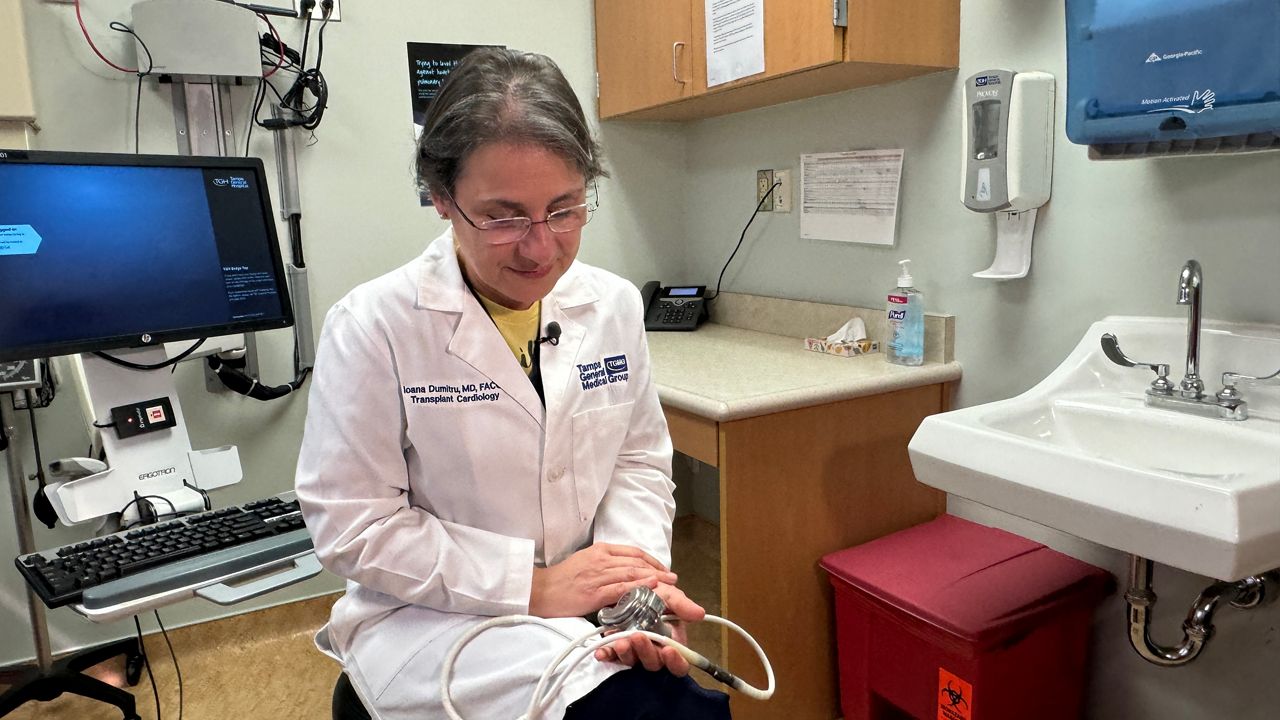
“There is a 10-year discrepancy, particularly during the time that the women are pre-menopausal, where the hormonal balance is completely different, where they are protected by their hormones for developing heart disease, particularly, coronary artery disease where certainly men are not,” said Dr. Ioana Dumitru, director of the Mechanical Circulatory Support Program at Tampa General Hospital. She added that other risk factors can include, weight, activity level and smoking and drinking.
Doctors say the new information encourages earlier intervention.
“That’s a very important study that will change practice,” said Dr. Lucian Lozonschi, director and Chief of Cardiothoracic Surgery at THG and USF Health. “I think we need to increase the awareness that it’s not age 40 or 50 when we need to start screening men and women for their cardiovascular disease but much earlier in 20’s and 30’s.”
41-year-old heart patient Eric Young agrees that more awareness is needed for the younger generation.
“I started feeling sick,” said Young, recalling a health scare in May 2024. “I got diagnosed with pneumonia from one place. And then, you know, then they told me that it wasn’t pneumonia and I was in end-stage heart failure.”
The then 40-year-old was otherwise healthy and had no family history of heart disease. He faced more than a month in the hospital at TGH, emergency procedures and the possibility of a heart transplant. A left ventricular assist device, or LVAD was implanted in Eric’s chest.
“It was a pump that was connected to the bottom of my left ventricle that pumped blood throughout my body,” he said.
For a year and a half, the LVAD supported Young’s heart. Lozonschi removed the device, marking a rare recovery.
“It’s only about one to two percent in the U.S.,” said Lozonschi.
“This is the reason why I’m here,” Young said of the device. He remains on heart medication.
His outcome is encouraging to doctors for more patients to recover. And while his case was a viral condition, it’s his age group that is at higher risk of heart disease, encouraging more screening and increased awareness for younger men and women.
A reminder from the American Heart Association of risk factors, that include:
Increasing age
Sex
Diabetes
High blood pressure
High cholesterol
Being overweight or obese
Tobacco use