
For decades, Pine Hills has been defined in headlines more often than in context.
When something negative happens here, our community’s name is amplified. When similar incidents occur elsewhere, the framing shifts. That difference may seem subtle, but it carries consequences.
Narratives shape perception.
Perception influences policy.
Policy affects investment.
And investment determines whether communities thrive.
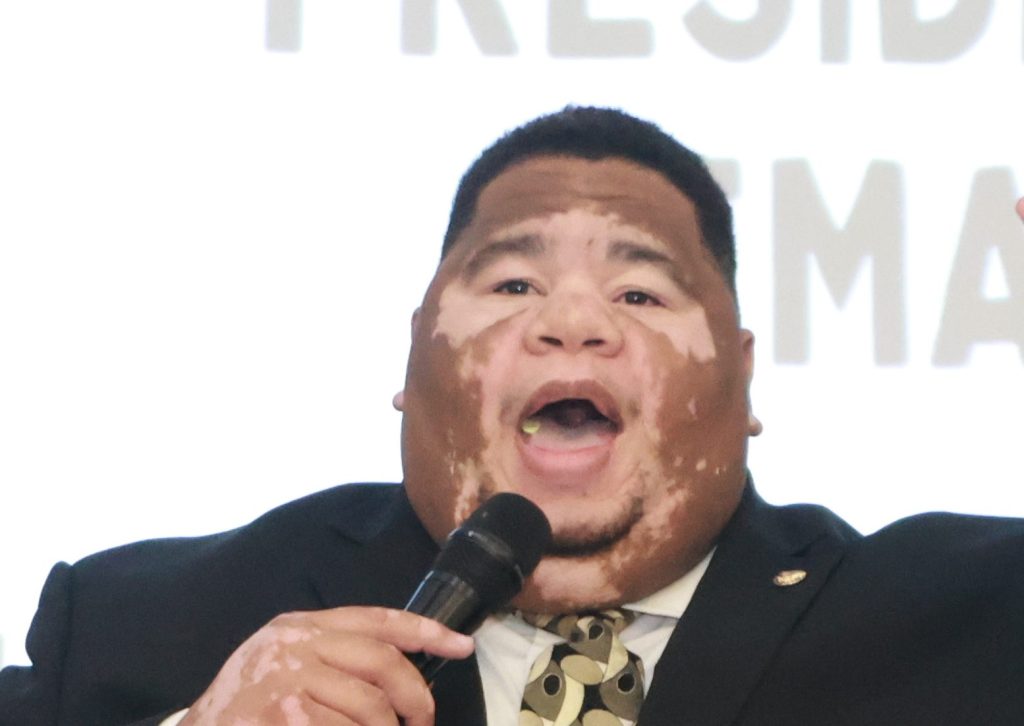
As the youngest and first Gen Z president in the 54-year history of the Pine Hills Community Council, I do not see leadership as symbolism. I see it as responsibility. Responsibility to confront not only the challenges our community faces, but also the narrative that too often defines us.
The issue is not whether Pine Hills has challenges. Every evolving community does. The issue is whether we allow selective storytelling to overshadow measurable progress and ongoing investment.
Because the Pine Hills I know tells a fuller story.
It is families investing in their children.
It is small business owners opening their doors every morning with determination.
It is faith leaders, educators, nonprofit professionals and neighborhood advocates doing the work that rarely trends but always matters.
It is young people who refuse to let labels define their future.
In recent years, youth from Pine Hills played an active role in Orange County’s redistricting process, advocating for a map that placed Pine Hills fully within one commission district — a long-standing community goal. That kind of civic engagement does not make headlines, but it shapes governance.
Local hiring fairs are connecting employers with residents ready to work. Neighborhood associations are collaborating rather than operating in silos. Infrastructure, pedestrian safety and multimodal transportation remain active priorities. Organizations across Pine Hills are aligning efforts around youth mentorship, scholarship pipelines, workforce development and small business growth.
These are not abstract aspirations. They are coordinated efforts.
We are working to build civic infrastructure that outlasts any one leader. Participation ensures residents have a seat at the table. Accessibility requires transparency in goals and outcomes. Collaboration recognizes that no single organization can move a community forward alone. Excellence demands measurable progress.
This work is happening in partnership with nonprofit institutions, business leaders, neighborhood groups and regional stakeholders. It is happening across District 7 and throughout Orange County. And it reflects a community that is organizing, not retreating.
The question is not whether Pine Hills deserves investment. The question is whether public perception will catch up to present reality.
When communities are defined primarily by crime statistics, outside stakeholders hesitate. Developers pause. Policymakers deprioritize. Residents internalize narratives that diminish pride. Over time, perception can quietly become policy. Despite Pine Hills experiencing a year-over-year decrease in crime, the damaging impact of the narrative persists.
That is why reframing the story is not about public relations. It is about equity.
Pine Hills is not a problem to be fixed. It is a community to be invested in. Fifty-four years of civic leadership have shaped zoning decisions, beautification efforts, youth programs, and public safety partnerships. Leaders before us carried this work through growth and rebuilding. We honor that legacy by continuing to build forward.
Does Pine Hills face real issues? Yes. Infrastructure improvements are needed. Pedestrian safety must increase. Economic opportunity must expand. But acknowledging challenges and reducing a community to them are two different things: One invites partnership. The other reinforces stigma.
If you have only encountered Pine Hills through a news alert, I encourage you to experience it directly. Attend a community meeting. Visit a local business. Volunteer with a youth program. Speak with residents who have invested decades here.
You will find resilience. You will find pride. You will find forward movement.
Headlines will always exist. But they should not be the sole authors of a community’s future.
That future belongs to the people who live it every day. And in Pine Hills, the work is well underway.
Julien Serrano-O’Neil serves as president of the Pine Hills Community Council and chief relationship officer of the United Foundation of Central Florida.