
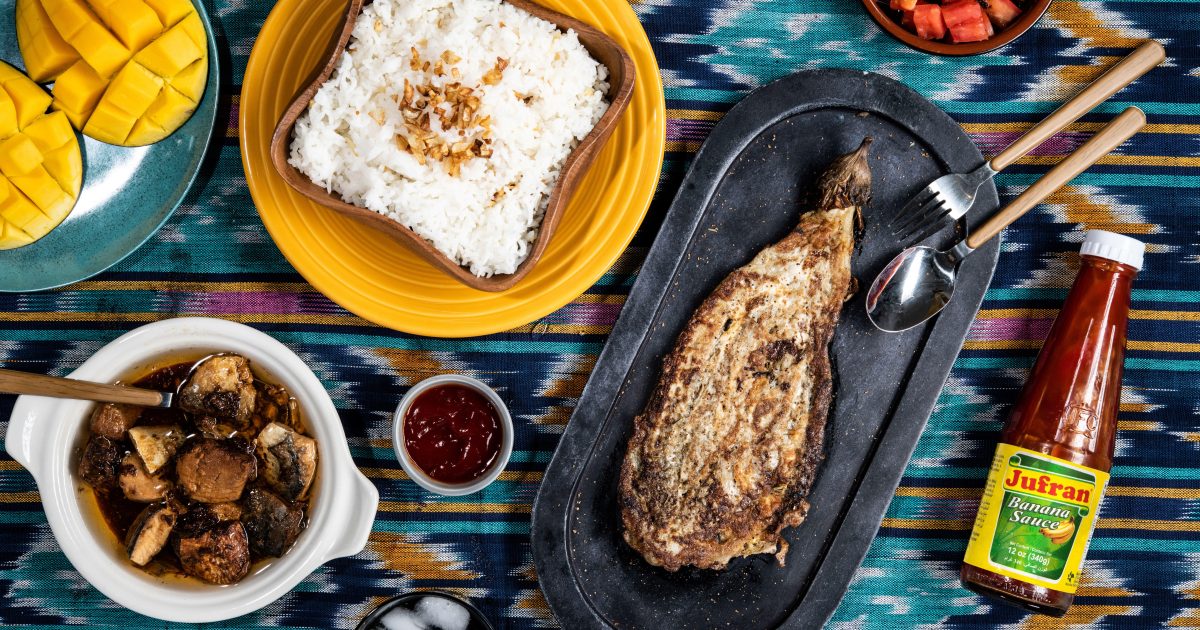
Jacksonville is home to Florida’s largest Filipino population, and one of the largest in the southeast, making it the perfect spot to try some Filipino food and immerse yourself in the culture. As you dine, you’ll notice how Filipino culture is weaved not only into the dishes you’ll enjoy, but the restaurant vibe and décor as well. Here are a few common items in Filipino culture – be on the lookout for them as you complete the trail:
Calamansi
Calamansi is a common ingredient in Filipino cuisine, a Filipino citrus fruit, sometimes called Philippine lime or lemon. It is used to marinate meats, flavor sauces and make refreshing drinks. It is tart and slightly sweet.
Chicken Adobo
The Filipino chicken adobo is made with soy sauce, vinegar, garlic, bay leaf and black peppercorn. It is typically served over white rice and is known for being tender and flavorful.
Ube (pronounced ooh-bay)
Ube is a purple root that is native to Philippines and used in many Filipino desserts.
Wooden spoons
In Filipino culture, giant wooden spoons and forks displayed in homes, often in the dining area, are a tradition rooted in symbolism and practicality. They are seen as symbols of good health, prosperity, and abundance, reflecting the Filipino appreciation for food and family mealtimes. Also, Filipinos tend to use a spoon and fork when eating meals and you will often not see a knife as part of the table setting.
Turo turo
Turo turo is a Filipino term for a casual cafeteria-style restaurant where customers order by pointing at pre-cooked dishes on display, a concept that literally translates to “point point.” It is a popular method for getting quick, affordable Filipino meals, which typically include a main dish (ulam) and rice.