
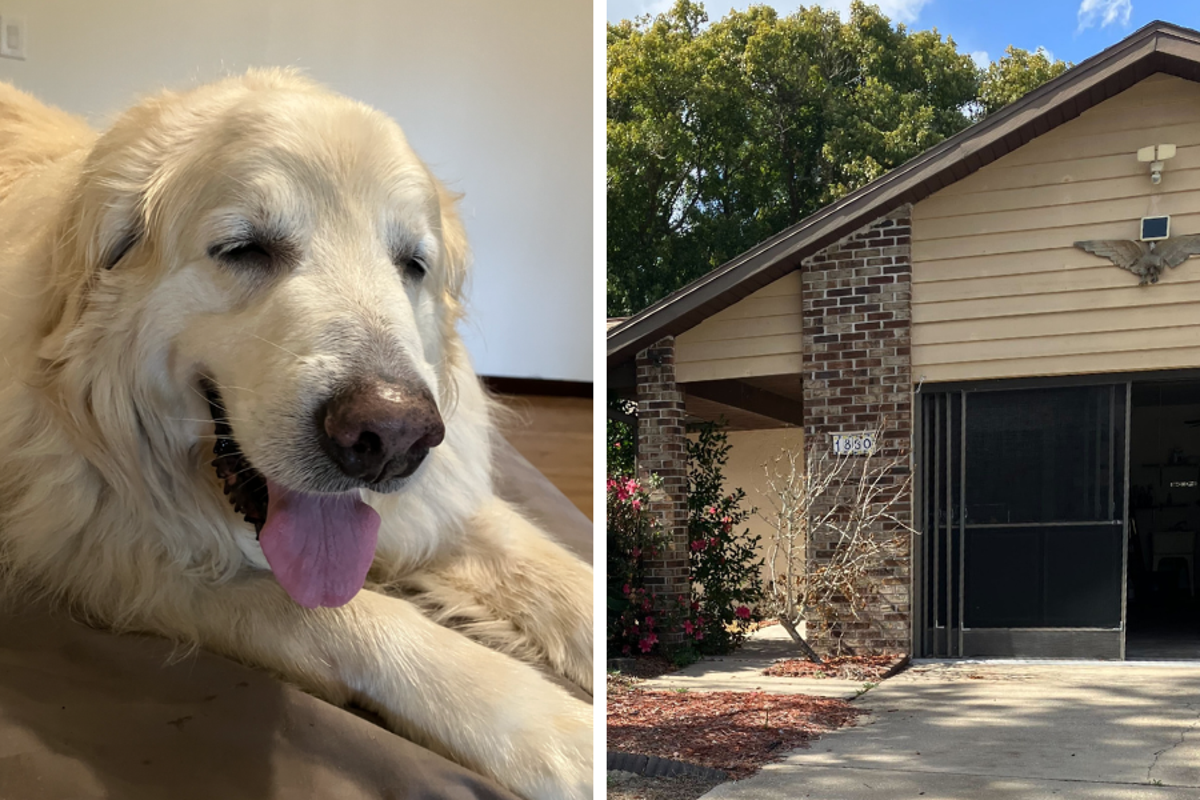
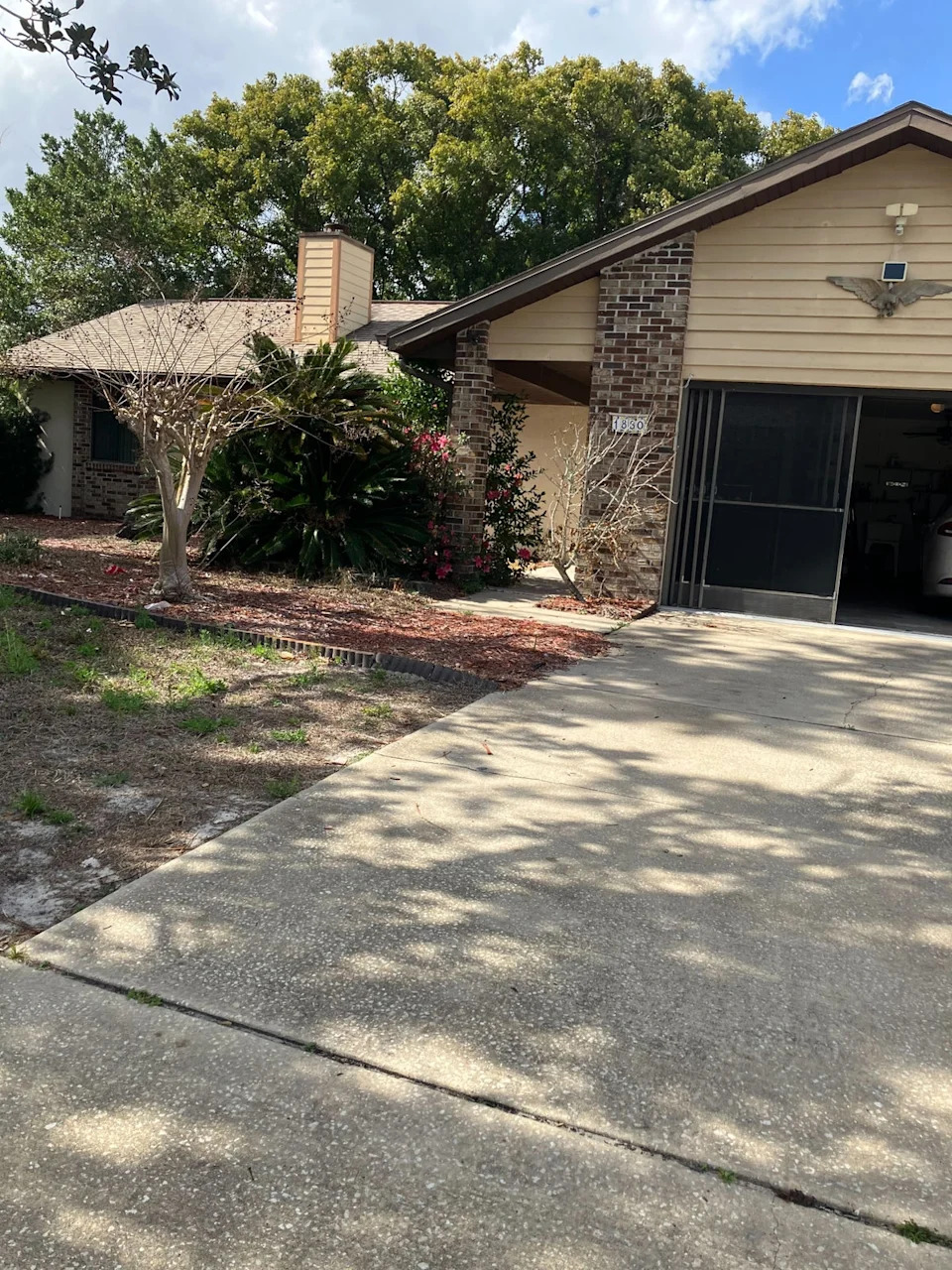
An elderly Florida man is at risk of losing a home he’s lived in for 20 years after the federal government filed a $190,000 lawsuit over a reverse mortgage he says he never knew existed.
Facing the possible loss of the only home he has known for decades in an auction sometime this month, Bill Tavernier said he is fighting not just for himself but also for his beloved 10-year-old Golden Retriever, Gunner. With few options and nowhere else to go, Tavernier filed for Chapter 13 bankruptcy this week to try to stay in his Deltona house.
“I mean, you talk about stress on me? I’m surprised I’m still alive,” Tavernier, 75, told The Independent. “It’s not only me – it’s my dog, and I think about him more than I think about me.”
Tavernier moved into the home 20 years ago to help look after his mother after his dad passed away. She felt safer having someone with her, he told WFTV, and they lived together until she died in 2013.
For years, Tavernier, whose mom paid off the initial mortgage, believed he and Gunner could live in the home for the rest of their lives. But that changed this past summer when he put the house up for sale, hoping to move closer to his brother in South Carolina.
Bill Tavernier, 75, and his 10-year-old Golden Retriever, Gunner, now face the threat of losing their Florida home after discovering that his mother had taken out a reverse mortgage years before her death (Bill Tavernier)
That’s when the U.S. Department of Housing and Urban Development notified him of a lawsuit seeking to foreclose on a reverse mortgage tied to the property. It was only then, Tavernier claims, that he learned that his mother had taken out a reverse mortgage on the home in 2001 for a little more than $70,000 – something he says she, nor the government, previously told him about.
“It was the culture in our family: You did not talk about money or finances with your kids. You just didn’t do it,” Tavernier told The Independent. “I was never notified, never sent one bill statement from the original mortgage company, from the federal gov – from no one. Nothing, zippo, zappo.”
HUD does not comment on active litigation.
A reverse mortgage is a special type of loan designed for homeowners aged 62 or older. It allows them to tap into a portion of their home’s equity and receive it as tax-free cash, providing extra funds for living expenses, healthcare or other needs, according to Experian.
Unlike a traditional mortgage, borrowers are not required to make monthly payments on a reverse mortgage. However, the loan continues to accrue compound interest over time, which increases the total amount owed. The full loan balance, including interest and fees, must be repaid when the borrower dies, sells the property or permanently moves out of the home.

Tavernier said the stress of the lawsuit has made it hard to eat or sleep, leaving him waking in the middle of the night to let Gunner outside (Bill Tavernier)
The federal government claims Tavernier now owes nearly $190,000, which includes the original loan amount along with years of accumulated interest and additional fees, killing his dream of moving, according to the lawsuit, WFTV reports.
Barry Miller, an Orlando-based real estate attorney, told WFTV that a simple title search could help homeowners avoid situations like this. Miller explained that whenever property is transferred from one person to another – even between family members – a title search should be conducted to identify any existing loans or liens on the property. He said the process typically costs only a few hundred dollars and can reveal important information about the home’s financial obligations.
Miller also advises homeowners who take out reverse mortgages to inform their family members so they understand the financial responsibilities tied to the home.
Miller also explained that the HUD may not have known Tavernier’s mom has passed until the 2025 property listing. The listing may have alerted them to the mortgage, triggering the legal action, he said.
“They’re not going to try to get a deficiency judgment or any money from him, because, of course, he’s not the borrower,” Miller told the outlet.
Tavernier, who said he has physical health issues that make it difficult for him to maintain a job, said he relies primarily on his Social Security income, making it nearly impossible for him to come up with that kind of money.
“If they had sent me ‘this mortgage is due and payable…’ you know, whatever, 12 years ago, I could have done it,” he said.
Without the money to pay for a lawyer to help him in this case, Tavernier has tried to challenge the lawsuit on his own, but so far has been unsuccessful.
“A couple of attorneys, well, their free consultations are about how much their fee is going to be. I learned that real quick, you know? So I had to do it on my own,” Tavernier told The Independent.
Tavernier said the amount of pressure he’s under has made him lose his passion for cooking. He also has difficulty eating and sleeping.
“I get up at 1 a.m. and I try to go back to sleep,” Tavernier told The Independent. “I can’t, so I let the dog outside, sit on the back porch with him, and he goes outside and comes in, licks me.”
He continued: “I take my dog to the dog park every morning. He loves it. I mean, that’s his enjoyment. He’s got his friends there. They play, they run around and stuff, and it’s great exercise for him. And by the time he’s done, I come back, I’m ready to lie down and take a nap.”