
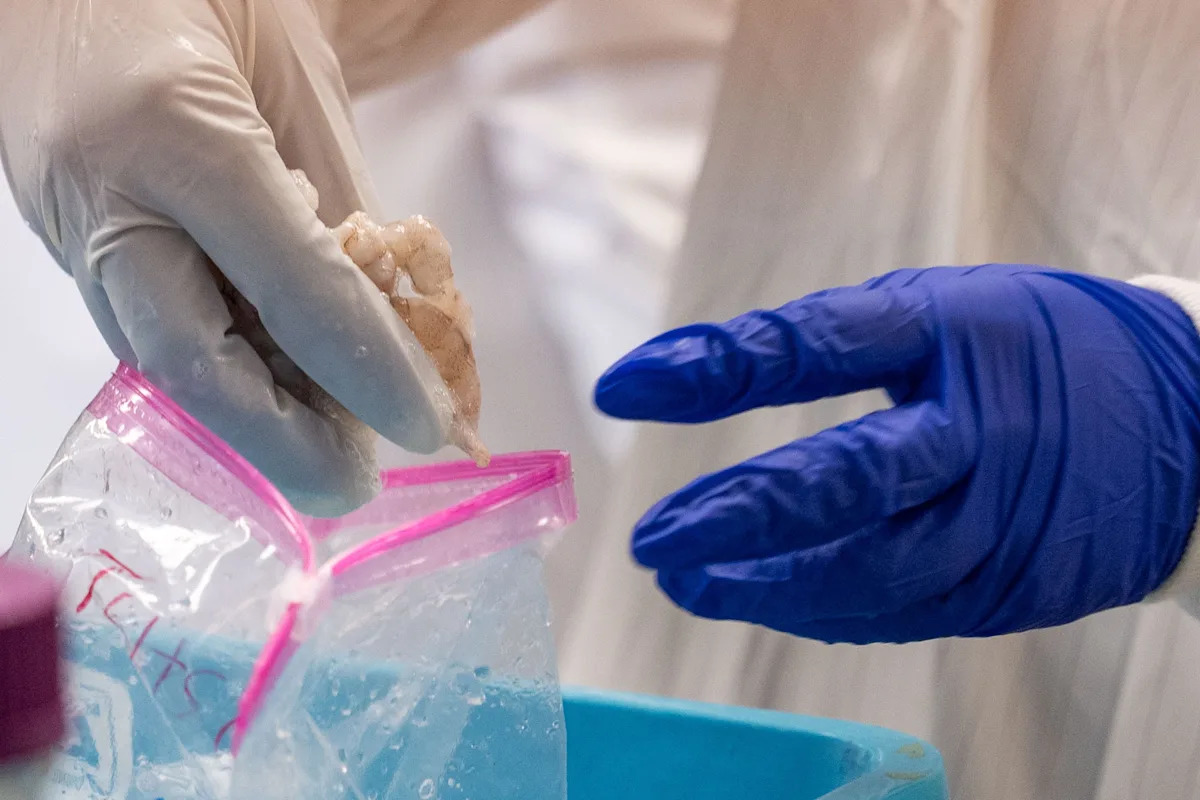
Last year the Tallahassee Democrat informed you all about the whole bait and switch happening in the seafood industry — especially with crustaceans.
Customers at seafood restaurants — you know the ones decked out in that coastal-esque decor that makes you feel like your entrees came straight from domestic waters — thought they were getting the real deal. But in the billion‑dollar shrimp industry, diners weren’t always getting what they paid for. Some eateries were serving imported shrimp disguised as locally caught delicacies.
Fast forward one year later and the Tallahassee Democrat revisited the Florida State University campus to meet with Florida State University’s Department of Health, Nutrition and Food Sciences graduate students Samuel Kwawukume, Nethraja Kandula and Hannah Brown to hear what they’ve been up to: local testing.
The graduate students shared that they visited 15 different locally-owned and regional chain seafood restaurants here in the capital city to test their products with a rapid DNA test. With a new digital platform they developed, they also tested the shrimp offered at four local supermarkets to determine if your grocery stores were offering a mix of domestic and imported shrimp when you buy.
Here’s why it matters: The seafood industry is swimming with imported shrimp, often from farms abroad that may use antibiotics and questionable practices banned here in the states. But restaurants aren’t always upfront about what they’re serving (sometimes even they don’t know), leaving diners in the dark about what’s really on their plates. Even here in Tallahassee. But we’ll get to that soon I promise.
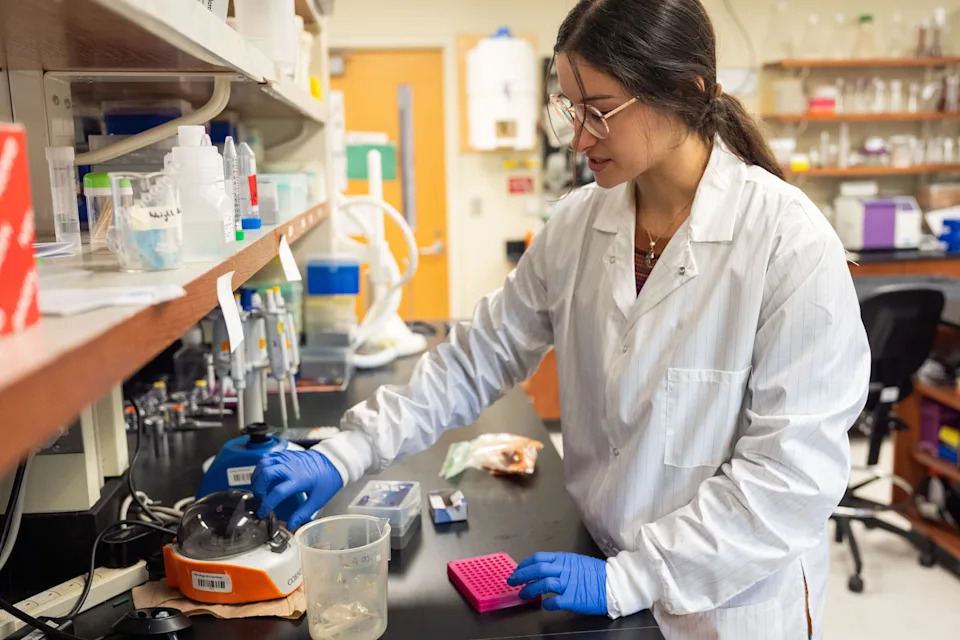
Florida State University graduate student Hannah Brown conducts a test on shrimp to determine if the sample is imported or domestic shrimp Wednesday, Feb. 25, 2026.
The mislabeling can take business away from U.S. shrimpers. The same goes for shrimp products you find at the grocery store.
First, a quick refresher on how the testing works.
Testing the menu
Taking a refrigerated bag of deep-fried shrimp pulled from the local restaurants, they took the crustaceans and peeled the crispy layers exposing the white meat to pick out a piece of flesh. This one piece of tissue, almost as fine as a strand of hair, was all they needed.
As Florida State University assistant professor Prashant Singh described in a previous interview, “The test is designed to identify a DNA sequence. So, we just run the same test using all the samples.” A portable Polymerase Chain Reaction (PCR) machine helps the scientists identify the difference between domestic species of shrimp and imported species of shrimp.
“We take a tiny piece of shrimp tissue with a disposable toothpick, which is used for DNA isolation by boiling the samples in lysis buffer (a solution that helps to open cells and release their contents).” That’s then used to create a reaction and identify the presence of substances in the liquid sample.
Hannah Brown told the Democrat that she went undercover at local restaurants, ordering entrees advertised — or strongly implied — “wild‑caught” or “Gulf shrimp.”
After conducting the tests on the sautéed, grilled, baked, boiled and fried shrimp, they found that 72% — or 11 of the 15 restaurants — that said they were offering domestic shrimp are actually offering imported.
The researchers would not disclose the names of passing and failing restaurants to the Tallahassee Democrat.
Their reason being: ‘We can’t test every single restaurant that serves seafood, so if they are doing the same thing (falsely labelling menu items), they would basically feel like they’ve gotten away with it. We’re not naming any restaurants, but hopefully this will bring awareness to the issue and make restaurants kind of look at their own practices as well,” Brown said.
Also, to avoid any lawsuits.
The scientist plan to expand their research to other cities in the Sunshine State as well.
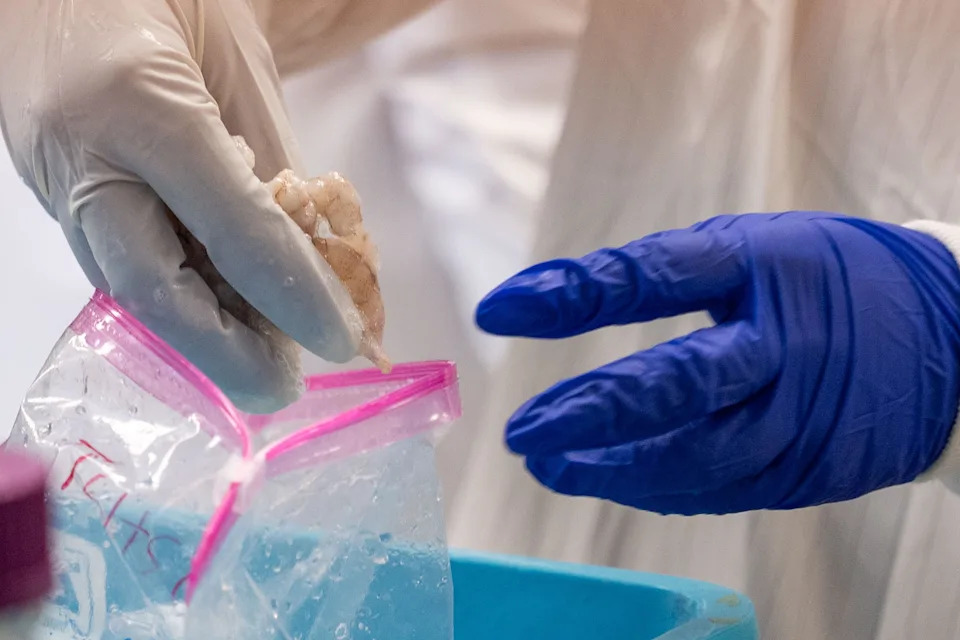
Florida State University graduate students conduct a test on shrimp to determine if the sample is imported or domestic shrimp on Wednesday, Feb. 25, 2026.
Testing in local supermarkets
The students also realized they needed a way to test shrimp sold in bulk at grocery stores. Using a new digital PCR platform they developed, they also can determine whether stores are blending domestic and imported shrimp — and in what proportions.
With this test they take 50 grams of raw shrimp and blend it altogether so “even if there is a little bit of other things mixed in there, it’s going to give you a signal” Kandula said.
The overall test can take three to four hours, but this method can run a little longer because of DNA extraction protocols, which call for samples to be incubated overnight.
The large sample is mixed with a “Phosphate Buffered Solution (PBS)” a water-based solution used to wash cell samples to remove debris and contaminants before lysis, ensuring cleaner downstream DNA extraction. The shrimp-PBS mix is then transferred to a machine, a homogenizer, which “forces materials through small spaces to break down particles, emulsify liquids, and mix ingredients into a stable, uniform, and consistent texture,” according to a manufacturer.
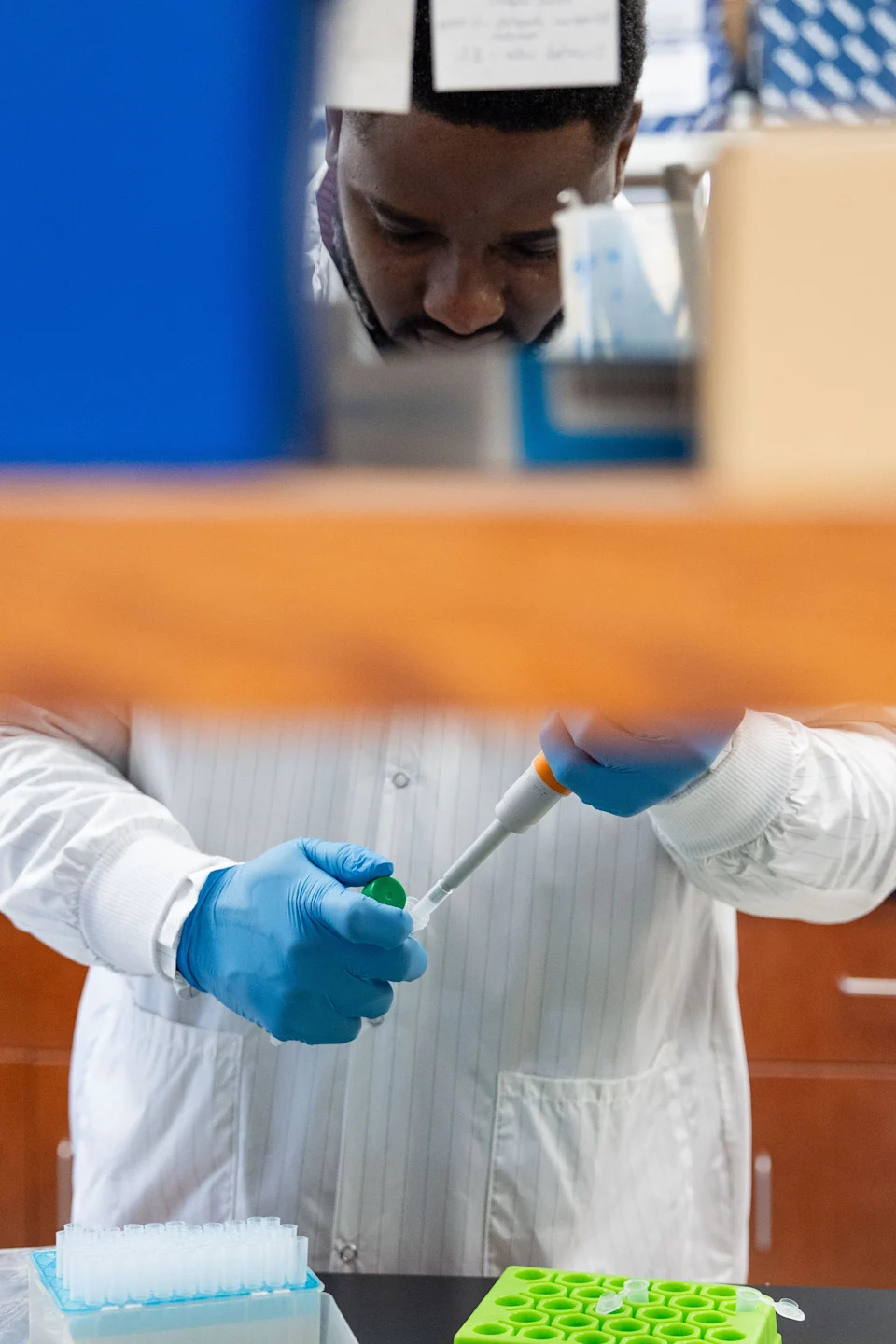
Florida State University graduate student Samuel Kwawukume conducts a test on shrimp to determine if the sample is imported or domestic shrimp Wednesday, Feb. 25, 2026.
After several additional preparation steps, the cleaned sample is ready for testing. A digital PCR machine is then used again to identify the concentration of domestic and imported shrimp species in each sample.
In terms of testing frozen shrimp samples from supermarkets, tests have been conducted in Tallahassee, Gainesville, Jacksonville and Panama City.
Results showed that Tallahassee’s samples were clean, meaning everything marked “wild caught” and domestic were in fact. However, in other Florida cities —Panama City, Jacksonville and Gainesville — Kwawukume says, “we found interesting results.”
Gainesville: Four of the five samples were domestic, while one turned out to be imported.
Jacksonville: Three out of the 10 samples were domestic, while seven turned out to be imported.
Panama City: Seven out of 14 samples were domestic, while the other seven turned out to be imported.
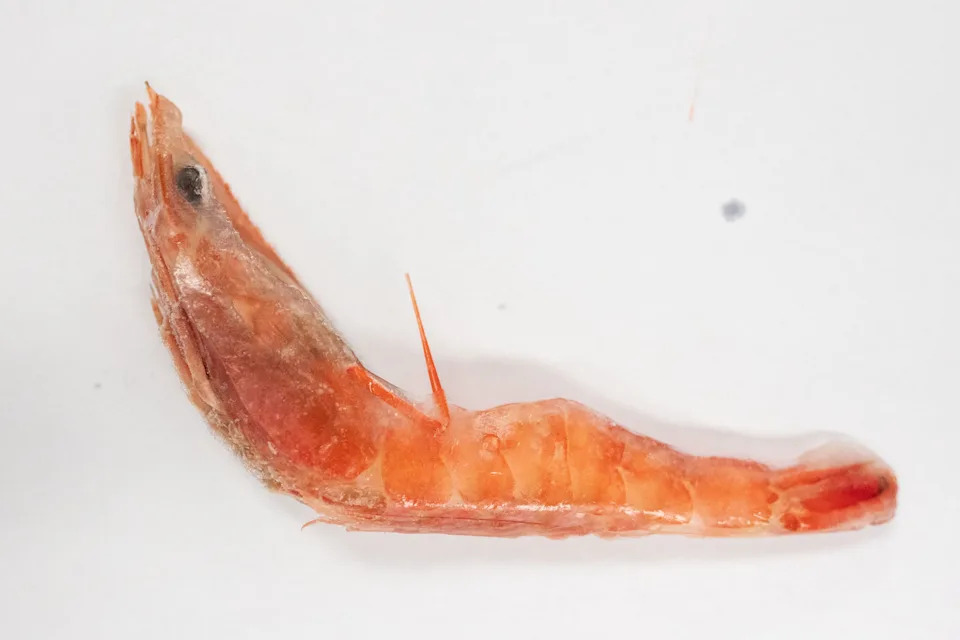
Florida State University graduate students test a variety of shrimp to determine if it is domestic or imported Monday, Feb. 10, 2025.
Plans for their findings
With their findings, the scientists aim to raise awareness and push for more transparency.
They made note of Georgia passing HB 117 this February. The bill now requires food establishments to explicitly label or disclose if they are serving imported, farm-raised shrimp on their menus to provide transparency for consumers.
“That’s what we’re aiming to do in Florida. Florida doesn’t have a labeling law to implement for restaurants or retail outlets selling domestic or imported shrimp. We’re not trying to shame any business, we’re trying to push for legislation,” Kwawukume said.
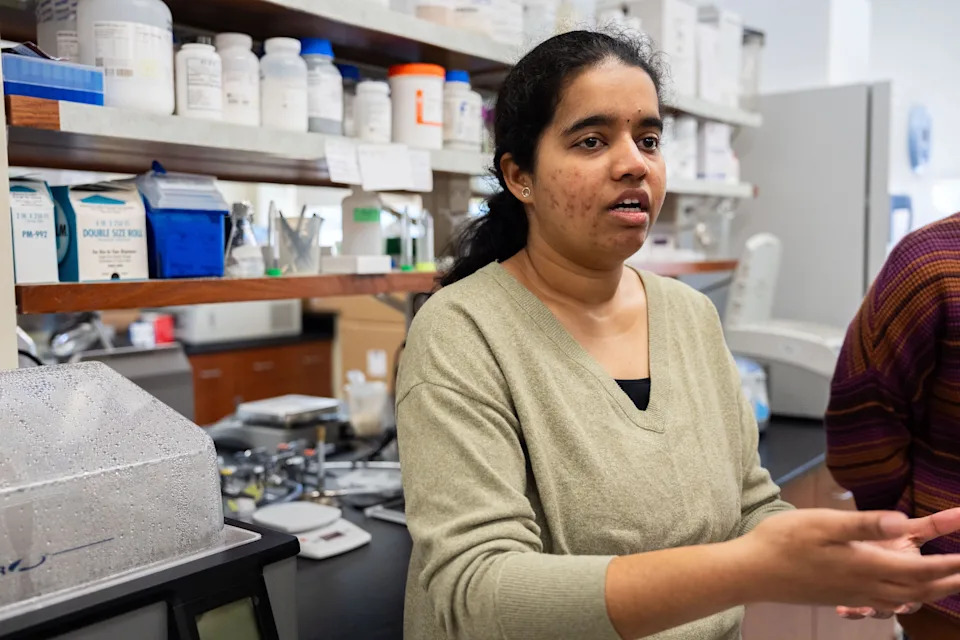
Florida State University graduate student Nethraja Kandula explains the process for testing shrimp to determine if the sample is imported or domestic shrimp Wednesday, Feb. 25, 2026.
Kandula added that they plan to collaborate with the Southern Shrimp Alliance in Tampa, because of the group’s connections with federal agencies, or with FSU’s legal team to explore how they can build a case from their findings — hopefully enough to support a new bill.
How it all started
David Williams, founder of Houston-based food safety tech company SeaD Consulting, has spent years diving into the murky waters of seafood sourcing. Williams is a commercial fishery scientist and has decades of experience under his belt. After speaking with fishermen working on the Gulf Coast, he realized the shrimp market was in jeopardy.
He identified the dilemma as an “authenticity-in-the-restaurant problem,” when he found the local “shrimp business was unable to support itself” because people were making substitutions by importing to save dollars on food supply.
Florida State University graduate students conduct a test on shrimp to determine if the sample is imported or domestic shrimp on Wednesday, Feb. 25, 2026.
In 2022, Williams took his concerns to Singh, hoping to crack the case of the sneaky shrimp swap.
With the help of SeaD Consulting researchers and Florida State University’s Department of Health, Nutrition and Food Sciences graduate students Samuel Kwawukume and Frank Velez, as well as assistant professor for health, nutrition and food science Leqi Cui, Singh took on the challenge.
The research was ignited by research funding from a Florida Sea Grant awarded to Singh and Cui.
After licensing the FSU instruments for testing, Williams was hired by the Southern Shrimp Alliance to visit restaurants. He was initially visiting seafood festivals in major cities and found that a majority of the shrimp featured was imported, even though it was implied to be locally sourced. That is when he was asked to visit restaurants.
This article includes previously reported information. Kyla A Sanford covers dining and entertainment for the Tallahassee Democrat. New restaurant opening up, special deals, or events coming up? Let me know at ksanford@tallahassee.com. You can also email your suggestions for a future TLH Eats restaurant profile.
This article originally appeared on Tallahassee Democrat: Bait and switch? FSU researchers dive into local seafood mislabeling