
Home » AIRLINE NEWS » Mid-Air Drama Over the U.S. Nashville-to-Fort Lauderdale Southwest Flight Forced to Land in Atlanta After Suspicious Security Situation!
Published on
March 7, 2026
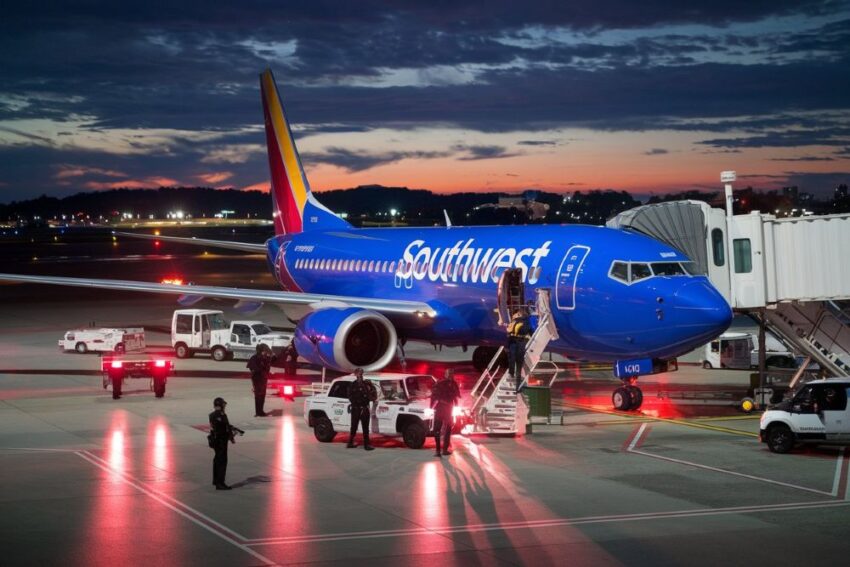
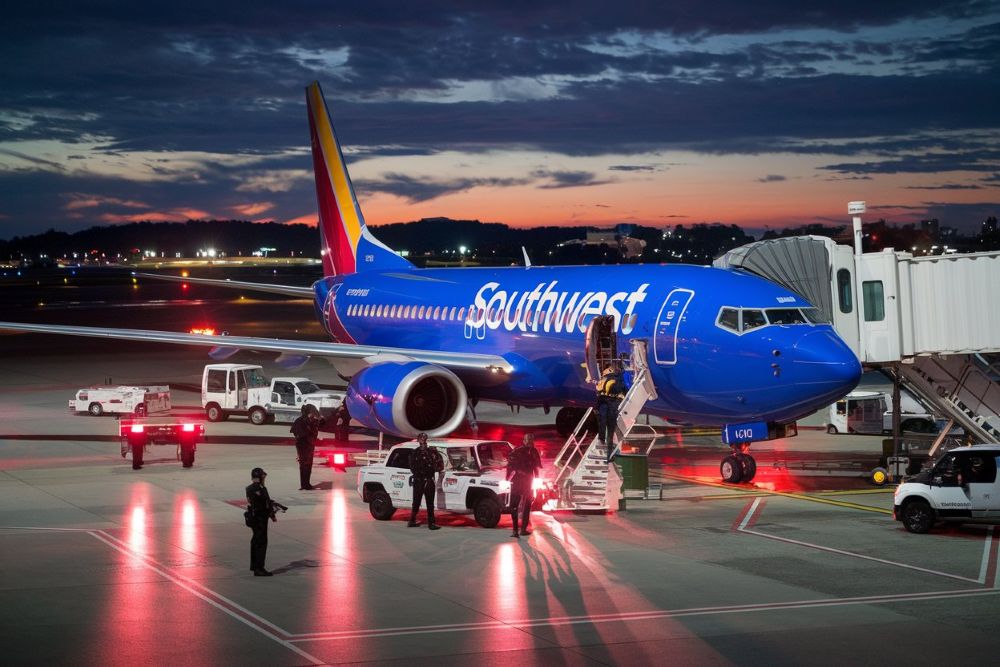
Image generated with Ai
Atlanta, United States A commercial flight operated by Southwest Airlines was forced to divert and perform an emergency landing late Friday evening at Hartsfield‑Jackson Atlanta International Airport after the crew detected what was described as a potential onboard security concern. The aircraft, operating as Flight 2094, had originally departed from Nashville International Airport in Nashville, Tennessee, and was scheduled to arrive at Fort Lauderdale–Hollywood International Airport in Fort Lauderdale, Florida. However, while en route, the flight crew initiated a diversion toward Atlanta after identifying a situation that required immediate security attention. The plane landed safely at Atlanta’s major aviation hub shortly after 9:00 p.m. local time, where local law enforcement officers boarded the aircraft and removed a passenger as part of a security investigation.
According to reports surrounding the incident, the flight crew made the decision to reroute the aircraft to Hartsfield-Jackson Atlanta International Airport, widely recognized as one of the busiest airports in the world. The diversion allowed authorities to respond quickly once the aircraft reached the ground. After the landing, a specialized armed unit from the Atlanta Police Department entered the aircraft to handle the situation. Officials removed a passenger from the plane while other travelers remained onboard during the initial security response. Authorities later continued their investigation into the circumstances that triggered the emergency diversion. Importantly, the aircraft landed without incident, and no injuries were reported among passengers or crew.
Advertisement
Advertisement
In communications following the event, Southwest Airlines explained that the aircraft diverted to Atlanta as a precautionary response to a possible security issue detected during the flight. The airline emphasized that the safety of passengers and crew remains its highest operational priority, noting that trained flight crews follow strict protocols when potential security concerns arise mid-flight. Airlines operating in the United States must adhere to comprehensive safety and threat-response procedures established by federal aviation authorities. These procedures require crews to take immediate action if any situation emerges that could compromise the safety of passengers, the aircraft, or airport operations.
Advertisement
Advertisement
Once the aircraft reached the gate area in Atlanta, law enforcement officers from the Atlanta Police Department boarded the plane to manage the situation. Security personnel approached the passenger involved and escorted them off the aircraft for questioning. The presence of armed officers reflected standard security protocol when responding to potential threats on commercial flights. While the investigation continued after the passenger was removed, officials did not immediately release further details regarding the specific nature of the security concern that led to the diversion. Authorities often withhold information in such cases until preliminary inquiries are completed.
Advertisement
Advertisement
Videos and images reportedly taken by travelers onboard began circulating across social media shortly after the aircraft landed. The footage appeared to show the moment law enforcement officers entered the cabin and escorted a passenger away from the aircraft. Other passengers remained seated while authorities carried out their response. Such passenger-recorded footage has become increasingly common in aviation incidents, providing real-time documentation of events inside aircraft cabins. However, airlines and law enforcement agencies generally rely on official investigations to determine the facts behind incidents rather than social media reports alone.
Commercial airlines operating in the United States follow strict procedures designed to address any potential security issue during flight. These procedures are guided by regulations and standards set by the Federal Aviation Administration and the Transportation Security Administration.
If flight crews observe suspicious behavior or receive information indicating a possible threat, they may take several precautionary actions, including:
Alerting air traffic controlDiverting the aircraft to the nearest suitable airportRequesting law enforcement assistance upon landingImplementing onboard safety protocols
Diverting to the nearest major airport ensures that authorities can respond rapidly and that the aircraft can land safely while minimizing risks.
Hartsfield-Jackson Atlanta International Airport frequently serves as a diversion point for flights across the southeastern United States due to its extensive facilities, long runways, and constant law enforcement presence. The airport’s infrastructure allows emergency responses to be carried out quickly, whether the issue involves mechanical problems, medical emergencies, or security concerns. As one of the world’s busiest aviation hubs, the airport is equipped with multiple emergency response units and specialized security teams capable of managing incidents involving commercial aircraft.
While the aircraft landed safely, diversions like this often result in delays for passengers. Travelers on the diverted flight typically remain onboard until authorities complete their initial response and the airline receives clearance to continue operations. In some cases, passengers may need to disembark while the aircraft undergoes additional security checks. Airlines generally coordinate with airport authorities to ensure passengers can resume their journey as soon as it is safe to do so. Southwest Airlines also acknowledged that the diversion caused delays for travelers but emphasized that the precautionary measures were necessary to maintain safety standards.
The incident highlights the continued importance of strong security measures within the global aviation industry. Since the early 2000s, airlines and aviation authorities have implemented extensive protocols designed to detect and respond to threats quickly. Crew training programs now include enhanced procedures for identifying unusual behavior and coordinating with law enforcement. Airlines also rely on collaboration with airport security teams, federal agencies, and local police departments to ensure swift responses to potential threats. These coordinated efforts are designed to prevent incidents from escalating and to maintain passenger confidence in air travel.
As of the latest information available, authorities continued to review the situation involving the passenger removed from the aircraft.
Investigators typically examine several factors in cases like this, including:
Passenger behavior during the flightStatements from crew members and travelersSecurity procedures followed by the airlineAny potential violations of aviation regulations
Depending on the findings, law enforcement officials may determine whether further action is necessary.
Although the diversion caused disruption to passengers’ travel plans, the outcome demonstrated the effectiveness of aviation safety protocols. The aircraft landed safely, law enforcement responded quickly, and passengers remained unharmed throughout the event. For travelers, incidents like this serve as a reminder that airlines and airports maintain strict safety procedures designed to protect passengers even in unexpected situations. As global air travel continues to grow, the aviation industry remains committed to ensuring that safety and security remain at the center of every flight operation.
