
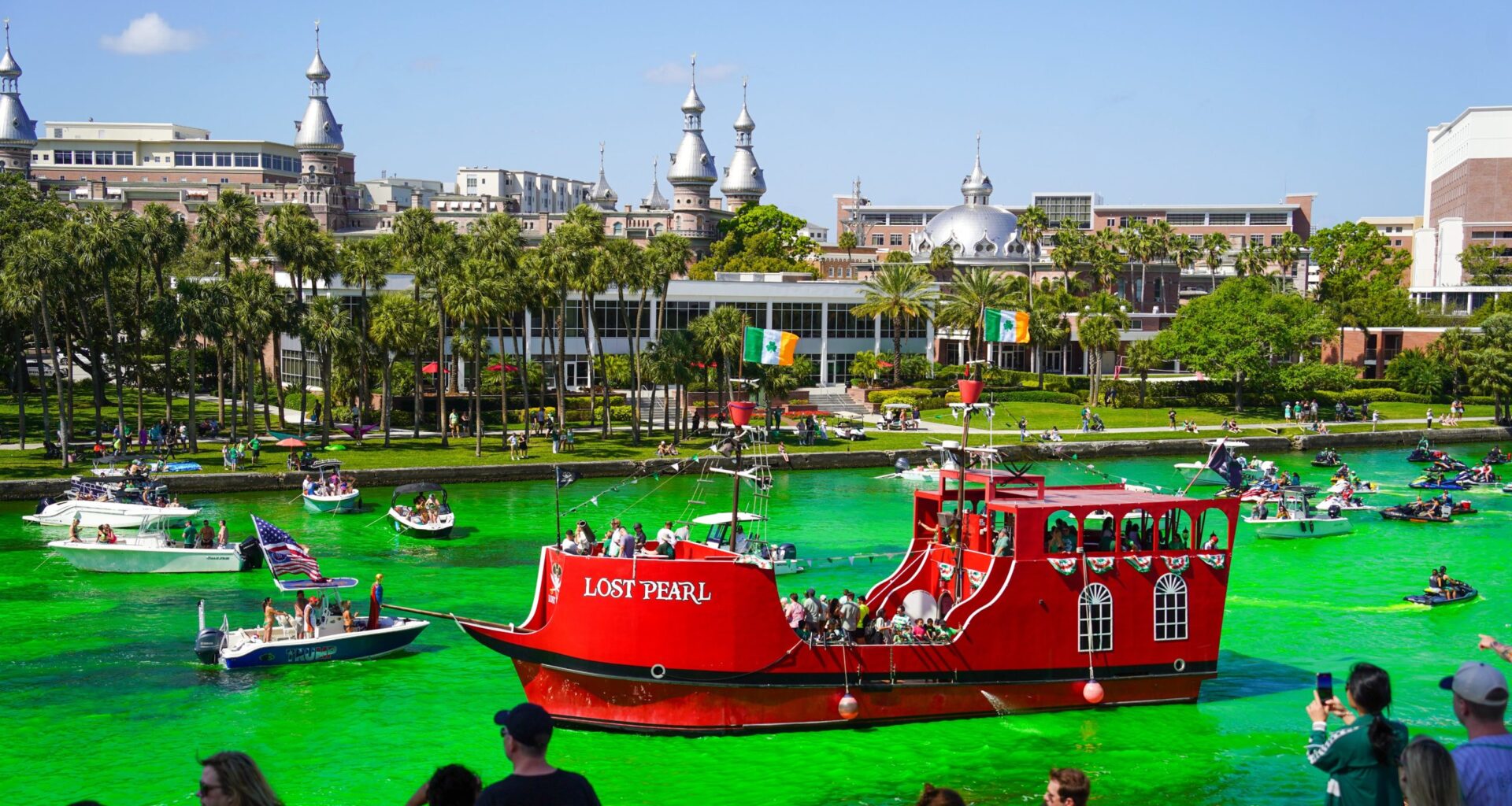
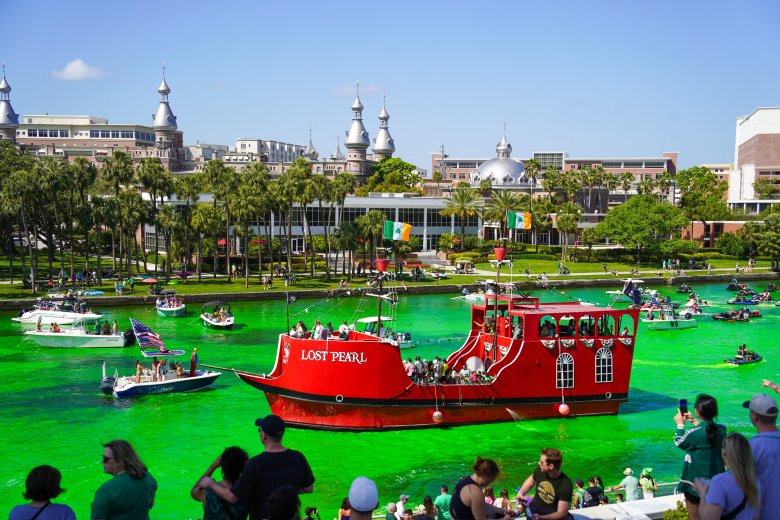
 The Hillsborough River in Tampa, Florida on March 15, 2025. Credit: cityoftampa / X
Each spring, the Hillsborough River glows an unnatural shade of green as part of Tampa’s River O’Green Fest. For many, it’s a beloved St. Patrick’s Day tradition. For others, it’s a poor use of resources to alter one of the city’s most important waterways.
Despite assurances from city officials that the kelly-green colored dye is safe to use for the one-day event, local fisherman and environmentalists say it’s harmful to the river’s wildlife and promotes the wrong idea about respecting the environment.
The tradition began in 2012 under mayor Bob Buckhorn and has continued every year since, except during the pandemic in 2020 and 2021. The 2026 River O’Green Festival happens Saturday, March 14.
Each year, about 250 pounds of dye produced by Ohio-based Kingscote Chemicals is mixed with roughly 280 gallons of water and sprayed into the river. The dye, appropriately named Bright Dyes ® FLT Yellow-Green Powder, transforms the water into a bright neon green.
According to the company’s safety sheet for the product, the dye is biodegradable, nontoxic, and “does not meet hazardous criteria set forth by the 2012 OSHA Hazard Communication Standard.” However, its recommended use is for “water tracing & leak detection dye,” and makes no mention of being used to turn entire rivers green.
In 2023, Captain Dustin Pack launched the “Stop Dyeing the Hillsborough River Green” petition to raise awareness about opposition to the city’s river-dyeing tradition. The petition has earned more than 7,000 signatures, with numbers on the rise as the event approaches.
Pack, a local fisherman, said when the river suddenly turns neon green, it alters how fish and other animals hunt, feed, and navigate in their environment. Essentially, the dye disrupts their normal behaviors and processes.
“If you’re in your living room, and all of a sudden, your living room turns neon green, it wouldn’t be normal for you,” Pack said.
Because the dye is described as a tracer dye meant to be used in tiny amounts (parts per billion) to locate leaks in pipes, it should not be used to color an entire river, Pack said. The product’s safety sheet also lists an environmental precaution stating: “Prevent from entering into soil, ditches, sewers, waterways and/or groundwater.”
Chris Pratt, a senior environmental manager for the water division from the Environmental Protection Commission (EPC), said the environmental precaution on the safety sheet is the one statement that hangs people up .
“If you had a bulk of this stuff, and, and you just tried to use it indiscriminately, and didn’t use it as per their manufacturers’ directions, there could perhaps be some problems there,” Pratt said.
Pratt said he appreciates Pack’s and other environmentalists’ concerns for the river, but that the EPC has no objections to dyeing the river.
“We’ve looked into the Material Safety Data Sheets and all the literature behind it, the history behind it, and the EPA has not found it to be in violation of the Clean Water Act,” Pratt said. “So EPC’s stance is that we’re, we’re neutral. We don’t advocate for the event, but we also don’t have any objections to doing it.”
The EPC has 16 monitoring stations across the lower Hillsborough river, where they conduct monthly water samples.
“In all the years that this has been going on, we have not seen any detrimental effects to the river or to wildlife or reports following the event,” Pratt said.
Pack, on the other hand, holds that whether or not the dye is “detrimental” to the river’s health, it is still doing a disservice to it and sending the wrong message to younger generations about how we should be treating the environment. He even shared photos of sludge in the river after the 2025 River O’ Green.
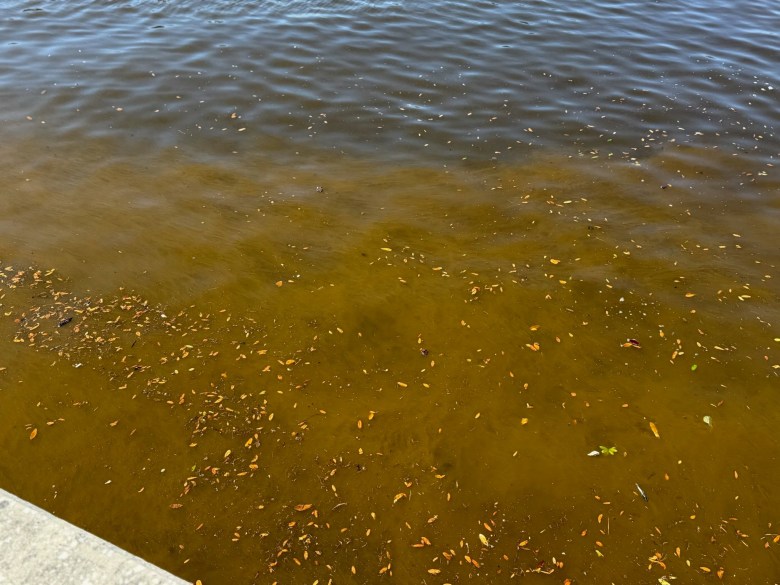 Sludge in the Hillsborough River following the 2025 River O’Green event in Tampa, Florida. Credit: c/o Dustin Pack
“It gets filled with trash. It gets filled with storm water. It gets filled with nutrients. It gets filled with green stuff, and then we’re treating it like a retention pond in a subdivision, not like a 27,000 year old body of water that we get our drinking water from,” Pack said.
The Downtown Partnership, which helps run the River O’Green Fest each year, referred CL to past statements about the practice saying “The dye is safe for the environment, non-toxic, biodegradable, meets all EPA standards, and is certified to comply with National Sanitation Foundation Standard 60. This is the same dye often used in eye surgeries, food, and water systems to trace the flow of drinking water.”
In a statement shared with FOX 13, Kenyetta Hairston Bridges, President & CEO of the Tampa Downtown Partnership, said “We’re thrilled once again to partner with the City of Tampa and Grow Financial to bring one of the region’s largest St. Patrick’s Day celebrations to life. This family-friendly event draws thousands of residents and visitors into Downtown, boosting support for our local small businesses and showcasing the vibrancy and energy that define our urban core.”
Aside from the dyeing of the river, the River O’ Green Fest includes a variety of other activities for guests to enjoy, including food trucks, live music and dance performances, and a parade.
“I just feel like it’s not necessary to dye the river,” said Pack. “Why do you have to do that to have a party?”
Pitch in to help make the Tampa Bay Journalism Project a success.
Subscribe to Creative Loafing newsletters.
Follow us: Google News | NewsBreak | Reddit | Instagram | Facebook | BlueSky
This article appears in Mar. 05 – 11, 2026.
Related