
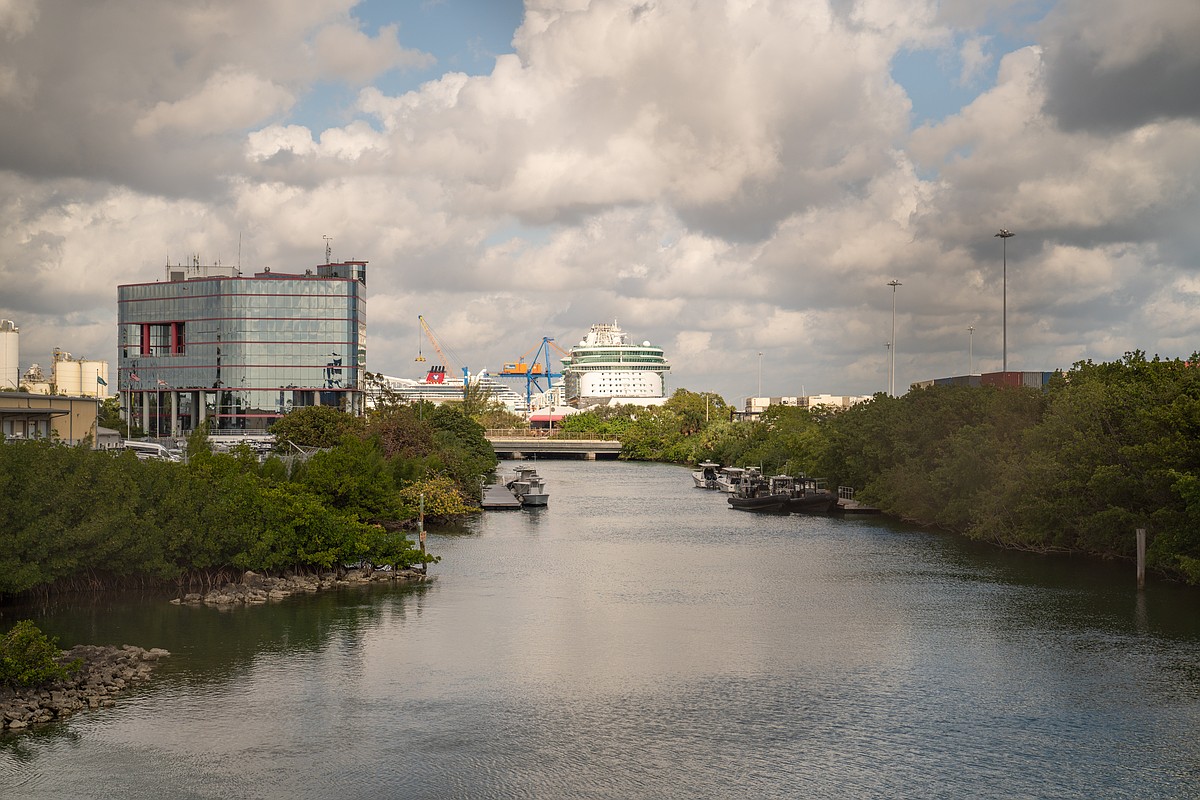
FORT LAUDERDALE, Fla. — Dive shop owner Bill Cole leaned back in his captain’s chair, raised the volume on the Margaritaville radio station and watched six trails of bubbles trickle up through clear blue water.
Fifteen feet beneath the surface, divers drifted through one of the last thriving coral reefs in Florida, spotting juvenile parrotfish and grunts darting between branches of staghorn coral that survived the catastrophic heat waves and disease outbreaks that have rendered their species all but extinct in the continental United States.
But soon, this refuge could also be wiped out — not by hot-tub water temperatures or the mysterious plague of stony coral tissue loss disease, but by the U.S. Army Corps of Engineers. Less than a mile away, the corps is planning to deepen and widen the shipping channel leading into Port Everglades, blasting through the reef line and dredging up sediment that could smother acres of surrounding coral, according to federal scientists.
If approved, “the project would result in the largest impact to coral reefs permitted in U.S. history,” Andy Strelcheck, the southeast regional administrator for the National Oceanic and Atmospheric Administration fisheries division, wrote in a letter to Army Corps officials last year.
A separate analysis from scientists at NOAA and the Shedd Aquarium found that authorizing the project “would constitute the largest impact in U.S. history to populations and critical habitat of Endangered Species Act (ESA) listed species.”
A similar dredging project at the Port of Miami in 2014 killed more than half a million corals, according to a 2019 study. At Port Everglades, more than 10 million corals could be in harm’s way, according to the NOAA and Shedd Aquarium scientists. Dolphins, sea turtles and one of the last mating populations of endangered queen conch in the U.S. could also be harmed.
“It’s not just concerning because it’s going to hurt my business,” said Cole, who has been a diving instructor in Fort Lauderdale for 46 years. “It’s going to hurt my business because it might kill the reef, too.”
Port officials say the project is necessary to make room for a new generation of the massive container ships and fuel tankers that underpin the regional economy and keep South Florida’s cars, trucks and planes full of gas, diesel and kerosene. A bigger channel would also create jobs, reduce prices and allow fully loaded ships to make fewer port calls and burn less fuel, they say, cutting pollution.
Plus, nearly half the project’s $1.35 billion budget would go toward protecting and restoring affected reefs, mangroves and sea grass beds by funding less-harmful dredging techniques, water-quality monitoring and new coral research facilities. It would also include a massive effort to rescue and replant threatened coral before dredging begins, according to Port Everglades Assistant Director David Anderton.
“The opportunity that we have here with coral propagation and nursery growth is a once-in-a-lifetime opportunity,” Anderton said. “There is going to be a significant amount of infrastructure that’s going to be constructed as part of this project, to the tune of hundreds of millions of dollars … and that infrastructure is going to remain in place after this project is done.”
The project — first proposed in 1996 — isreaching the end of a drawn-out environmental review. Environmental groups sued the Army Corps in 2016, alleging that the project would violate the National Environmental Policy Act and the Endangered Species Act. But now, NOAA is on the verge of finalizing a key environmental opinion that would pave the way for the project’s approval.
The Army Corps declined to comment for this article, citing the ongoing lawsuit. An agency spokesperson referred questions about the project to the Justice Department, which did not respond to a list of questions about the project’s environmental impact sent last month.
But environmentalists say the project is a destructive boondoggle.
“We’re talking about spending more than $1 billion in taxpayer money to kill some of the last staghorn corals in Florida,” said Rachel Silverstein, CEO of Miami Waterkeeper, an environmental nonprofit that sued the Army Corps over the Port Everglades project.
A FINAL REFUGE
Florida’s reef tract, the third-biggest barrier reef on Earth, runs about 350 miles from the Dry Tortugas at the bottom of the Florida Keys to the St. Lucie Inlet in Martin County. Once home to thriving populations of the state’s iconic staghorn and elkhorn corals, the ecosystem has been in steady decline for decades because of pollution, disease, invasive species, warming waters, and damage from boaters, divers and snorkelers.
Then came the outbreak of a wasting illness called stony coral tissue loss disease — which spread from the area near the Port of Miami around the time of its 2014 dredging project — and a record heat wave in 2023. Corals bleached and their population nose-dived, especially in the Keys, where water temperatures hit a Jacuzzi-like 101 degrees.
“When I started this career, the reef was already degraded, but we thought, ‘There are still some really cool spots,'” said Brian Walker, a research program director at Nova Southeastern University who works out of a campus at the mouth of Port Everglades. “Fast-forward 25 years, and damn — we’ve really seen it degrade even more.”
But some standout reefs remain, Walker said, “so we’re dedicated to try to protect them.”
Some of the densest surviving staghorn coral colonies are clustered around Fort Lauderdale and its busy shipping port, and coral in this area has been growing back after recovering from a disease outbreak a decade ago. Scientists aren’t sure why these particular populations are thriving, but they say they’d like to study them in the hope of breeding more resilient coral they can use to restore Florida’s reefs.
“We keep the corals alive, we save their genetic diversity for the future, and then when we have a better environment offshore here, they will be able to help kick-start the system back to something that everyone would flock to and love to see,” Walker said.
But the clock is ticking.
Dredging at Port Everglades would stir up the sediment and heavy metals at the bottom of the shipping channel, and they can drift with the current in miles-long plumes. Coral polyps can shed some of the debris that settles on them, but over time they get exhausted and eventually die. Walker recalls diving through cloudy water to check on the coral around the Port of Miami during its 2014 dredging.
“It just looked like milk. You couldn’t see past your arm,” he said.
At least 560,000 corals died within a third of a mile of the dredging, and more probably died as sediment drifted miles away, according to the 2019 study. Disease outbreaks have limited their recovery in the years since.
“The aftermath was one of the most depressing times of my career,” Walker said. “Things just kept dying.”
A CHOKED CHANNEL
On a sunny morning under cotton ball clouds, a gold-trimmed Disney cruise ship eased past a spit of mangrove trees. It pulled into Port Everglades, the world’s third-busiest cruise port.
A tourist strolling along its top deck looked out over rows of berths awaiting container ships and fuel tankers that supply virtually all the gasoline, diesel and jet fuel burned in South Florida. But the docks sat mostly empty: When a cruise ship is in the port, the latest generation of cargo ships are too big to squeeze through the narrow channel. They have to wait for the cruise ship to leave, then float in with less than a full load to avoid scraping the bottom of the channel.
Digging the channel up to 10 feet deeper and 300 feet wider in some places would add $550 million a year to the local economy, according to port officials. It’s an argument they’ve been making to push for expansion since 1996.
“Here we are sitting back in the late 1990s, and that’s not a place that we want to be forever,” said the port’s director, Joseph Morris. The project would “enable those larger, more efficient vessels to be deployed, reducing emissions, improving the flow of goods, and reducing costs at the stores and at the pumps.”
Congress authorized the project in 2016, but environmentalists, galled by the destruction of coral reefs at the Port of Miami, sued. The Army Corps is now reassessing the project’s environmental impact alongside scientists at NOAA’s fisheries program and the Florida Department of Environmental Protection, and coming up with a plan to limit the damage. NOAA is finalizing a key biological opinion that will determine how the Army Corps should protect the affected reefs.
“We recognize that something went wrong in Miami,” said Anderton, the assistant port director. But he said he wants the Port Everglades project to be the poster child for environmentally responsible dredging.
That means spending $614 million of the project’s $1.35 billion budget on environmental protections and changing the way dredge boats operate to dump less sediment on coral reefs, according to an August 2023 cost estimate provided by the port. The Army Corps is revising the cost estimate, port officials say.
The port has already planted acres of mangroves and sea grass and donated the land to the state of Florida to offset the habitat that would be destroyed during dredging. The corps plans to monitor water quality near the reefs and pause work if it gets too cloudy, and it will stop offshore dredging each year during coral spawning season from July to October. It has proposed replanting more than 1 million corals and funding the construction of land-based coral nurseries.
Andrew Baker, a coral scientist at the University of Miami, said a big burst of federal investment in coral restoration could benefit Florida’s reefs. But after seeing the damage at the Port of Miami, he’s not sure it will be enough to offset the corals lost to dredging.
“I worry that we’re likely to repeat the same mistakes,” he said.
A PLUME OF SEDIMENT
Bill Cole, the dive operator, fell in love with South Florida’s reefs in 1980. He has seen a 10-foot tiger shark glide past him “like a king holding court.” He has watched ships sink, sprout corals and transform from wrecks into reefs. And in almost half a century in the water off Fort Lauderdale, he has marveled at coral colonies that have grown even as reefs across Florida fade.
But he says he worries about whether the reefs — and his livelihood — could survive if dredging begins at Port Everglades.
In a potential sign of things to come, Broward County started work on an unrelated dredging project near Port Everglades in December. This project, designed to restore the natural flow of sand across the port channel, is smaller than the proposed channel expansion would be. But on one recent dive trip, Cole said, he saw a ghostly sediment plume from that small dredging project stretch two miles away to a healthy staghorn reef he has been visiting for decades.
“It made me sick to my stomach,” he said.
Scientists say they could rescue some corals and take them to onshore nurseries, or use them to seed new reefs that could protect other parts of the South Florida coastline from damaging waves and storm surge. Rebuilding Florida’s reefs could save $335 million a year, according to a 2025 study from the U.S. Geological Survey.
“Environmental restoration doesn’t have to be just damage repair,” said Baker. “It can actively create new habitats that are valuable and can be strategically placed … to preserve the economy and the environment at the same time.”
But that would represent just a fraction of the millions of corals in harm’s way near Port Everglades. Divers have to carefully chisel each coral from the seabed by hand and bring it to the surface, which takes a lot of time and labor. Even then, some relocated corals wind up dying.
“Coral relocation is really hard,” said Ross Cunning, a research biologist at the Shedd Aquarium in Chicago who studies South Florida’s reefs. “Most coral relocation efforts target hundreds, maybe thousands of coral. Anything more than that and you’re talking about years of effort.”
The corals left behind — about 9 in 10 of the current stock, even in the best-case scenario — would have to take their chances in cloudy water. Some coral colonies have formed over centuries and wouldn’t be able to bounce back quickly if they were wiped out, Walker said.
“Things theoretically could recover, but it could take hundreds, if not 1,000 years or so,” he said.
That means the public officials designing the dredging project have a stark choice to make, scientists say.
“This is an opportunity to decide: Do we want to be an example of doing everything we can to protect these ecosystems while accomplishing the goals of the project?” said Cunning. “Or do we want another example like the Port of Miami, where we had a catastrophic and preventable loss of our critical natural resources?”
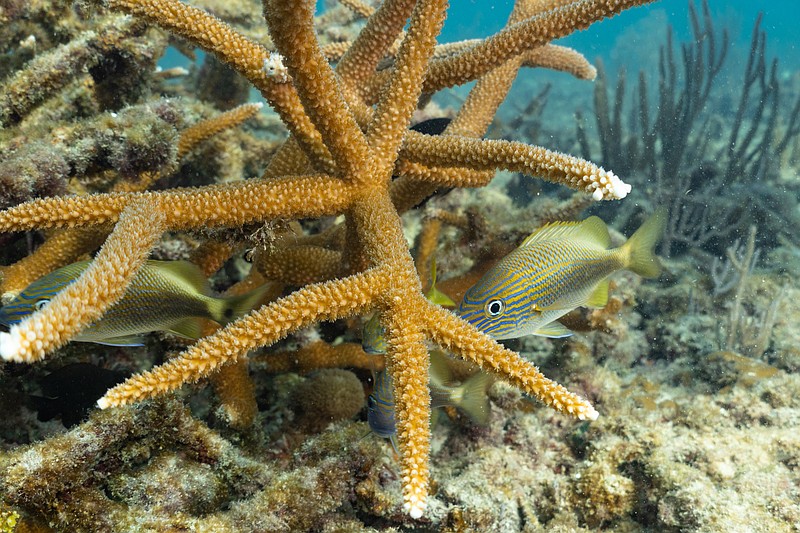
Fish explore staghorn coral. More than 10 million corals could be in harm’s way if the Port Everglades dredging is approved, scientists say.
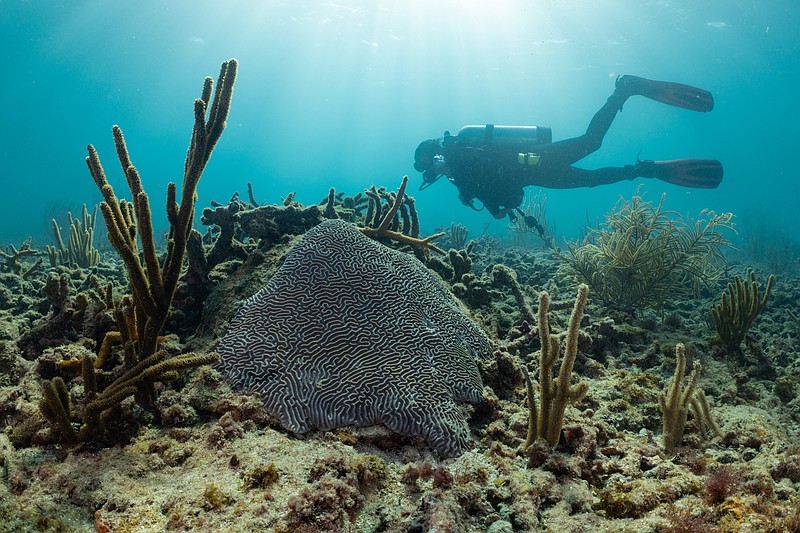
Rachel Silverstein of Miami Waterkeeper dives on a coral reef just outside Port Everglades.
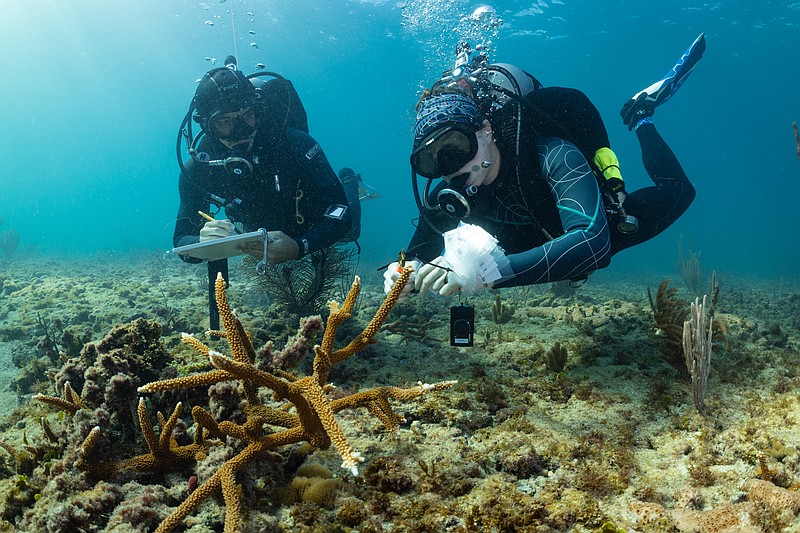
Fabrizio Lepiz Conejo and Julianna Kopp, members of the University of Miami Coral Reef Futures Lab, survey and sample coral.
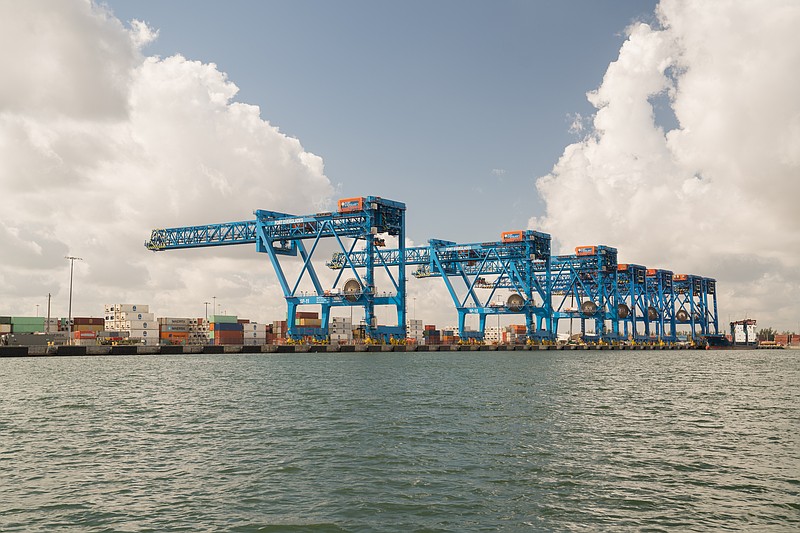
Newly built crane arms await a new generation of large container ships that would be able to enter Port Everglades more easily after the dredging.
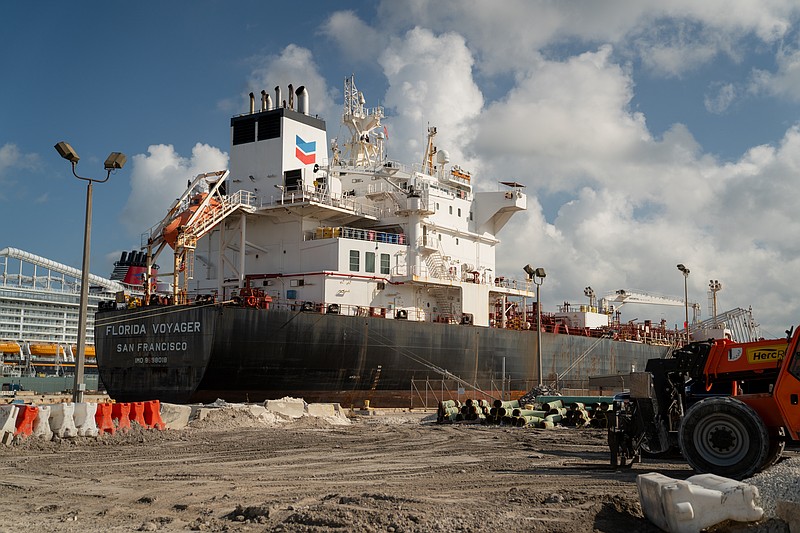
A Chevron fuel tanker at Port Everglades.
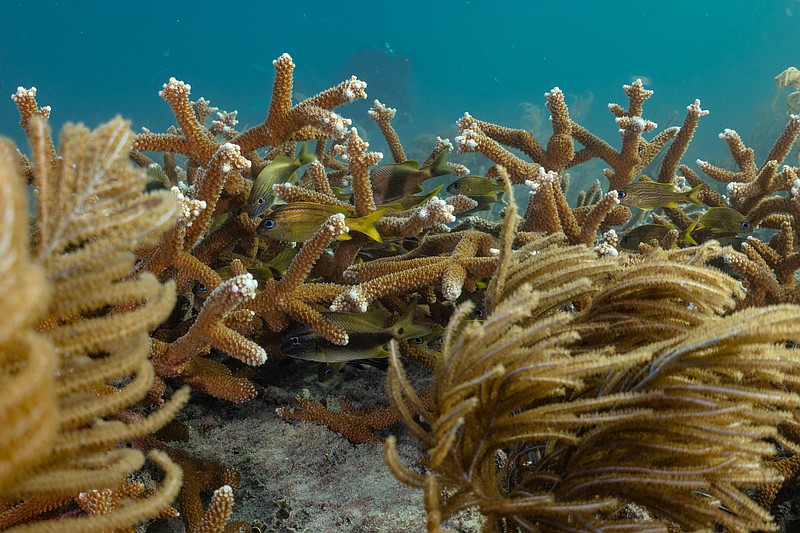
These are some of the last wild staghorn corals in Florida. They could be gravely impacted by dredging.
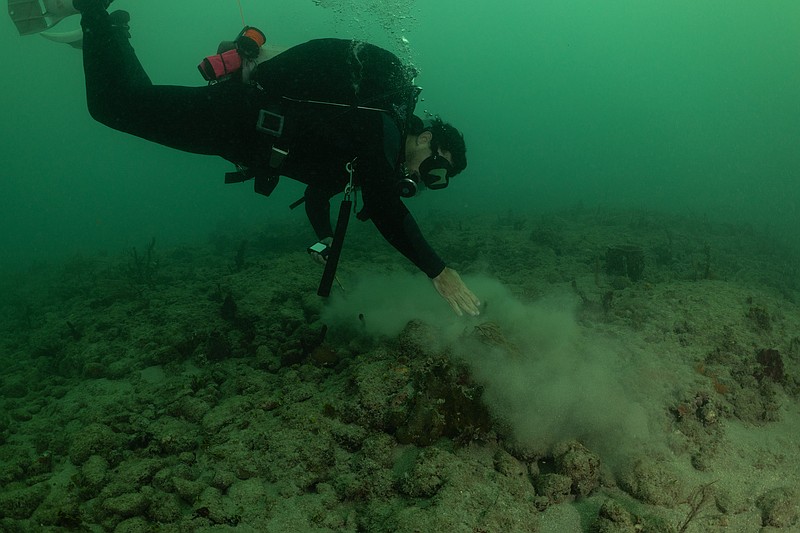
Fabrizio Lepiz Conejo of the University of Miami Coral Reef Futures Lab surveys sedimentation from an unrelated dredging project on a reef just outside Port Everglades.
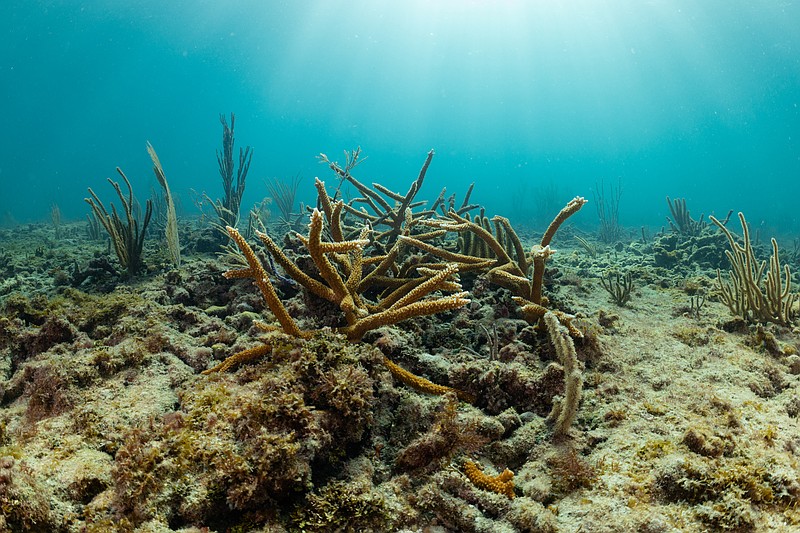
Endangered staghorn coral. Some colonies have formed over centuries.