
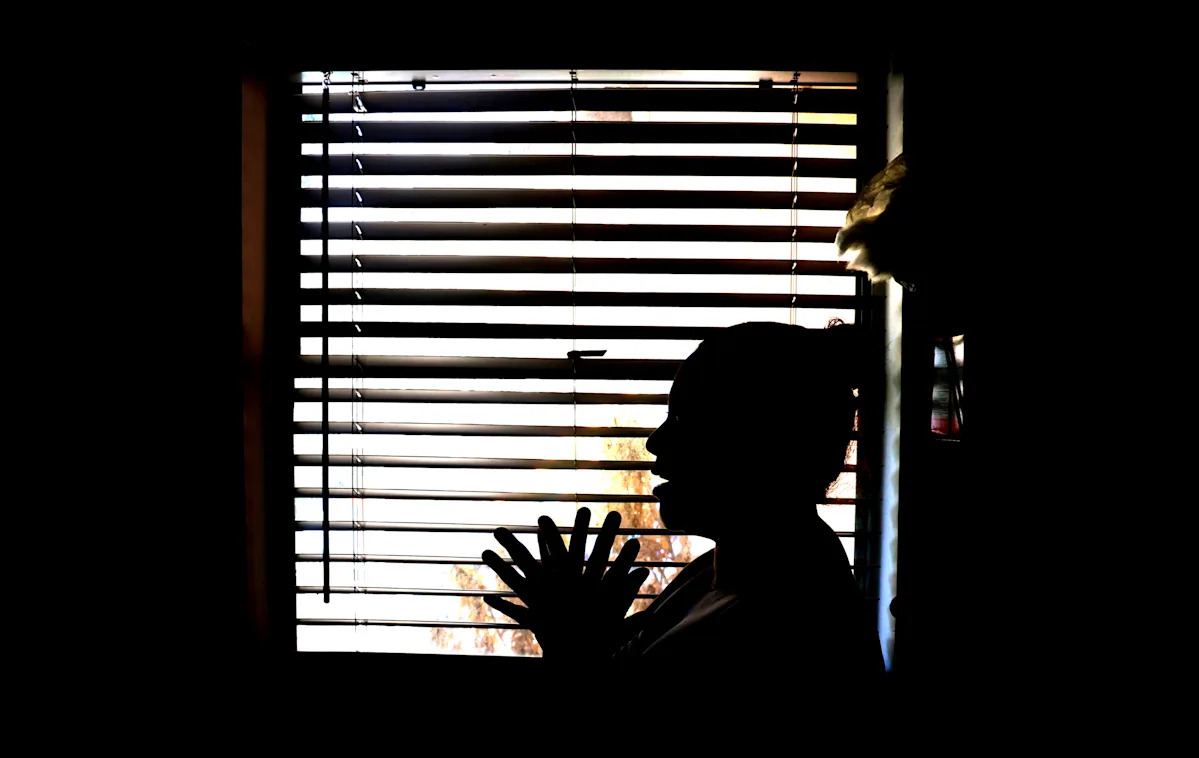
In early January, an Apopka mother heard reports of ICE raids near her daughter’s Orange County elementary school. Terrified, the immigrant from Honduras texted her five-year-old’s teacher.
The teacher messaged back: “Do what you think is better for you and your family.” And so she kept her daughter out of school for a week.
Since then, the kindergartner has missed another five days of school because her mother, who doesn’t have legal immigration status, worried getting her to and from campus might lead to an interaction with police and then detention. She has a two-year-old, too.
“I don’t want to be separated from my daughters… I don’t know what would become of me,” said Yessi, 28, who spoke in Spanish and asked to be identified only by her first name so as not to draw the attention of U.S Immigration and Customs Enforcement.
Children from immigrant families across Central Florida are now in the same spot as Yessi’s daughter, often missing school because their parents feel home is a safer option given the Trump administration’s immigration crackdown.
Other students have simply left, as families have been detained, deported or decided to move away.
Statewide, school enrollment is expected to be down by about 46,000 students this year. State demographers, in a January report, blamed the “chilling effects” of President Donald Trump’s immigration policies as a leading cause for the plunge.
There are no specific estimates for how many immigrant students have left Florida’s public schools, and the wider availability of state-paid vouchers to cover private school tuition and lower birth rates also have contributed to the overall enrollment decline. But the number of students statewide taking English for Speakers of Other Languages classes has dropped by more than 17,000 this year, according to the report by Florida’s Office of Economic and Demographic Research, in perhaps a more precise measure of immigrant exits.
In Orange County, school district officials acknowledged the loss of immigrant students has contributed to a steep enrollment decline and plans to shutter seven schools this summer. As an example, they said about 1,200 Venezuelan youngsters have left their public schools this academic year.
Missing weeks of school
For immigrant children who remain enrolled, the risk of academic failure is increasing as absences pile up, undermining the dream of an American education that was often a key reason their parents came to the United States.
One mother from Venezuela, who spoke in Spanish and asked that her name not be used, said her daughter has missed about two weeks of school so far this year because the family feared ICE enforcement was taking place near the campus of Renaissance Charter School at Goldenrod in east Orange.
The daughter, an eighth grader at the school who is usually a straight-A student, received one D on her last report card.
“All you have to do is study and get good grades to get scholarships,” the mother recalled telling her daughter. “And she told me ‘For what, Mom? If these people want us out.’”
The mother, who is seeking asylum in the U.S., said she has altered her family’s daily routines to limit the risk of encountering immigration agents — even paying another parent who is a citizen $100 a week to drive her daughter to and from school.
She also pulled her daughter out of extracurriculars, such as sports and music rehearsals, because getting her home would mean driving, and the accompanying risk of being stopped by law enforcement and detained.
“How do the kids feel? Frustrated, terrorized,” the mother said.
Thomas Kennedy, a policy analyst and consultant with the Florida Immigrant Coalition, said immigrants’ fears related to school make sense based on the Trump administration’s and Florida’s actions.
In Florida, all law enforcement agencies in the state are now required to enforce federal immigration laws, and it’s made driving even more risky for immigrants without legal status, some of whom cannot get licenses in Florida and many states.
The Trump administration revoked a Biden-era policy prohibiting immigration enforcement operations in protected areas, including school campuses, making some immigrants fearful they could be detained when they drop off or pick up their children.
ICE’s actions in Chicago and Minnesota were broadcast widely, and those “aggressive enforcement practices” likely tie into student absences and departures, Kennedy said.
“The rhetoric speaks for itself … The climate speaks for itself. It’s causing obvious fear,” he added.
Since the COVID-19 pandemic, Florida’s public schools have struggled with high student absenteeism and sought ways to encourage youngsters to make school a priority again, knowing lots of absences correlate with poor grades and lower standardized test scores.
Now, immigration enforcement is working against those efforts.
Even if students are in class, their families’ fear can still impact their studies, as some struggle to focus on school work when they don’t know for certain if their parents will be there when they get home.
“This is disruptive to the school environment,” said Sophia Rodriguez, a professor of educational policy and sociology at New York University, who is conducting a national study on teachers’ perspective of the immigration crackdown. “I’ve had educators tell me that kids are terrified. They’re coming to school crying.”
As engagement in school decreases, educational access and social mobility will be impacted, too, Rodriguez said.
Another Venezuelan mother awaiting a decision on her asylum case spoke about her nine-year-old daughter’s school struggles after a recent appointment at an ICE office in Orlando.
The woman, who also spoke in Spanish and asked not to be named, said it is hard for her child to focus in class. She thinks immigration worries led to her daughter’s poor performance on FAST, the state’s standardized exam.
But the woman, who came to the U.S. in 2021, said school is now less important than avoiding detention. She places a tracker in her daughter’s shoe every day and checks social media to see if there’s police near her home or the school.
“If I were to have any suspicions about her being in danger because of raids by the school, she’s not going anymore,” she said.
‘Core part of the American dream’
Maria Salamanca, the vice chair of the Orange County School Board, understands why some immigrant parents are hesitant to send their children to school.
In 1999, when she was in first grade, Salamanca came to the U.S. with her family from Colombia. Throughout her school years, her parents warned her never to talk about their immigration status to anyone.
“I did not feel like any future was guaranteed for me from when I came in 1999 all the way till I became a citizen. I never took any days for granted,” she said.
But Salamanca credits OCPS teachers with guiding her to academic success after she arrived in Orlando as a 7-year-old who knew no English. She landed at the University of California, Berkeley, she has said, because of her public education.
And she is saddened that one of the schools she attended — McCoy Elementary School — is among the seven slated to be closed because enrollment has plummeted.
Her message to other immigrant families is to remember that education is a key reason many came to this country. Immigrant families need to “balance their concerns with the reasons why they’re here,” Salamanca said.
“If you take one core part of that American dream away, which is education, then that’s not what you came here for,” she said.
Yessi, the mother who came from Honduras in 2021, said her daughter’s education is important but not the family’s top concern now.
And if the girls’ father, also a Honduran national, were to be detained, Yessi said she’ll go back to Honduras with her children, even though the younger one is a U.S. citizen, with her oldest leaving another empty spot in public school.
Her partner is the sole breadwinner for the family as he has a work permit, and without him, Yessi said, the family’s dreams would be “on hold.” For now, their lives are dictated by their worries.
All police officers make Yessi anxious, even the one at her daughter’s school, though she knows school resource officers are stationed there to keep children safe. “When I see a cop I get nervous but I just pretend I didn’t see them,” she said.
If she doesn’t send her daughter to school, Yessi makes up excuses. “I tell her that there’s no school or that we have an emergency or that I feel sick, things like that. She’s barely five and she won’t understand,” she said.
Her daughter is usually so excited to go back that she spends the whole day talking to her friends during class, Yessi said. The kindergartner dreams of becoming a police officer, a doctor or maybe a firefighter.
“When I see that my daughter has dreams like that, I feel like I want to fix it but I don’t know what to do,” Yessi said. “Even though I’m scared, sometimes I wanna leave, but sometimes I want to keep fighting,” she added.