
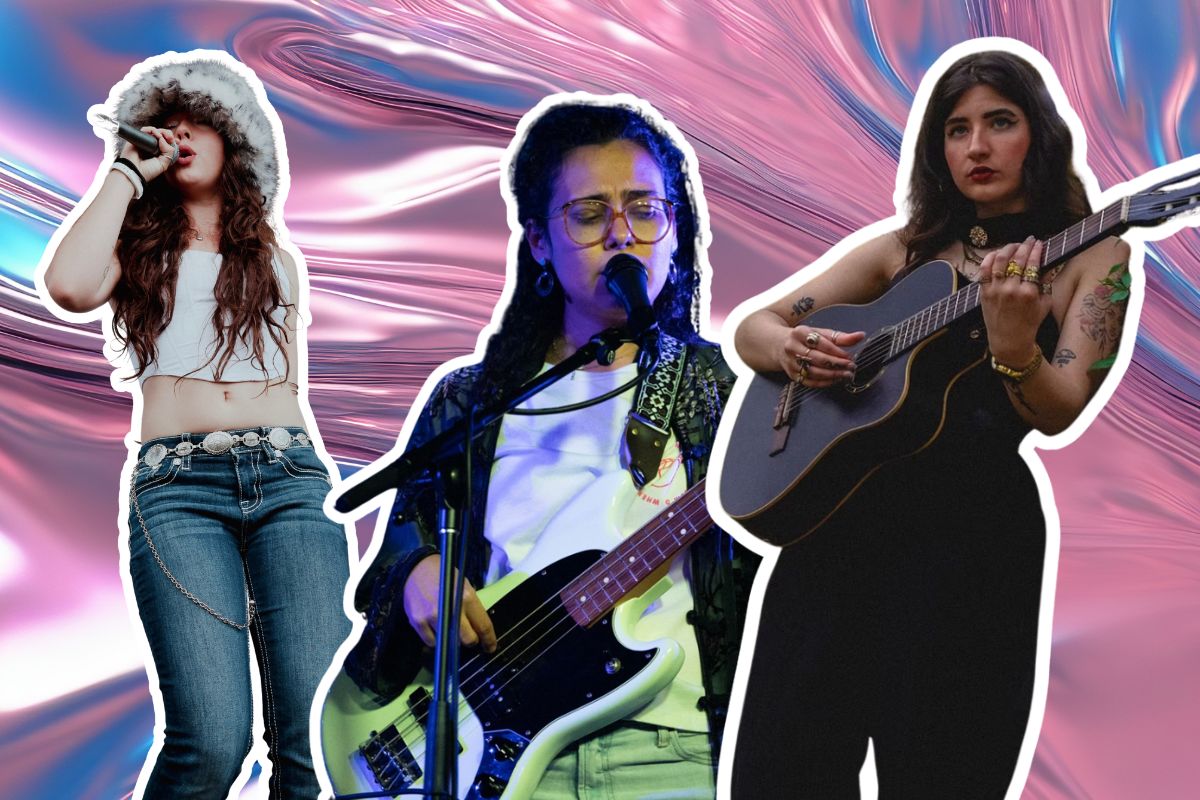
From left to right: Maeve McMahon, Ana Paz, and Melvys.
New Times collage. Maeve McMahon photo by Meghan Tinelli, Ana Paz photo by Ashlyn Mckibben, Melvys photo by Wallflwr Media.
One of the hallmarks of the 21st century is the way in which women have been gaining ground in male-dominated industries. Despite having historically shaped music in the US, women remain largely marginalized across genres, comprising only about 20-30% of artists in recent charts. A 2025 report by the USC Annenberg Inclusion Initiative found that women accounted for only about 19% of songwriters and 3% of producers on popular tracks.
“There has been this movement of bringing more female artists to the forefront,” says indie-alternative songwriter and vocalist Ana Paz in conversation with New Times. “But there’s also something about it that can sometimes feel performative.”
Why Women Remain Underrepresented in the Music Industry
Across multiple reports, women in the industry cite fewer female role models, a plethora of male-dominated labels, and a widespread lack of recognition. Gendered expectations warp the prevalence of women in the award circuit, a systemic issue that draws back to skewed power dynamics in the industry.
“The older I get, the more I realize just how uncomfortable and overwhelmed I felt for so many years, with just a lot of self-imposed expectations or what I understood to be expectations from my teachers, mentors, or peers,” says Paz.
Paz’s first EP, Surrender (2025), wrestles with the ideas of loss, grief, and memory with dreamy vocals and lush textures. An emotionally intelligent and deeply felt record, Paz displays a mastery of her craft that extends beyond theory as she seeks collaborations that prioritize depth of musicianship over identity.
In a similar way, Melvys – whose jazz vocals blend seamlessly with her multi-instrumentalism – hopes to see the music industry place greater value on ability than presentation. As an occasional solo artist, Melvys remains perpetually conscious of her appearance, having been heckled at various gigs for the way she looked.
“I like to dress feminine and cute, but I also have a hard, masculine line that I draw with my clothes,” she says. “I feel more free to wear the feminine, dressy clothes when I have a band of people with me. But if the gig is solo, I really am mindful of how people perceive me.”
Her most recent single, Cuerpo (2023), combines her jazz expertise and a more R&B soulfulness. With a melodic cadence that bridges the gap between concept and sound, this intimate look into her thoughts sounds both achingly human and effortlessly graceful, despite the challenges she faces in the industry.
“Part of what makes you last is that you have to be tough,” says Melvys. “I had to get tough.”
This sentiment reflects across genres. Maeve McMahon is a singer, songwriter, and performer whose sound blends pop, country, and rock. Her debut EP, Traffic Lights (2025), conveys tension, transition, and expectation in a raw reclamation of the simple melody and lyric.
“I think women are going to have a lot more opportunities as the music industry grows,” said McMahon. “I think the best thing that a woman can do as an artist is to use her voice and stand up for herself. It’s about knowing your worth, and then just keeping a positive mindset–not letting people’s judgments define you.”
Despite the persistent issues, change lingers just ahead. While progress for women on popular charts has stalled since 2024, every song presents an opportunity for inclusion. At a local level, artists are already beginning to see advancement.
“The industry has changed for women,” says Paz. “I do recognize how many more women I see than ever. The older I get, the more women I see of all ages. It just keeps growing, growing, growing, and these are great signs. That shift is what continues to motivate me.”