
In their recently-released “2025 Accomplishments Report,” Pinellas County commissioners explained, in detail, how local government spent last year balancing hurricane recovery with ongoing infrastructure, housing and economic initiatives across the county.
The aftermath of Hurricanes Helene and Milton defined much of the county’s priorities: nearly 47,000 homes and more than 1,200 businesses in Pinellas County were impacted. In response, officials focused on accelerating rebuilding efforts while securing outside funding to support long-term recovery.
Among the most significant milestones was the county securing $813.8 million in federal housing recovery funding through the U.S. Department of Housing and Urban Development. County officials also shortened the typical timeline for launching resident aid programs, opening applications in about seven months.
The county issued more than 34,000 permits and completed roughly 85,000 inspections tied to hurricane recovery.
Pinellas also worked with its municipalities to establish a disaster staffing contract that would allow cities to temporarily add inspectors, permitting staff and other personnel after major storms.
Beaches rebuilt, tourism rebounds
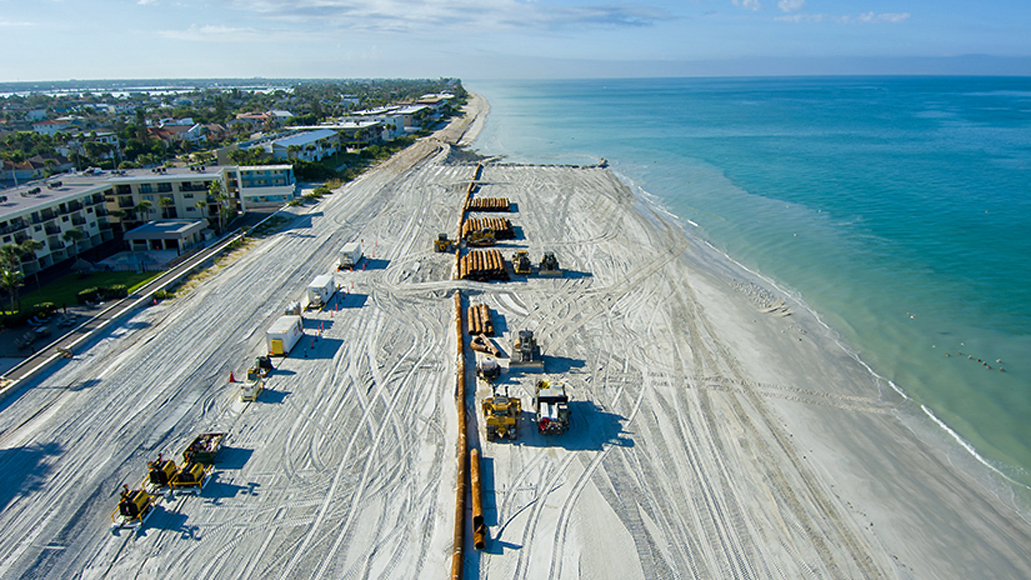
Storm surge severely eroded large stretches of Pinellas beaches, prompting one of the county’s largest beach nourishment efforts in recent history, spearheaded by Pinellas County Commissioner Kathleen Peters.
Crews moved roughly 2.5 million cubic yards of sand onto beaches from Clearwater to St. Petersburg to restore storm protection and rebuild the shoreline. The project was funded through the county’s tourist development tax.
The county reported nearly 15 million visitors in 2025, generating an estimated $10 billion in economic activity and supporting roughly 100,000 jobs across the region.
Infrastructure work continues
Crews resurfaced nearly 225 miles of roadways and repaired approximately 550 potholes, most within three days of being reported. In Lealman, more than five miles of sidewalks were replaced with ADA-compliant paths and improved drainage intended to reduce flooding and improve pedestrian safety.
The county continued installing digital water meters that allow customers to track water use and receive leak alerts. Wastewater improvements began in several manufactured home communities to reduce sewer strain and flooding risks.
Environmental work included habitat restoration and water quality projects. The county installed nearly 10,000 oyster reef modules designed to filter waterways and support marine ecosystems. Tree-planting initiatives also expanded canopy coverage in parks and neighborhoods.
Housing and public safety investments
The county reported preserving or creating more than 1,400 affordable and workforce housing units while providing emergency housing assistance to nearly 300 households at risk of eviction or homelessness.
A seven-year effort to strengthen the county’s emergency radio towers against Category 5 hurricanes was completed, helping ensure communications between dispatchers and first responders during major disasters.
Funding was also allocated for three new fire stations in Clearwater, Largo and Palm Harbor to improve coverage and reduce response times.
Economic development and travel
County programs reported supporting more than 1,600 jobs tied to about $122 million in capital investment through business retention and expansion efforts. Consulting programs for small businesses reached roughly 600 owners, supporting nearly 2,000 local jobs.
Travel activity continued to grow as well. St. Pete-Clearwater International Airport served nearly 2.8 million passengers in 2025, setting a new record for the facility.
Parks, environment and quality of life
Several recreation and environmental projects also moved forward, such as the opening of the Lake Tarpon Outfall Canal Bridge completed the northern segment of the Pinellas Trail Loop, creating 65 miles of continuous trail for cyclists and pedestrians.
New playgrounds were installed at several parks, while boardwalks and fishing piers were renovated at locations including Weedon Island Preserve and A.L. Anderson Park.