
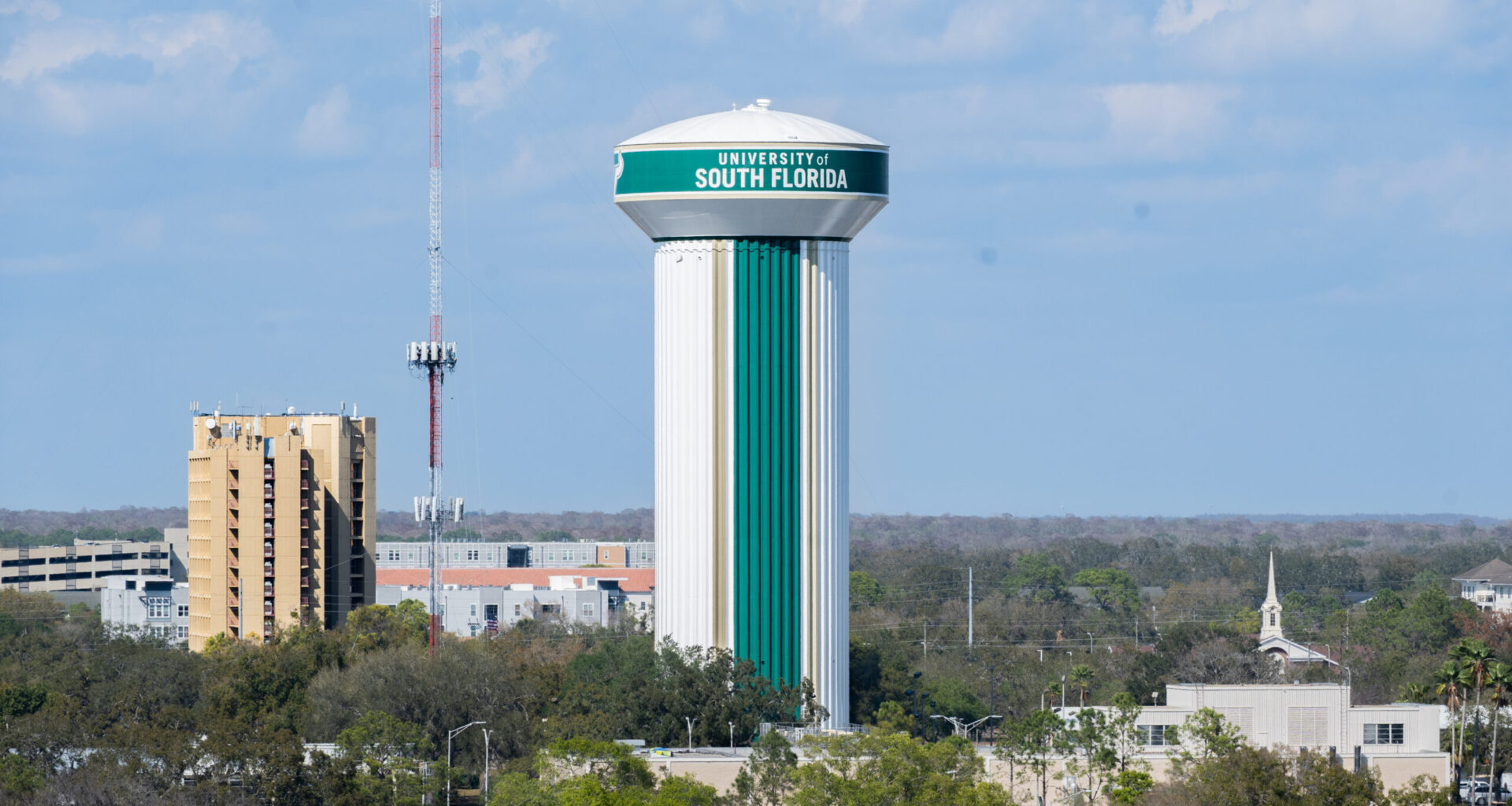
 USF will invest the $14 million to improve research and student success initiatives across the university. ORACLE PHOTO/DYLAN SABOL
USF will invest in seven projects across its campuses after receiving more than $14 million in federal funding approved as part of a federal spending package announced Feb. 12.
The funding was secured through the Federal Community Project Funding process, which allows members of Congress to request federal dollars for projects that benefit their districts, according to USF Newsroom.
The $14 million will be spent on initiatives for artificial intelligence, cybersecurity, biomedical research, hurricane forecasting and student support services, according to USF Newsroom.
USF spokesperson Althea Johnson said the projects were identified in collaboration with federal representatives based on their regional and statewide impact.
“USF works with the Tampa Bay region’s members of Congress to determine the projects that would be the most beneficial to the region, state and nation,” Johnson said.
Johnson said that while the university submits proposals, the U.S. House Appropriations Committee determines the funds allocated to each project.
Still, Johnson said each project selected for funding aligns with USF’s broader strategic goals, and is expected to make a measurable impact across research, workforce preparation and community engagement.
USF professors and researchers said the projects are designed to strengthen workforce development, expand research infrastructure and improve regional resilience.
Related: USF community concerned Fletcher District could impact Forest Preserve
One of the seven initiatives allocates $1.5 million to enhance hurricane, storm surge and algae bloom forecasting through oceanographic instruments and sensor upgrades, according to USF Newsroom.
Yonggang Liu, the director of the Ocean Circulation Lab at USF’s College of Marine Science, said this funding will be used to add a new buoy to the West Florida Shelf.
A buoy is a floating ocean monitoring station that collects real-time meteorological and oceanographic data, including wind speed, air pressure, water temperature and ocean currents, according to Marine Fenders.
Liu said these systems help scientists track and measure ocean conditions that satellites cannot detect, which in turn helps improve hurricane and storm-surge forecasting models.
He added that the $1.5 million investment could directly impact Florida coastal communities by improving emergency forecasting and providing emergency teams and residents with more accurate information ahead of major storms.
Still, he said this infrastructure requires long-term commitment and stable funding to foster more consistent reports for coastal ocean observing systems.
“This one-time funding — a large amount — is great,” Liu said. “[But] our work needs to be supported more stably, more consistently over the years, not just one time.”
Related: USF sets 20-hour work cap for Student Government positions
Although some of the multimillion-dollar funding will support scientific research and coastal forecasting, another of the seven projects focuses on expanding student workforce preparation across USF.
A $3 million initiative will fund the construction of a new Veterans, Military Families and First Responders Complex on the USF St. Pete campus.
The project will help expand services for student veterans and military-connected students, according to USF Newsroom.
The initiative will also support new facilities on the Tampa campus that serve veterans, ROTC students and first responders, according to USF Newsroom.
Renee Amboy, the interim director of USF’s Office of Veteran Success, said the St. Pete complex will serve as a space for military-connected students to access support services and build a community.
“[It will] create a centralized hub where military-connected students and first responders can access academic support, career resources and community in one location,” Amboy said.
Amboy said having services available in one place makes it easier for new students to find support and adjust to university life.
“This space will bring together services designed to support their transition into higher education and ultimately into the workforce,” she said.
The complex will offer tailored services for academic advising, tutoring, peer mentoring and career development to help veterans and military-connected students transition to academic life.
“For many veterans, the transition from military service to college can feel like moving between two very different worlds, and spaces like this help us build the community, connections and trust that are essential to student success,” Amboy said.
Beyond support and academic resources, Amboy said the long-term goal of the initiative is to improve engagement, retention and career outcomes for military-connected students across USF.
“If we see increased engagement among military-connected students, stronger retention and graduation rates and more veterans successfully transitioning into meaningful careers, that would indicate the initiative is making a meaningful difference,” she said.