
Broward County taxpayers deserve a clear and transparent explanation regarding commissions collected by the Broward County Tax Collector’s Office on school district property.
The biggest misconception is that the commission at issue was created, imposed or newly introduced by the Tax Collector’s Office. It was not. The commission was established under Florida law in 1971. State statute provides that tax collectors are entitled to a commission on all real and tangible personal property taxes collected and remitted. This applies to school district ad valorem taxes, including voter-approved millage. Broward residents may not have known it, but this is the system that has been in place for 55 years.
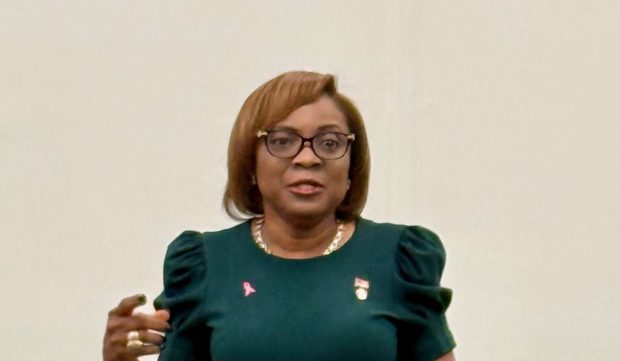 Abbey Ajayi is the Broward County tax collector. (courtesy, Abbey Ajayi)
The Tax Collector’s Office does not have discretion to waive, alter or selectively apply this commission. We are administering the law as written.
Each year, our office collects $2 billion (to date) on behalf of the Broward County School Board. That work requires professional staff, secure systems, compliance oversight, customer service operations and daily financial management. The statutory commission exists to offset the real and ongoing costs of these collection efforts. It ensures that the burden of tax collection does not fall directly on county taxpayers or require additional appropriations.
There’s also some confusion stemming from recent structural changes in Broward County government. Until the August 2024 election, there was no independent Broward County Tax Collector’s Office. Rather, tax collection functions were handled within the county’s internal structure. Associated costs were absorbed within broader budgets, so the statutory commission was not as visible as it is today.
When the tax collector became a separate constitutional office, transparency increased. The statutory framework did not change, but its visibility did. To reiterate, what some critics think is a “new charge” is, in reality, the implementation of an existing legal structure that has long governed tax collection in Florida.
The statute also assigns responsibility for payment of certain commissions to specific governmental entities. That language addresses which entity is responsible for payment — not whether the commission applies. There is no exemption for voter-approved school millage, and the applicable state authorities have affirmed that commissions apply to school board voted debt.
We know public funds are precious, particularly when they support our schools. That is precisely why clarity matters, so let me be clear: This is not a policy decision, a new revenue enhancement effort, or a discretionary action. It is the lawful administration of state statutes.
Our office remains committed to open dialogue with the School Board and all Broward County entities. As an organization just over a year old, we welcome questions and are prepared to provide clarification at any time. Transparency, accountability and reliable public service remain at the core of our mission.
The residents of Broward County deserve an efficient, professional and lawful tax collection system. The new Broward County Tax Collector’s Office is proud to fulfill that responsibility every day.
Abbey Ajayi is the Broward County tax collector.