
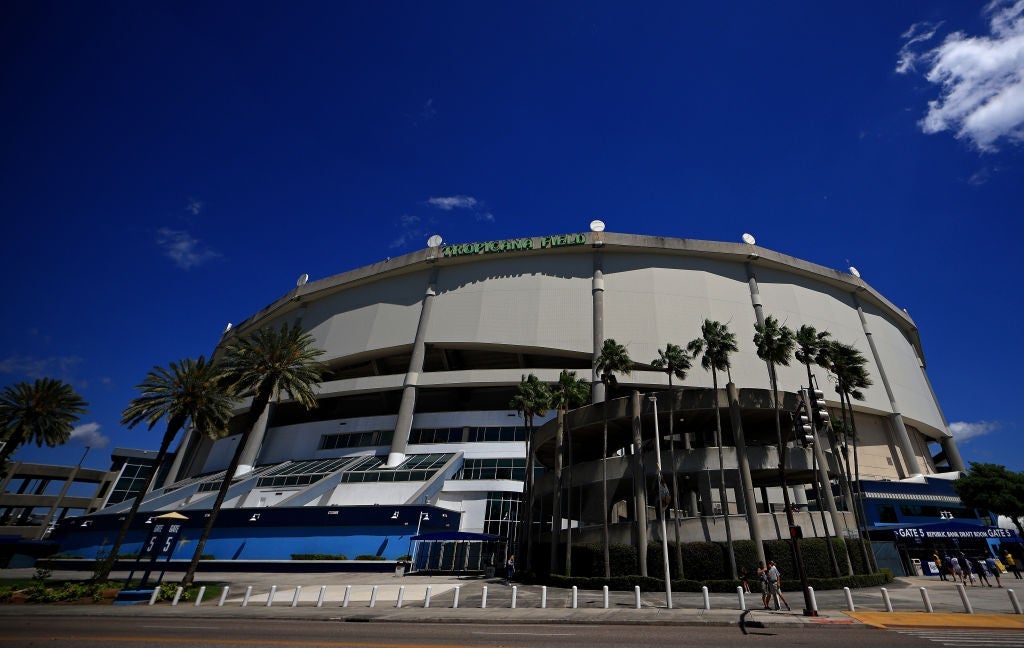
The St. Petersburg City Council greenlit $378,896 last week for archaeological digs. The goal is to confirm graves from an old cemetery in a parking lot across from Tropicana Field. Work starts after the 2026 baseball season wraps up in September or October.
Stantec Consulting Services will dig up potential grave sites, sift through excavated material, and document any remains they find. Ground-penetrating radar detected seven possible burials last year, plus three additional areas of interest. That brings the count to 10 possible graves in the lot.
Oaklawn Cemetery stood on the site between 1906 and 1926. Known remains were dug up and moved to other city graveyards when construction started on the Royal Court Apartments in 1949.
The process is called “ground-truthing.” It involves careful digs to confirm what lies underground. Within 90 days of field work and lab analysis, the company will provide a report to the city, stakeholders, and the Florida State Historic Preservation Officer.
Oaklawn was a white cemetery. It sat next to two other cemeteries with African American burials. Evergreen and Moffett cemeteries were established on land that now sits under I-175 across from the ballpark.
Councilman Corey Givens Jr. said he hopes the same care will be given to Evergreen and Moffett. “True equity, I think, will be doing the same thing that we did at Oaklawn — doing ground-penetrating radar on Evergreen Cemetery in Moffett Cemetery to find out if there is still, in fact, individuals buried underneath those cemeteries,” said Givens Jr, according. to WTSP.com.
Records show those buried in these two cemeteries were supposed to be moved to Lincoln Cemetery in Gulfport. There are no available records that show that transfer was completed.
FDOT owns part of the land that made up the footprint of Evergreen and Moffett. The agency has told 10 Investigates multiple times it has no plans to search for the graves.
The 10-acre Oaklawn cemetery closed in 1926. The St. Petersburg Housing Authority bought the complex in 1966 and renamed it Laurel Park before it was demolished in the 1980s to make way for the stadium.