
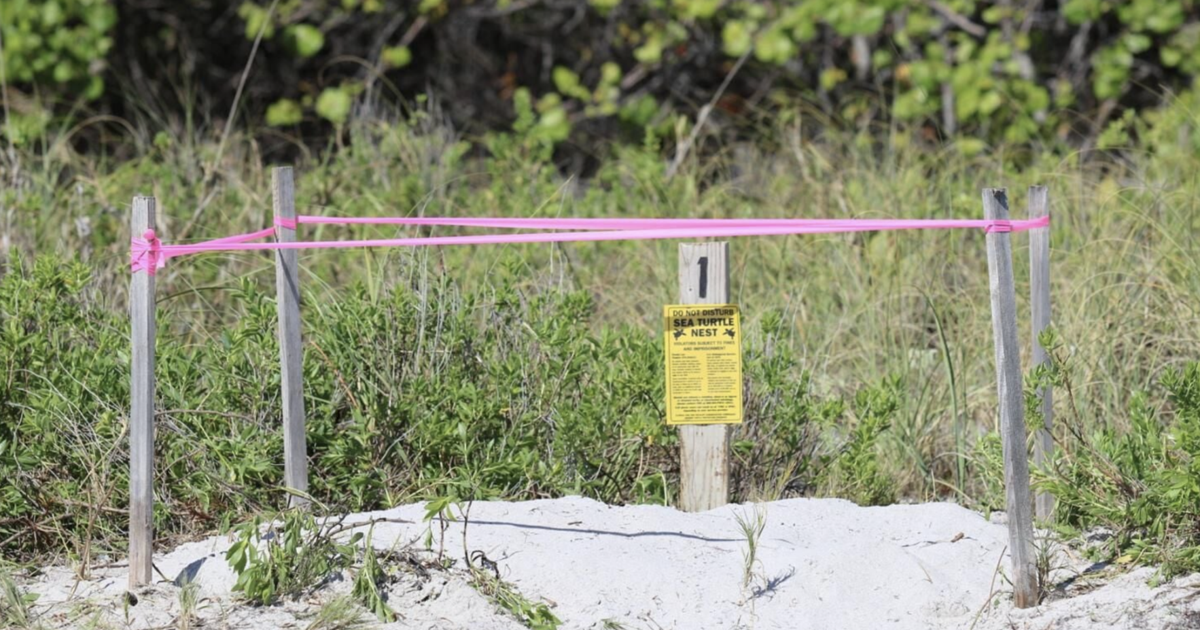
Sea turtle nesting season is underway along the beaches of Key Biscayne and throughout Miami-Dade County, a time when residents and visitors are urged to take extra care to protect nesting turtles and their hatchlings in high-traffic coastal areas.
One of those areas is Bill Baggs Cape Florida State Park on Key Biscayne, where people can enjoy local beaches and parks without disturbing sea turtles and hatchlings.
Sea turtle nesting season in Key Biscayne and South Florida beaches runs from March 1 through Oct. 31, although nesting activity can sometimes begin earlier in the spring.
Miami-Dade County Commissioner Raquel Regalado, whose District 7 includes the state park in Key Biscayne, is hosting a Zoom Webinar at noon, on Wednesday, March 11, to help people learn about sea turtle species that nest along the coastline.
The special educational session in partnership with Miami-Dade County Parks on Sea Turtle Nesting Season in Miami-Dade County.
Participants will review past nesting patterns and trends and learn how residents and visitors can help protect sea turtles year-round.
“Join us to better understand the important conservation work taking place on our beaches and how you can play a role in protecting these remarkable marine animals,” Regalado said.
According to the Florida Department of Environmental Protection, many of the 100 miles of beaches protected by Florida State Parks provide nesting habitat for sea turtles.
At major nesting sites along the beaches, park staff and volunteers locate turtle crawls on park property and monitor signs of turtle movement in the sand to help gauge nesting activity in certain areas.
Scientists and volunteers record the crawl locations and, when possible, identify the species and check whether the crawl resulted in a nest
Many factors work against endangered turtle populations, including loss of nesting habitat.
Hatchlings, which use moonlight to navigate from the nest to the shore, can be misled by artificial lights and baby turtles are small and vulnerable to predators on land and at sea.
Florida Park Service biologist Scott Tedford researches and protects nesting sea turtles at state parks in South Florida and the Florida Keys.
Tedford says there are simple steps that everyone can take to share Florida’s beaches with sea turtles and hatchlings.
“Give nesting adults and their hatchlings space and take care not to disturb them, turn off artificial lighting near beaches at night during nesting season, and properly dispose of food items and debris like fishing line, netting and plastics to decrease predation from wildlife,” he said. “Also, participate in beach cleanup events and avoid buying items derived from sea turtles.”
Bill Baggs Cape Florida State Park averages 90-100 turtle nests per person. To protect the nests and hatchlings, natural dark beaches at the park are closed to visitors between sunset and sunrise, according to the Village of Key Biscayne 2022 Turtle Nest Adoption program.
This restriction helps reduce disturbances and light pollution, which can disorient hatchlings toward the ocean.
The park also works with the Friends of Cape Florida, Inc. to fund conservation programs, including beach patrols, nest monitoring, and signage.
To participate in the Zoom webinar on protecting sea turtles and nesting habitats in Miami-Dade County and Key Biscayne, residents can register at Webinar Registration – Zoom