
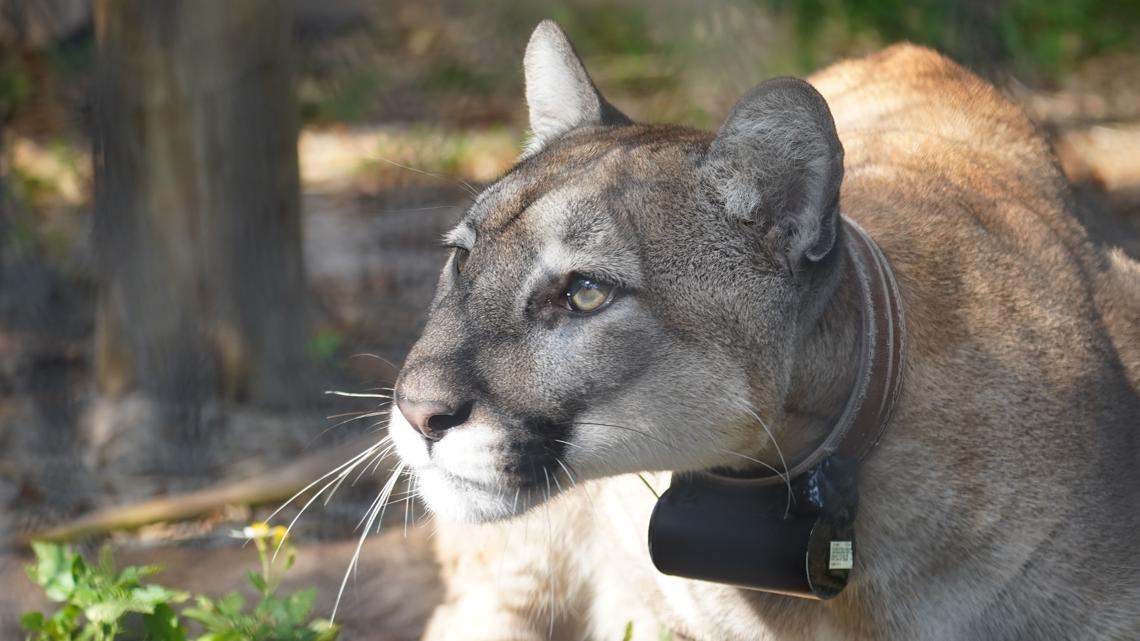
Loper, an injured Florida panther, now calls ZooTampa home after a life-saving rescue and surgery. The big cat will become a conservation ambassador.
TAMPA, Fla. — ZooTampa at Lowry Park has a new permanent resident: Loper, a Florida panther who will be, for the time being, in rehabilitation while he heals.
Staff at the zoo said in a statement on Monday that the panther will be a conservation ambassador at its new home, adding that the big cat was injured when a car hit him.
ZooTampa notes that the incident and rescue of the animal is a “powerful” example of statewide collaboration to protect the iconic Florida panther, which is currently an endangered species.
According to ZooTampa, there are only an estimated 120-230 Florida panthers in the wild, so each one is crucial to the species’ survival.
Zoo staff reported that in 2024, more than 30 panthers died, marking the highest death toll since 2016. They stated that the primary cause of death for the Florida panther is car collisions.
Loper is a young male panther. According to the zoo, last July, he was hit by a car.
The Florida Fish and Wildlife Conservation Commission coordinated an emergency response, which led to the big cat having surgery at BluePearl Specialty and Emergency Pet Hospital in Fort Myers. There, veterinarians treated fractures, according to staff in the zoo.
“Following initial assessment and stabilization, the panther was found to have sustained a right radius and ulna fracture as well as some minor lacerations. We were able to stabilize both bones with plates and screws to repair the injuries,” Dr. Oscar Carballo, at BluePearl in Fort Myers, said. “We were delighted the panther was transferred to ZooTampa for recovery.”

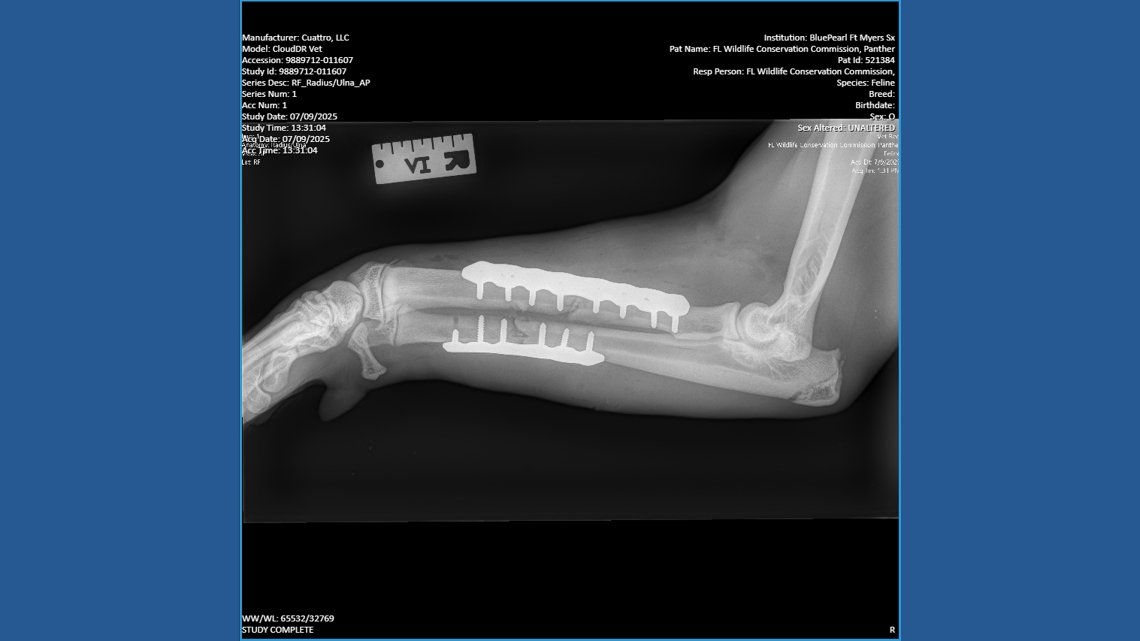
ZooTampa was selected as the intensive rehabilitation care provider due to the medical needs of caring for the Florida panther during the post-surgery period, the zoo staff said.
Teams at the zoo say they can count on a controlled rehabilitation environment that minimizes movement, reduces interaction with humans and supports recovery without habituation.
After surgery, the panther remained under staff monitoring and care for eight weeks, staff noted.
After the initial recovery period, caretakers noticed an ongoing limp, which revealed an additional fracture to the panther’s humerus. The big cat had further full-body examinations and had to undergo three additional procedures as part of the treatment.
“Since I can remember, it has been a dream of mine to help wildlife, and we built ECoVets Veterinary Specialists with the intention of contributing wherever we can. Many people don’t realize how difficult life is for wild animals, particularly large cats, trying to survive in an increasingly diminished and fragmented wilderness,” Dr. Brett Darrow of ECoVets Veterinary Specialists said.
Due to the panther’s prolonged treatment and concerns about habituation, wildlife experts deemed the panther non-releasable. While Loper will not return to the wild, zoo staff say he will educate visitors about the threats to Florida panthers and the protections needed for their habitats.
“This young panther’s journey is a testament to what can be achieved when agencies, veterinary and animal care specialists come together for Florida wildlife,” Veterinarian, Dr. Meredith Persky, Senior Vice President and Chief Conservation & Animal Health Officer at ZooTampa, said. “Although we hoped he would return to his native habitat, Loper’s story will inspire greater awareness and impactful action to protect this iconic species.”
Loper is currently acclimating to his new environment at ZooTampa with the help of caretakers, staff said, adding that in the coming weeks, guests will have an opportunity to see him in the zoo’s Florida Wilds area.
“Rehabilitating Florida panthers is challenging, so we are especially grateful for the partnerships that made this successful outcome possible,” Dr. Peter Sebastian, panther veterinarian for the Florida Fish and Wildlife Conservation Commission, said. “We also thank Floridians who support our work through the purchase of ‘Protect the Panther’ license plates, which help fund panther research, management and rehabilitation.”
ZooTampa added that drivers in panther habitat areas are urged to slow down and remain alert, particularly during dawn, dusk and nighttime hours.
If you see a Florida panther who is injured, sick or dead, you can report it to the FCW Wildlife Alert Hotline at 888-404-3922.
Just a month ago, staff at ZooTampa mourned the death of Lucy, a Florida panther who was rescued and lived there for years.
PHOTOS: Meet Loper the Florida panther and ZooTampa’s new permanent resident