
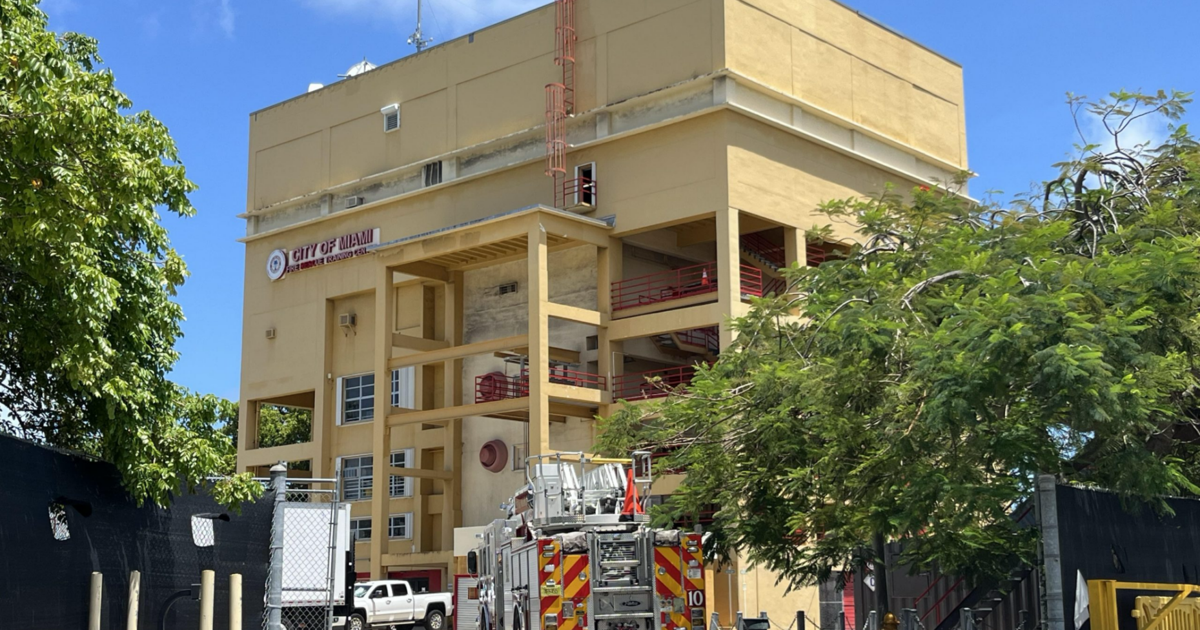
A Miami-Dade Circuit Court judge will decide in the coming weeks whether the long-running “Old Smokey” lawsuit against the City of Miami can move forward as a class action — a step that could open the case to tens of thousands of potential plaintiffs.
The decision marks the most significant development in a case that has hovered over Coconut Grove’s historically Black West Grove neighborhood for more than eight years.
“It’s about time the city did something right for these plaintiffs,” said Jason Clark, an attorney working on the case with The Downs Law Group.


The proposed class area for the “Old Smokey” lawsuit, if certified, would extend across the West Grove and east of U.S. 1 into Coral Gables.
(The Downs Law Group, Paul Rosenfeld)
The class-certification hearing is scheduled to run over five days between March 11 and March 20. Three plaintiffs are expected to testify, along with seven expert witnesses for the plaintiffs. The city’s attorneys will present their defense during the final two days.
The lawsuit, filed in September 2017, alleges that residents were exposed for decades to toxic substances — including dioxins, arsenic, lead and barium — left behind after the city’s garbage incinerator, known as Old Smokey, shut down in 1970.
The contaminants were discovered during a routine environmental assessment in 2011 at the former incinerator site, now home to the city’s Fire Rescue Training Center.
In response, the city closed and remediated several parks where ash from the incinerator had been deposited and buried. But according to the lawsuit, cleanup efforts did not extend to nearby West Grove neighborhoods.
Plaintiffs also contend the city failed to notify residents that the soil where they lived contained toxic contamination — exposure they say has contributed to serious health problems, including cancer.
Attorneys pursuing the case have long pointed to research suggesting a possible link between pollution and illness in the neighborhood. In 2013, University of Miami researchers identified a cluster of pancreatic cancer cases in the West Grove they believed might be associated with environmental contamination.
More recently, a 2024 study commissioned by plaintiffs’ attorneys found that about 80% of private residential properties tested within a mile of the incinerator site contained dioxin levels exceeding county limits.
If the court grants class-action status, anyone living within the proposed class area — roughly a one-mile radius around the former incinerator site — could join the lawsuit. The area includes about 2,200 properties and could encompass tens of thousands of residents, Clark said.
Those who attended Carver elementary or middle school, the Barnyard recreation area or St. Alban’s Child Enrichment Center, or who spent time at contaminated parks, may also qualify to join the class.
In advance of the hearing, The Downs Law Group has encouraged residents to undergo medical screenings to document health conditions and to help estimate how many people may have been affected.
About 800 plaintiffs have formally retained attorneys in the case so far, Clark said.
He and other attorneys hope many residents attend the hearings.
“When communities show up, judges notice,” Anthony Alfieri, director of the University of Miami School of Law’s Center for Ethics and Public Service, told residents on Saturday at a community meeting. “They understand that this is important and meaningful.”
The case is being heard by Judge Spencer Eig of the Eleventh Judicial Circuit.
Clark said a class-action ruling could also encourage the city — now under a new mayor — to take settlement discussions more seriously.
“The goal is always to settle,” Clark said. “As long as the settlement is enough to right the wrongs done to these people.”
Previous settlement attempts have failed, but Clark said he believes the plaintiffs enter the hearing with momentum.
Over the past several months, the city filed four motions for partial summary judgment seeking to dismiss portions of the lawsuit, along with a motion to strike the plaintiffs’ lead expert. The court denied those motions.
Plaintiffs also attempted to strike several defense experts, but those requests were rejected.
If the judge declines to certify the case as a class action, the claims could still proceed individually, with lawsuits filed one by one.
City of Miami officials did not respond to a request for comment.
This story was produced by the Coconut Grove Spotlight, a nonprofit newsroom covering Coconut Grove and Miami City Hall, as part of a content sharing partnership with The Miami Times. Read more at coconutgrovespotlight.com.