
A bill that teachers and faculty leaders say could doom their unions’ existence is heading to Gov. Ron DeSantis’ desk after a favorable vote Wednesday in the Florida House.
The measure (SB 1296), previously approved by the Senate, requires at least half of all members of a public sector union to vote in favor of recertification — a change from current law that demands unions win support from half of those voting. Recertification votes are required, and unions that cannot meet the threshold would no longer represent their workers.
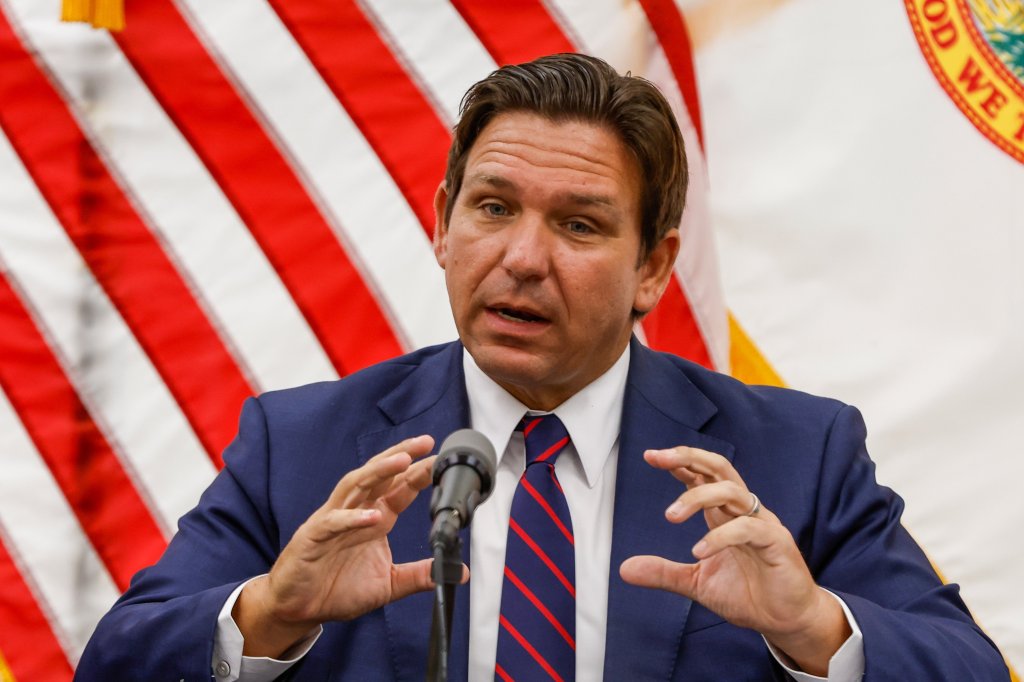
DeSantis called the bill a “huge win to hold partisan school unions accountable,” in a post to X Wednesday evening.
The bill exempts the unions that represent police officers, firefighters and corrections officers, whose leaders typically support Republicans, but also applies to unions that represent nurses and utility workers.
Lawmakers “turned their backs on Florida workers,” said the Florida Education Association, the statewide teachers union, in a statement.
“As Floridians continue to struggle with paying their bills and skyrocketing expenses like rent, childcare, groceries, and more, thousands of workers called, emailed, and came to Tallahassee to ask lawmakers to help us, not hurt us,” the statement said. “It is unfathomable that lawmakers turned a deaf ear to workers.”
But Republican lawmakers who pushed for the bill’s passage said requiring more votes for a union to be recertified keeps unions more accountable, arguing most don’t really have the support they claim.
“Unions have lost their way across the state. Not all, but many, they’re putting politics over public employees,” said Rep. Jenna Parsons-Mulicka, R-Fort Myers, who sponsored the House’s version of the bill and spoke in support of it Wednesday.
Teachers unions have held up Legislature-approved raises for years, she said, explaining her interest in a bill that would give teachers a way to hold unions accountable.
In 2024, for example, the Orange County teachers got nearly 10% pay raises, but labor negotiations took nine months so they didn’t see the extra pay — meant to start when the new school year — until April. School board and district leaders blamed the local union for dragging out the process, and state officials latched onto those complaints to criticize the union. Union leaders, however, said the district’s efforts to hike health insurance costs led to the delays.
The new legislation comes three years after the Legislature passed, and DeSantis signed, a bill that ended payroll deductions for school union dues and required bigger membership numbers for unions to remain active, both changes that local unions said made it tougher for them.
Typically, teachers unions see about 30% turnout for a recertification vote with about 97% in favor. But under the bill, anyone who doesn’t vote is a “no” vote, so that could make hitting a 50% threshold challenging.
Rep. Ana Eskamani, D-Orlando, who voted against the bill, and said in a statement the “union-busting bill” was “not about accountability” but instead about targeting teachers unions.
“Policies that undermine their ability to organize ultimately undermine the strength of the public institutions Floridians rely on,” she wrote in a statement.
Democrats and union leaders also noted the bill was backed by the Freedom Foundation, a Washington group whose leaders consulted with legislators on the bill language and call unions the “root cause of every growing national dysfunction in America.”
During a committee meeting, Sen. Corey Simon, R-Tallahassee, pushed to alter the bill so the recertification criteria was not as hard to reach, requiring 25% turnout and a 60% vote in favor.
But when the bill hit the Senate floor, bill sponsor Sen. Jonathan Martin, R-Fort Myers, got colleagues to amend the bill again to make the criteria more restrictive.
The bill passed the Senate 20 to 14 on Friday with five Republicans voting against, including Simon and Sen. Alexis Calatayud, R-Miami, who chairs the Senate Education Postsecondary Committee and is the vice chair of the Senate Education K-12 committee.
The bill passed the House on Wednesday 73 to 37, with eight Republicans joining Democrats in opposition.