

The U.S. remains the most popular spring break destination for Canadians this year, according to data sent to TheTravel by FlightHub. This positive trend comes amid travel boycotts due to increased border scrutiny, particularly with phone and device searches, and after Montréal-based Air Transat suspended all its U.S. flights this summer.
Despite continuing tensions between the two countries, flight bookings this March show that Canadians may finally be warming up to the U.S. Canadian spring breakers are even flocking to a U.S. state that experienced a significant decline in Canadian visitors last year. Here’s a closer look at the shift in Canadian-U.S. tourism this season, as well as the top U.S. spot for Canadian spring breakers.
U.S. Remains The Most Popular Spring Break Destination For Canadians Despite Boycott Tensions

Aerial image of college spring break on Fort Lauderdale Beach, Florida, USACredit: Felix Mizioznikov/Shutterstock
According to FlightHub’s data, the U.S. remains the most popular spring break destination for Canadians, accounting for 33% of international bookings, though it is a 3% decline from 2025. FlightHub’s report is based on round-trip bookings originating in Canada between March 16 and March 27, comparing 2026 departures to the same period in 2025.
The data was extracted on March 5, 2026, and includes flights booked between January 1 and March 5 for both years. Ayoub Hissar, Director of Brand Marketing & Communications at FlightHub, told TheTravel via email that “despite political tensions, the U.S. remains Canada’s top international destination, though interest has dipped slightly over the past year.”
“This latest data shows Canadians aren’t waiting for summer to travel, whether to escape the long winter or just for a change of scenery,” FlightHub’s Director of Brand Marketing & Communications told TheTravel. “Both domestic and international Spring Break travel rebounded in 2026, and it will be interesting to see if this momentum continues into summer.”
Another interesting finding is that international airfares from Canada also increased in several regions, including the U.S., where average ticket prices spiked from $321 to $379, while Central and South America surged from $677 to $761.
FlightHub’s latest numbers also reflect the emergence of Mexico as a “safer” alternative to the U.S. But contrary to reported boycott trends, Mexico still trails behind the strong demand for sunny U.S. destinations, only rising from 6% to 9% of international bookings by Canadian spring breakers.
Ongoing Canadian Boycott Of U.S. Travel Amid Positive Spring Break Bookings
Aerial image of college spring break on Fort Lauderdale Beach, Florida, USACredit: Felix Mizioznikov/Shutterstock
Overall, FlightHub’s data shows some promise amid a continuous decline in Canadian visits to the U.S. in early 2026. According to a February 2026 update on Longwoods International’s study, 73% of Canadians said that tariffs and statements by U.S. political leaders were the primary negative influences on their cross-border travel plans.
45% of them say they will replace U.S. with domestic trips in Canada (+8% from 2025), 24% will switch to other international destinations, and 11% will simply cancel their U.S. vacations. Adding to the appeal of domestic Canadian trips is that the average spring break fare this year dropped to $203 from $217 in 2025, according to FlightHub.
Fort Lauderdale, Florida Is The Top U.S. Spring Break Destination For Canadians
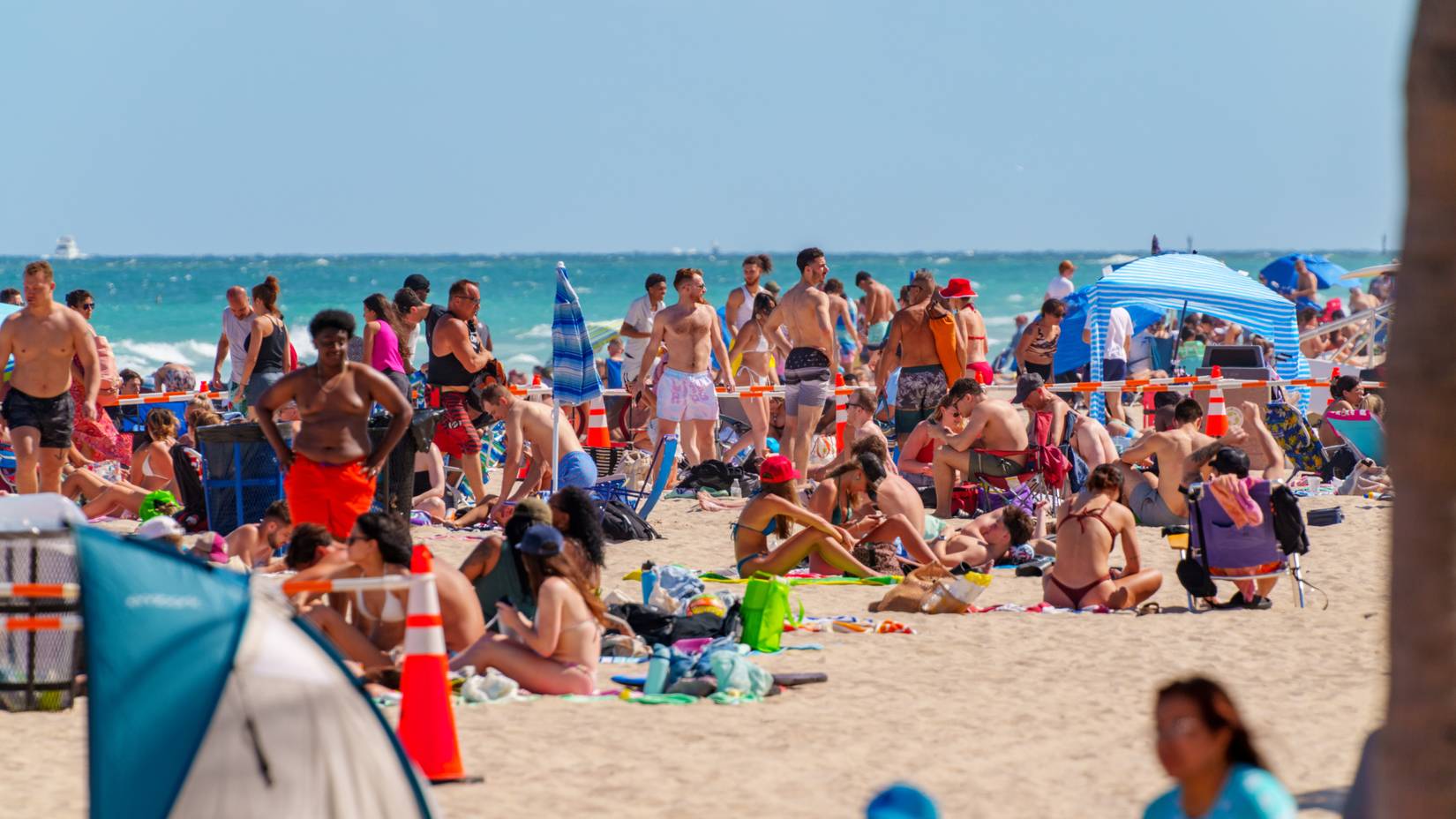
Spring break beach crowd in Fort Lauderdale, FloridaCredit: Felix Mizioznikov/Shutterstock
According to FlightHub, Montréal to Fort Lauderdale is still the most popular international travel route for Canadian spring breakers based on March bookings. Spirit Airlines, which operates non-stop Montréal to Fort Lauderdale flights, also ranked Fort Lauderdale as the No. 1 spring break destination this year.
This route is one of the remaining U.S. routes Air Transat is removing this summer, with its Montréal to Fort Lauderdale flights completely ending on June 13. However, the airline is gradually winding down all its remaining U.S. routes this spring. FlightHub’s data comes a month after Air Transat’s major move in light of the declining interest of Canadian travelers in Florida.
Most cities in the Sunshine State, including Fort Lauderdale, have seen significant downturns in Canadian visitation in the past year. The number of Canadians who visited Florida in 2025 dipped by 9% from its post-COVID recovery period in 2023, when 3.2 million Canadians vacationed in Florida.
A Potential Rebound In Canadian Travelers’ Interest In Florida
FlightHub’s data reflects the optimism of John Gradek, the faculty lecturer of operations & integrated aviation management at McGill University, who believes this trend will “shift back.” Commenting on Air Transat’s cancellation of all its U.S. routes, Gradek told CityNews in February:
“Canadians love the sun in the U.S. They love Florida. You know, I’ve been going to Florida for 20 years, and I really enjoy Florida. But, you know, I think that Canadians will remember what’s happened. I think that, you know, Canadians have a long memory, and there may be some trepidation.”
Despite ongoing political and border tensions that continue to affect Canadian tourism in Florida, Gov. Ron DeSantis announced in February that the state set a new tourism record in 2025, welcoming a total of 143.3 million visitors. The state continues to welcome Canadians, with businesses actively encouraging their return this year.
For those heading to Florida for spring break this year, travelers are advised to check their destination’s latest regulations. For instance, Fort Lauderdale is implementing a new ban on coolers, tents, amplified music, and alcohol (except from approved hotel vendors) on the beach, a new ordinance prohibiting open containers of alcohol on sidewalks in entertainment districts, a daily 5 p.m. beach closure, and increased police presence.