
BRADENTON, Fla. — A state program designed to help Florida homeowners rebuild stronger after the devastating hurricanes in 2024 has faced delays — but now officials say progress could be coming soon.
What You Need To Know
Sharon Foster says she has been out of her home since Sept. 26, 2024. Her house was damaged by both hurricanes Helene and Milton.
In early 2025, Florida launched Elevate Florida, a $400 million FEMA-funded program to help homeowners elevate, rebuild or harden their properties against future storms.
State officials say these types of projects can take two years or longer, largely because FEMA must review applications and approve funding before construction can begin.
Once Foster’s FEMA rental assistance ends this month, she says she will be responsible for paying both rent and a mortgage on a home she cannot live in.
More than 12,000 people applied to Elevate Florida, a $400 million mitigation program primarily funded by FEMA.
But as FEMA’s future remains uncertain and rental assistance runs out for some survivors, many say they’re struggling to get answers — and need a solution.
A home damaged by two hurricanes
Waves still lap just feet away from what’s left of Sharon Foster’s waterfront home — a house damaged by Hurricane Helene, then Hurricane Milton and now caught in a state program that has yet to move forward.
Foster says she has been out of her home since Sept. 26, 2024.
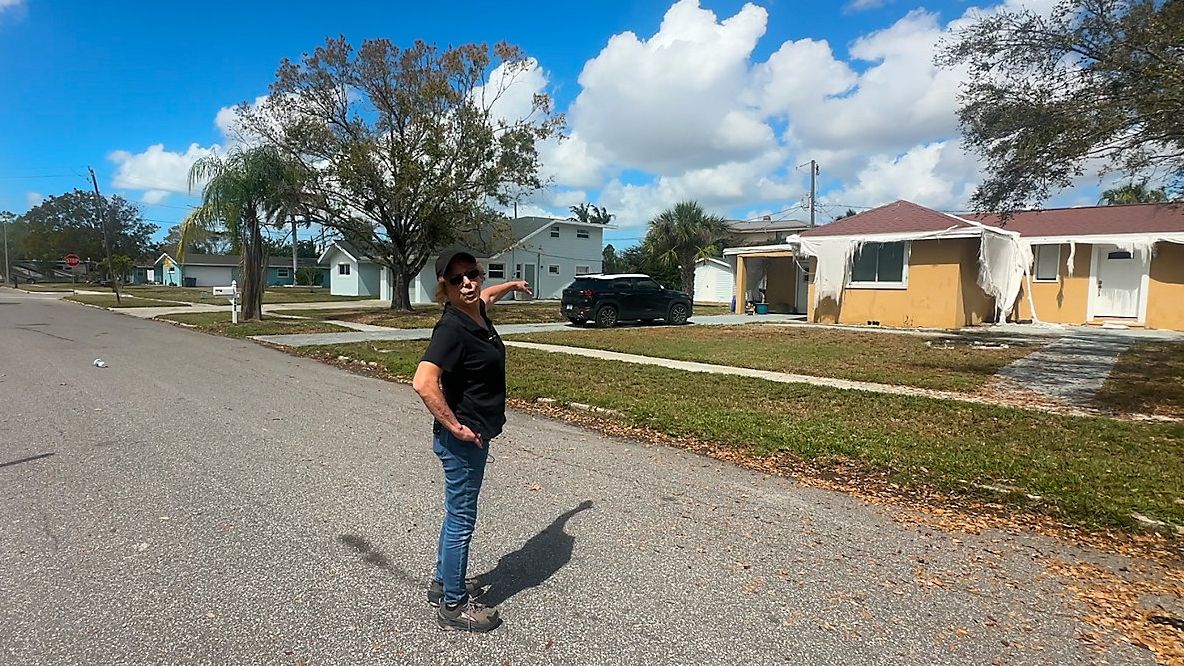
Outside, tattered tarps and cracked surfaces show where storm surge pushed through, leaving the home uninhabitable.
“It was like Armageddon back here,” Foster said.
Like many Floridians affected by the storms, Foster had to decide whether to elevate her home, demolish it, or walk away from it.
The Elevate Florida program
In early 2025, Florida launched Elevate Florida, a $400 million FEMA-funded program to help homeowners elevate, rebuild or harden their properties against future storms.
State officials say these types of projects can take two years or longer, largely because FEMA must review applications and approve funding before construction can begin.
Officials also say demand far exceeded available funding.
Of the more than 12,000 applicants, about 90% were denied or dropped out, while others remain under review.
Meanwhile, Foster says the financial support helping her stay housed is running out.
“And I was getting FEMA assistance to rent, but now that assistance is coming to an end,” she said.
Waiting for FEMA approval
Foster says she was approved into the program, but she is still waiting for FEMA to sign off on the next step — demolishing and elevating her home.
“I’m still waiting for FEMA to approve knocking the house down and elevating it,” Foster said.
Inside the home, water-damaged floors and walls are all that remain of the life she built there.
“This is the dining area, this is the living room,” Foster said while walking through the house.
Some belongings remain salvageable.
“My kids always made fun of me for keeping their artwork. It was soaking wet but looks like I can salvage it,” she said.
Once Foster’s FEMA rental assistance ends this month, she says she will be responsible for paying both rent and a mortgage on a home she cannot live in.
“What are we supposed to do?” she said.
Without repairs or elevation, insuring the property has also become a challenge.
“What sane insurance company would insure a situation like this?” Foster said.
Foster says every attempt to get answers from state and federal agencies has left her feeling stuck in limbo.
Agencies respond
Spectrum Bay News 9 reached out to FEMA, which referred questions to the state, saying Florida runs the program.
FEMA added that it supports the state “by providing funding, technical assistance and ensuring projects comply with federal law.”
A spokesperson with the Florida Division of Emergency Management said the program has begun receiving initial FEMA funding determinations.
In a statement, the agency said:
“This means that the Elevate Florida program will imminently confirm project type and property owners’ home conditions, to then begin construction stage preparation activities.”
Despite that update, Foster says the long wait has been difficult.
“I try to remain optimistic. Sometimes it’s hard because every time you think you are making progress, you’re not,” she said.
Nearly a year and a half after the storms, Foster worries that without progress soon, she may have to let go of the home she fought to save — and start over.