
Firefly Aerospace grabbed headlines in 2025 when its Blue Ghost lander became the first by a commercial company to stick its moon landing. The company’s rocket business, though, had been pretty quiet.
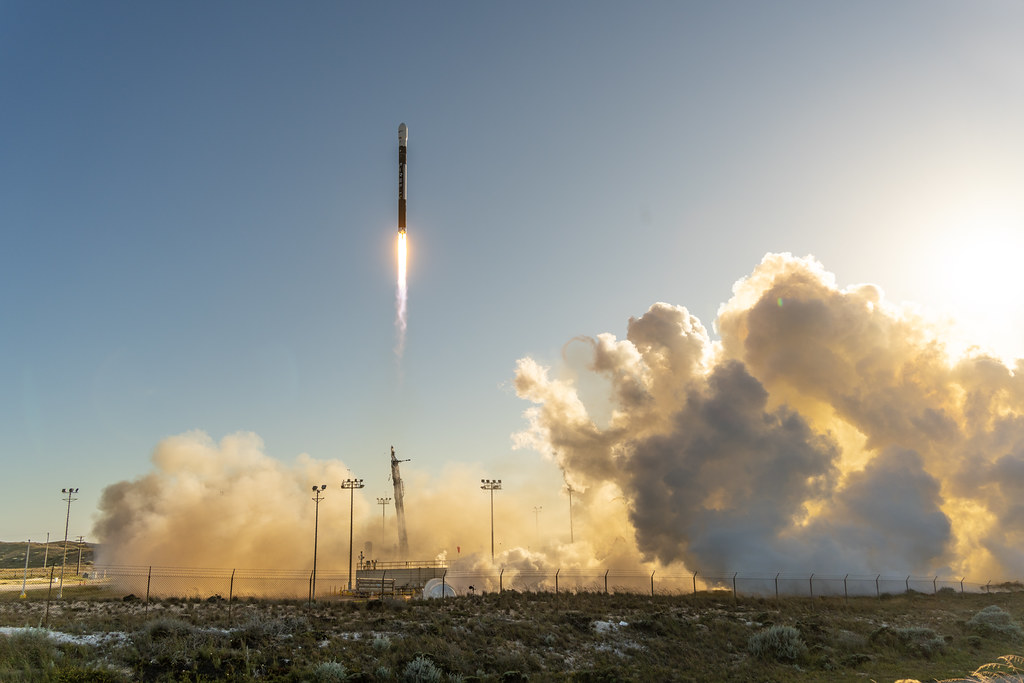
That changed Wednesday after flying its small Alpha rocket on a successful orbital mission from Vandenberg Space Force Base, the first successful flight of the rocket since July 2025. The rocket lifted off at 5:50 p.m. PDT (8:30 p.m. EDT) from Space Launch Complex 2 with a demonstration payload for Lockheed Martin.
The company’s last attempt in April 2025 ended in failure when the second stage engine was damaged during separation from the first stage.
The mission dubbed “Stairway to Seven” was the rocket’s seventh attempt since the first in 2021, but only the third to reach orbit successfully.
The flight was the first with Block II configuration upgrades, including new avionics developed by the company and an enhanced thermal protection system.
“Alpha Flight 7 was flawlessly executed with all mission requirements completed, further proving the resiliency, innovation and passion of the Firefly team,” said company CEO Jason Kim in a press release.
“Over the last several months, we took a hard look at our processes across engineering, production, test, integration and operations and invested the time required to make a series of improvements to ensure a higher level of quality and reliability in every Alpha we deliver and launch as we move to our Block II upgrade,” Kim added.
A planned Flight 8 would feature a complete Block II configuration, including adding another 7 feet to the rocket’s length and stronger carbon composite structures.
“Flight 7 served as a critical opportunity to validate Alpha’s performance ahead of our Block II upgrade, and this team knocked it out of the park,” said Adam Oakes, the company’s vice president of launch. “We have full confidence in our Alpha rocket, and we’re committed to continuous improvement as we roll out Block II.”
The company’s rocket endeavors are of interest to Northrop Grumman, which has partnered with Firefly for both a new version of Northrop’s Antares rocket called the Antares 330, and a new, medium-lift rocket to be called Eclipse.
The old version of Antares has not flown since 2023 when the company used the last of its supply of Russian-made engines for the rocket’s first stage. The Antares 330 will use seven of Texas-based Firefly’s Miranda engines on a redesigned first-stage.
Both the Antares 330 and the new Eclipse rocket will launch from Virginia’s Eastern Shore from NASA’s Wallops Flight Facility, although Firefly also has a launch lease at Cape Canaveral Space Force Station.
Without its own rocket, Northrop Grumman has had to rely on SpaceX Falcon 9 rockets for its Cygnus resupply spacecraft missions to the International Space Station with at least one more, NG-24, coming up as soon as April on the Space Coast.
Firefly, meanwhile, is also planning its second moon lander mission under NASA’s Commercial Lunar Payload Services program.
Set to launch sometime in 2026, a SpaceX Falcon 9 will bring both Firefly’s Blue Ghost lander and a new Elytra Dark orbiting transfer vehicle on the Blue Ghost Mission 2 to land on the far side of the moon and take advantage of the radio-quiet environment to deploy an array of antennas for a a low-frequency radio telescope.