
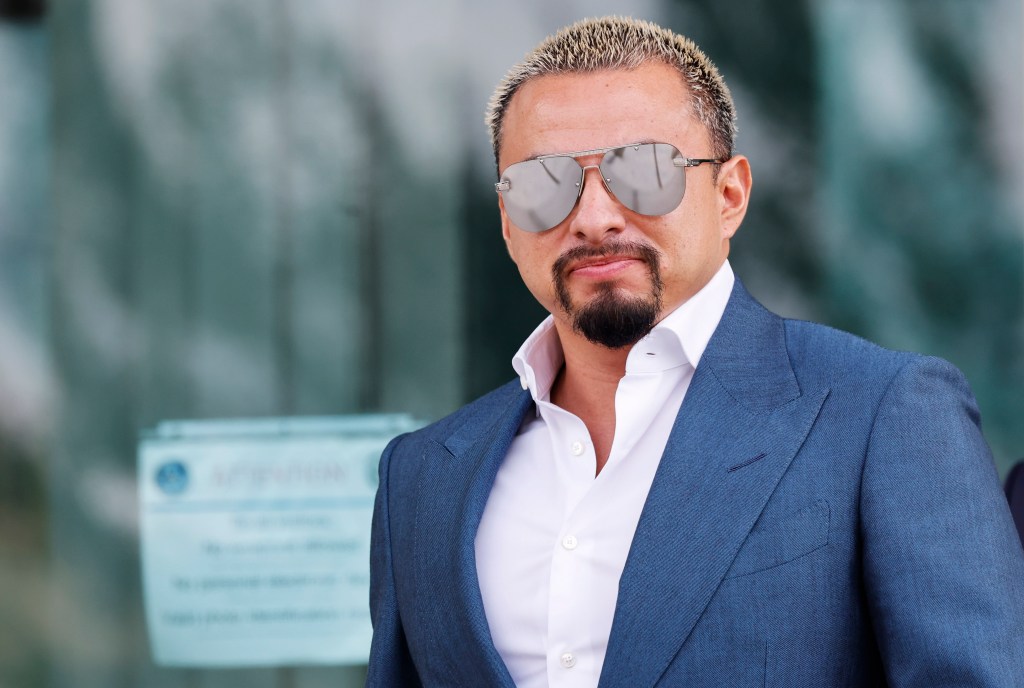
Three class-action lawsuits, including one against banking giant JPMorgan Chase, have been filed in connection with the massive cryptocurrency Ponzi scheme prosecutors say Christopher Delgado ran from his Orlando headquarters.
The recently filed lawsuits come on the heels of the Feb. 24 arrest of Delgado, 34, Goliath Ventures’ founder and former CEO. Federal authorities say Goliath Ventures defrauded investors of at least $328 million. Delgado now faces federal wire fraud and money laundering charges.
Two of the lawsuits were filed against businesses, alleging they helped enable the Ponzi scheme. The third was filed against Delgado and Goliath. All were filed as class actions as attorneys say there are more victims than those named in the lawsuits.
Prosecutors say Delgado lived the high life on other people’s money, misappropriating investors’ funds to buy million-dollar homes, luxury cars and fancy watches, among other items. He’s now free on bond but must mostly remain at his Isleworth home, a seven-bedroom, golf course mansion he bought for $8.5 million last summer.
The lawsuit against JPMorgan Chase was filed in federal court on Tuesday in California on behalf of Goliath investor Robby Alan Steele, an airline pilot.
The lawsuit claims JPMorgan Chase aided and abetted the alleged Ponzi scheme when it allowed Goliath to use its banking system to collect and move hundreds of millions of dollars from investors and ignored large volumes of suspicious transactions.
“Chase could see that new investors were getting paid with old investors’ money. That is the biggest red flag of a Ponzi,” said Adam Schwartzbaum, one of Steele’s attorneys. “The fact that Chase did absolutely nothing for this length of time with this amount of money…shows knowledge and substantial assistance.”
JPMorgan Chase declined to comment on the lawsuit.
About $253 million was deposited into a Goliath account at JPMorgan Chase between January 2023 and June 2025, according to the lawsuit. About $50 million from that account was sent to investors purportedly as returns on their investments during that same timespan.
The attorneys say the scheme’s fraudulent nature was obvious but argue the bank “turned a blind eye” and continued to service the Goliath accounts all while earning “substantial” fees from Goliath’s activities.
Schwartzbaum said Steele trusted Goliath in part because of JPMorgan Chase’s reputation. His signed agreement with Goliath said his money would be deposited in its account with the bank. He initially invested $310,000 into Goliath and then put another $340,000 from his retirement savings into the firm.
“Institutions like JPMorgan should know that when their name is used, it lends credibility and it moves markets, it moves investors,” Schwartzbaum said.
The class-action lawsuit against Delgado and Goliath was filed Wednesday by the New York-based T & C Investing Corp. in federal court in Florida and assigned to a Miami judge.
The company’s CEO learned of Goliath from a friend who had already invested and knew Delgado. T & C then invested $1.1 million into Goliath between December 2024 and September 2025. It has received about $211,000 in purported returns on its investments, the suit said.
The suit, which accuses Delgado and Goliath of fraud, says since Delgado’s arrest Goliath’s payments to investors have been suspended, investors have been unable to access the company’s mobile application and questions about where their investments stand have gone unanswered.
One of Delgado’s attorneys declined to comment on the lawsuit.
A third lawsuit, filed by the same attorneys involved in the JPMorgan case, alleges that an Atlanta-based law firm enabled Goliath’s scheme because it drafted the agreement investors signed.
That lawsuit was filed March 5 in federal court in Florida by two investors, one of them John Euliano, a major donor to the University of Central Florida and the namesake of the school’s baseball stadium. The other investor is Cole Brantley, another Florida resident.
Euliano also filed a separate lawsuit Feb. 10 against Goliath, saying he suffered at least $1.2 million in damages.
The lawsuit against the law firm Alston & Bird says in 2025 its attorneys drafted “joint venture agreements” for Goliath’s investors and misled them about the legality, risks and regulatory status of Goliath’s investment program, in part by failing to disclose important information to them.
The agreements “we believe were designed quite intentionally to create a venture that would avoid regulatory oversight and scrutiny by the state and federal securities regulators,” Schwartzbaum said.
The law firm did not respond to a request for comment.
All three lawsuits seek an unspecified amount of money.