
Few issues will shape the future of Key Biscayne more than how we address flooding and stormwater resilience.
The decisions before us will influence our environment, infrastructure and financial stability for decades. Getting these right matters, not just for today’s residents, but for the long-term sustainability of our Village. That is precisely why the process must be thoughtful, fact-based and guided by sound engineering.
Residents’ concerns about flooding, environmental protection and the long-term cost of solutions are entirely understandable. These are serious issues that deserve careful consideration.
Over the past many months, the Village Council has approached this work deliberately — through numerous public workshops, technical presentations and the formation of a dedicated Ad Hoc Committee tasked with closely reviewing the engineering alternatives and community input. The goal has been simple: ensure that any eventual decision is grounded in sound analysis and thoughtful evaluation.
Recently, public discussion around the project has intensified, including suggestions from a small group of residents that the issue could be brought to a public referendum. While referendums are a legitimate democratic tool, they can also be inherently divisive in a small community like ours. Major infrastructure decisions are best guided by complete information and engineering analysis so residents can evaluate the options based on facts rather than speculation.
One example is the suggestion that the Village could incur “crushing debt” approaching $1 billion as part of the stormwater program. At present, no such estimate exists as an adopted plan, engineering projection or financial proposal before the Village Council.
The Village is divided into eight drainage zones, and detailed engineering analysis has only been completed for a portion of the system (primarily Zone 1,) which is also currently evaluating an alternative design. The billion-dollar figure appears to be an extrapolation derived by multiplying an early estimate from one zone across the remaining zones. That is not a finalized cost, a defined project or a financial commitment.
Infrastructure planning of this scale is typically evaluated zone by zone as engineering, environmental review, and design development progress.
Another concern raised publicly is the suggestion that stormwater from a pump system would be discharged into Biscayne Bay without treatment or filtration.
That characterization does not fully reflect the regulatory framework currently in place. The Village has obtained a regulatory permit authorizing the discharge approach being evaluated. While opinions may differ about what the ideal level of treatment should ultimately be, the system under discussion operates within an established permitting structure. Protecting Biscayne Bay remains a shared priority across the community, and the final solution must balance flood protection with continued efforts to improve water quality wherever feasible.
There is also understandable concern about construction disruption. The reality is that any meaningful infrastructure improvement will involve some level of temporary disruption. Pumps, drainage improvements, underground systems, or distributed solutions all require construction within public rights-of-way. At this stage, the full scope and duration of disruption has not yet been finalized for either alternative, and detailed implementation plans will ultimately determine the scale of construction impacts.
Equally important is the condition of the Village’s existing stormwater infrastructure. Some approaches may rely more heavily on existing piping that could be approaching the end of its useful life, while other approaches contemplate more comprehensive replacement and modernization. While using existing infrastructure may appear less disruptive in the short term, long-term durability, maintenance requirements, and lifecycle costs are also important factors to consider.
The Village is currently evaluating multiple engineering approaches, and both deserve the same level of scrutiny and technical review. Each proposal brings different assumptions, methodologies, and potential tradeoffs. The purpose of the ongoing engineering process is to fully understand those differences before any final decision is made.
In fact, given the Village’s eight distinct drainage zones, the ultimate solution may not be a single uniform approach. Different areas may benefit from different tools depending on local conditions, groundwater levels, and existing infrastructure.
Stormwater resilience is a complex challenge, and it is natural for residents to hold different views on how best to address it. What should unite us is the goal of protecting our homes, our environment, and the long-term sustainability of our Village.
The responsibility before us is not to make the fastest decision, but the right one guided by sound engineering, verified information and a commitment to the future of Key Biscayne.
Our community deserves nothing less.
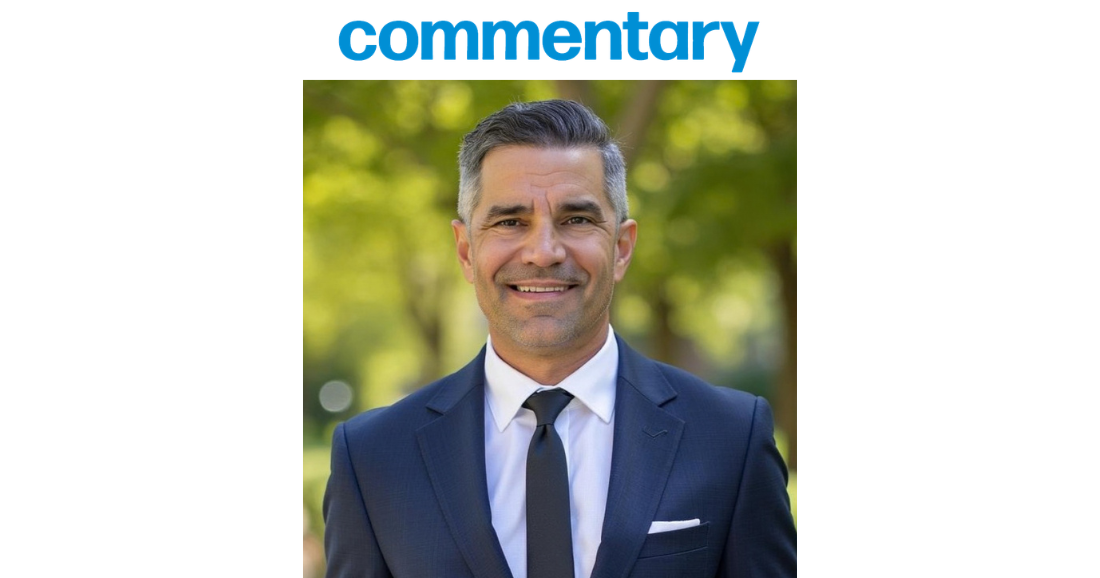
Oscar Sardiñas, a full time Key Biscayne resident since the mid-1980s, founded the Key Biscayne Children & Education Foundation and served on the village’s Education Advisory Board before being elected to the Village Council in 2022. He has served as Vice Mayor since 2024.