
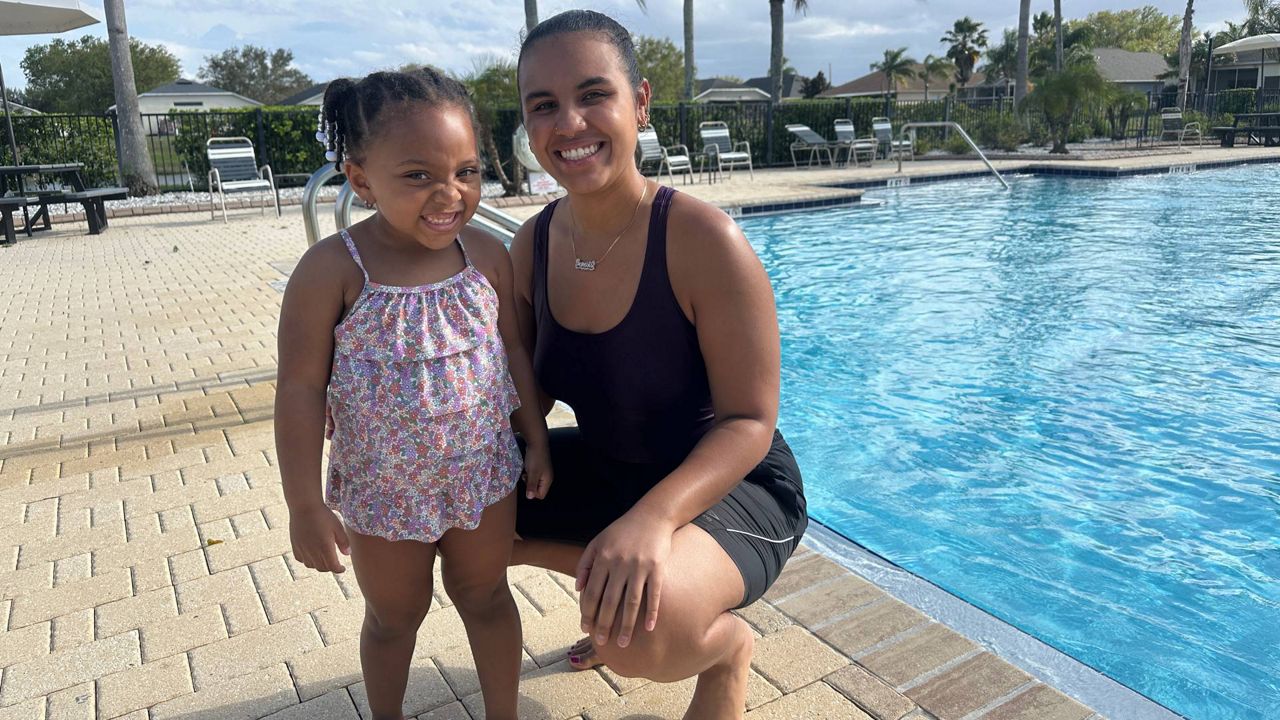
TAMPA, Fla. — Drowning is the leading cause of death for children ages one to four, according to the Centers for Disease Control and Prevention (CDC).
It’s a lifesaving skill that can be out of reach for many Hispanic families, and why one swim instructor is hoping to break those generational cycles and prepare children now.
The CDC reports there are over 4,000 unintentional drownings deaths in the U.S.
Ms. G’s Swim School says they’re seeing more Hispanics looking to get their children into lessons
According to the CDC, three in four Hispanic adults report that they never took a swimming lesson
Families in Hillsborough County are looking to break the cycle of not teaching their children how to swim
Swimming is a fundamental life skill some people learn from a young age, but for some families, lessons aren’t always easy to access.
According to the CDC, three in four Hispanic adults report that they never took a swimming lesson. That’s why Geovani Jimenez, who is Cuban and Puerto Rican, wanted a different outcome for his daughter, Leilani.
“I never got put into swim lessons when I was a kid and I never properly learned, so I wanted to make sure that she knew how to swim,” he said.
He enrolled Leilani in swim lessons when she was just six months old. Now four years old, he says she’s thriving in the water.
“She just loves it, like a little mermaid,” said Jimenez.
Jimenez said he wanted to give his daughter an opportunity he didn’t have growing up.
“There wasn’t really anywhere for me to go, and if there were places to go, they cost some substantial amounts of money that we just didn’t have growing up,” he said.
BayCare Hospital said last year, Florida saw 119 pediatric drowning deaths. Camille Yodzis a wellness and safety educator with BayCare and says minority children face a higher risk.
“Twenty-five percent of Hispanic children could become drowning victims because they do not have the resources in order to get those swimming lessons,” she said.
She said it’s important to keep a watchful eye on children near any kind of water, even still water or bathwater.
Yodzis said even with those sobering numbers, there are now more resources and grants to help families pay for swim lessons.
Genesis Caban, owner of Ms. G’s Swim School, teaches Leilani. She said more Hispanic families are searching for lessons, but many still face barriers.
“Financial, locational, and a lot of it too that I’ve known is fear,” she said. “A lot of families have had previous experiences where they’ve had a near-drowning incident and it’s scared them for life.”
From crab walking to floating, Caban said these skills can make a life-saving difference and give families like Jimenez’s more peace of mind.
“God forbid if something happens to me and I end up in the water, at least I know my daughter is more than capable of getting me out of harm’s way if need be,” he said.
For this family, it’s about breaking a cycle, replacing fear and limited access with confidence and safety in the water.
BayCare says drownings are largely silent, so they offer families who have a pool or live near any body of water a free door alarm.