
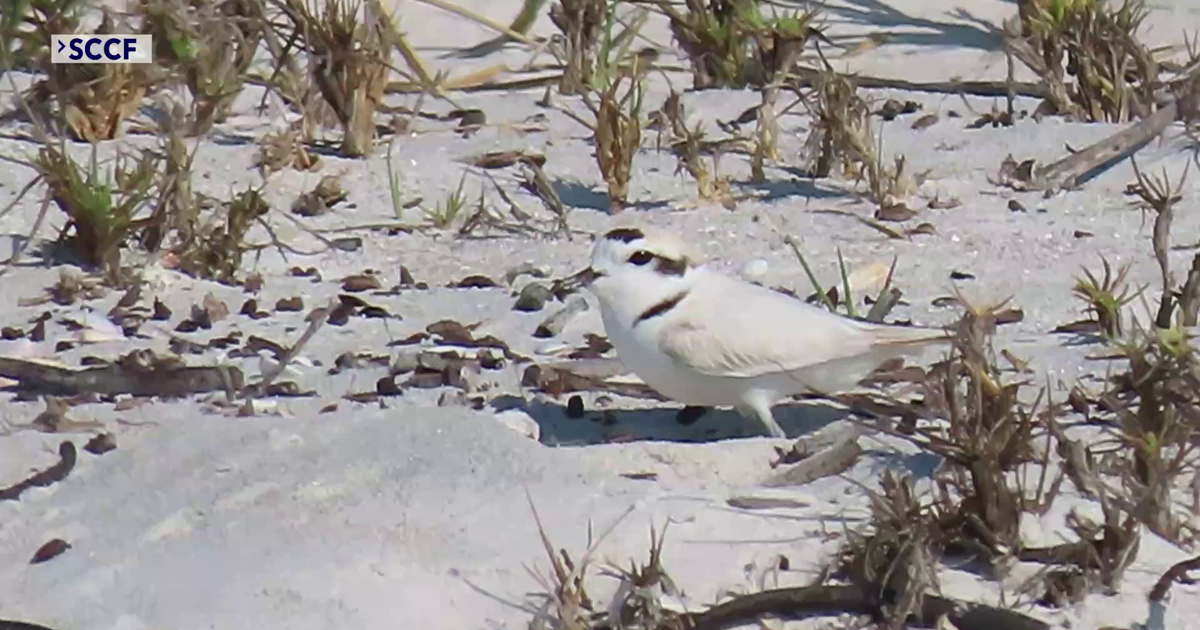
SANIBEL, Fla. (WINK) — Spring break crowds are packing Sanibel’s shores, but they aren’t the only ones moving in.
Tiny shorebirds are nesting in the sand, and one wrong step could spell disaster. WINK News reporter Bridget Bruchalski shows how volunteers are working to keep the feathered families safe.

Looking through the lens is Julie Hansen, a Sanibel visitor who has always watched the birds and their nesting patterns on the island. She’s particularly interested in how the birds have recovered after recent hurricanes destroyed their habitat.
“It’s exciting that they’re back,” Hansen said. “I’m always amazed that you can find the snowy plover number one, where I’m always looking, going, okay, where is it? Where’s the nest?”
Once a potential nest is spotted, the Sanibel-Captiva Conservation Foundation moves in to protect it. They rope off the area using wooden stakes placed in the sand and finish with “keep out” signs so people don’t walk over the nests and stay a safe distance.
“The snowy plover and the least tern are both state-threatened species, so they get extra protection where they’re nesting on the beach,” said Audrey Albrecht, SCCF shorebird biologist. “We rope off the area using what we call symbolic fencing, so we have stakes and twine with flagging so people can see it and informational educational signs.”
This is the busiest time of year for Albrecht. She’s out every morning keeping an eye on the birds and trying to pinpoint where they’re going to nest.
If an egg is laid outside a protected area, it could easily be stepped on, run over or eaten. Survival is never guaranteed for these small birds.
“When you’re that small, the whole world’s kind of against you, right?” said Samantha Hinsz, SCCF shorebird technician. “They face a lot of predators, both avian, like crows, as well as land predators. It’s really awesome to see kind of the snowy plovers holding on and keeping the nest here year after year and do their best.”
Hansen’s wish for this season is simple: no big storms so the nests can stay and the birds can continue to come back to the same area.