
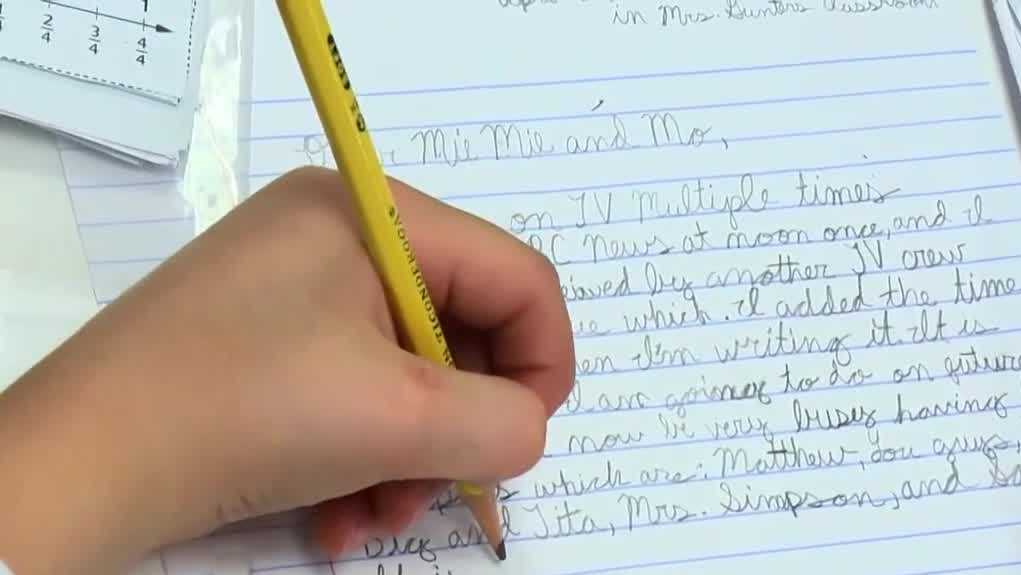
According to historical records, the Greeks and Romans were the first to adopt cursive writing. The constant motion of the pen helped preserve the tip of the quill. Now, reading and writing cursive is a dying art, hasn’t been taught in many schools for decades, leaving some Gen Zers especially challenged. Two Florida lawmakers would like to change that. A bill has been crafted that would require kids in grades second through fifth to learn how to write and read in cursive. It’s a skill needed to read the hallmarks of U.S. History: the Declaration of Independence and the Constitution. For this story, we wrote the famous phrase, “The rain in Spain falls mainly on the plain,” in cursive and asked a few folks if they could read it. Some could, others couldn’t. Shane Lasota, a 19-year-old student at Rollins College, says, “I was never taught cursive, which I’m not really proud of. My mom says to me all the time, ‘Shane, I wish you were taught cursive in school,’ and I never was.”Jane Hastings, a former educator, says she’s in favor of the bill, but not the part that requires the child’s cursive skills to be formally assessed. “That’s just another pressure to meet a standard.” The bill is not finalized yet, not written in stone or cursive. But should it pass, it would go into effect in July of next year.
FLORIDA, USA —
According to historical records, the Greeks and Romans were the first to adopt cursive writing. The constant motion of the pen helped preserve the tip of the quill.
Now, reading and writing cursive is a dying art, hasn’t been taught in many schools for decades, leaving some Gen Zers especially challenged.
Two Florida lawmakers would like to change that. A bill has been crafted that would require kids in grades second through fifth to learn how to write and read in cursive.
It’s a skill needed to read the hallmarks of U.S. History: the Declaration of Independence and the Constitution.
For this story, we wrote the famous phrase, “The rain in Spain falls mainly on the plain,” in cursive and asked a few folks if they could read it.
Some could, others couldn’t.
Shane Lasota, a 19-year-old student at Rollins College, says, “I was never taught cursive, which I’m not really proud of. My mom says to me all the time, ‘Shane, I wish you were taught cursive in school,’ and I never was.”
Jane Hastings, a former educator, says she’s in favor of the bill, but not the part that requires the child’s cursive skills to be formally assessed. “That’s just another pressure to meet a standard.”
The bill is not finalized yet, not written in stone or cursive. But should it pass, it would go into effect in July of next year.