
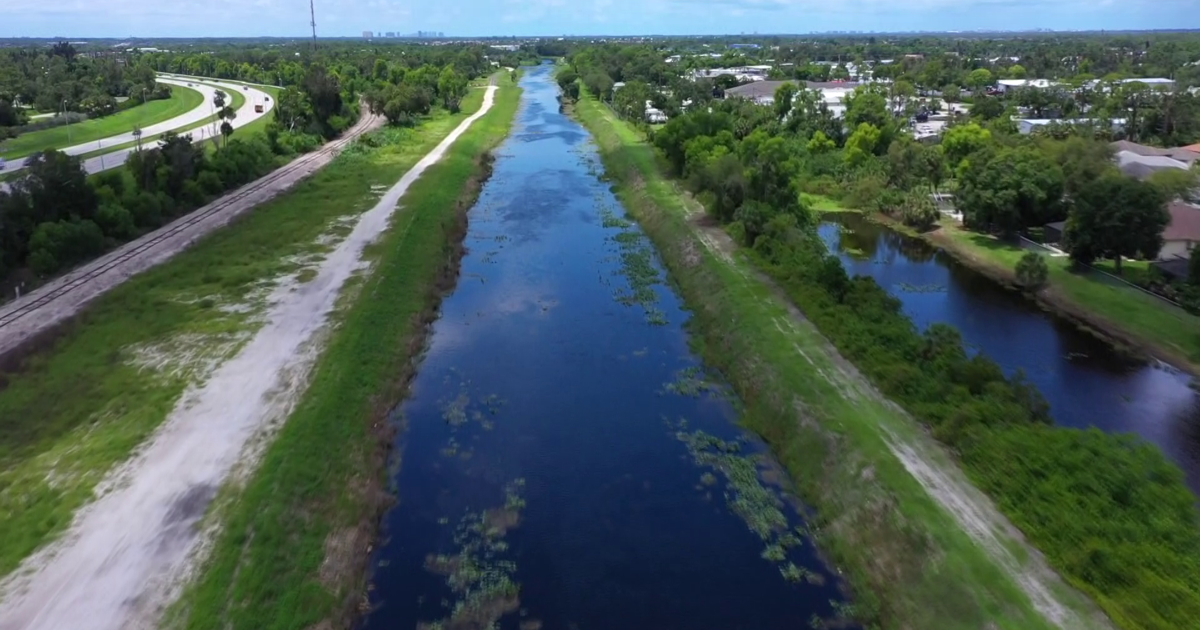
LEE COUNTY, Fla. (WINK) — Lee County commissioners approved $1.3 million to replace an aging weir near Page Field, a step toward ending chronic flooding near the Ten Mile Canal.
The canal, which stretches 10 miles across south Lee County, was designed to drain water but has repeatedly flooded neighborhoods instead. Original plans from the 1970s called for a larger canal, but it was never fully built that way. When heavy rain falls, water can’t move out fast enough, so it backs up and floods homes and streets.
In 2017, Island Park was hit hard. Cars stalled, streets flooded, and more than 200 rescues were needed. Engineers later found the canal, the county’s largest drainage system, couldn’t handle the water.
Lynn, a homeowner in Island Park, described the constant fear.
“Every time it rains, you’re terrified,” Lynn said. “First thing you do is go out, walk across the street, and look at the canal, see how high the canal is.”
Cindy, another resident, recalled trying to leave during the 2017 flooding.
“Yesterday I tried getting out along with everybody else,” Cindy said. “Everybody around me was going fine, but my car stalled out and had to be towed.”
The county created a flood plan, but the water kept coming. In 2022, before Hurricane Ian, flooding returned. Back-to-back hurricanes Helene and Milton brought back-to-back floods for residents like Jim Alfano.
Debbie Poklemba, a Newport Glen resident, pleaded for help.
“Just come help us so we don’t have to keep going through this over and over and over,” Poklemba said.
The county is now targeting one key problem: an aging weir near Page Field that is no longer keeping up. Commissioners approved $1.3 million to replace it with a motorized, remote-operated structure.
The county said the new system will allow stormwater within Ten Mile Canal to be managed proactively during storms. By adding automation, the canal can be drawn down, increasing available storage during storm events. In other words, lower the water before the storm, make room, and reduce the amount that spills into neighborhoods.
The $1.3 million is fully funded by the state through the Florida Department of Environmental Protection, meaning no impact to the county’s general fund. Work is expected to start right away with design and wrap up at the beginning of 2027.