
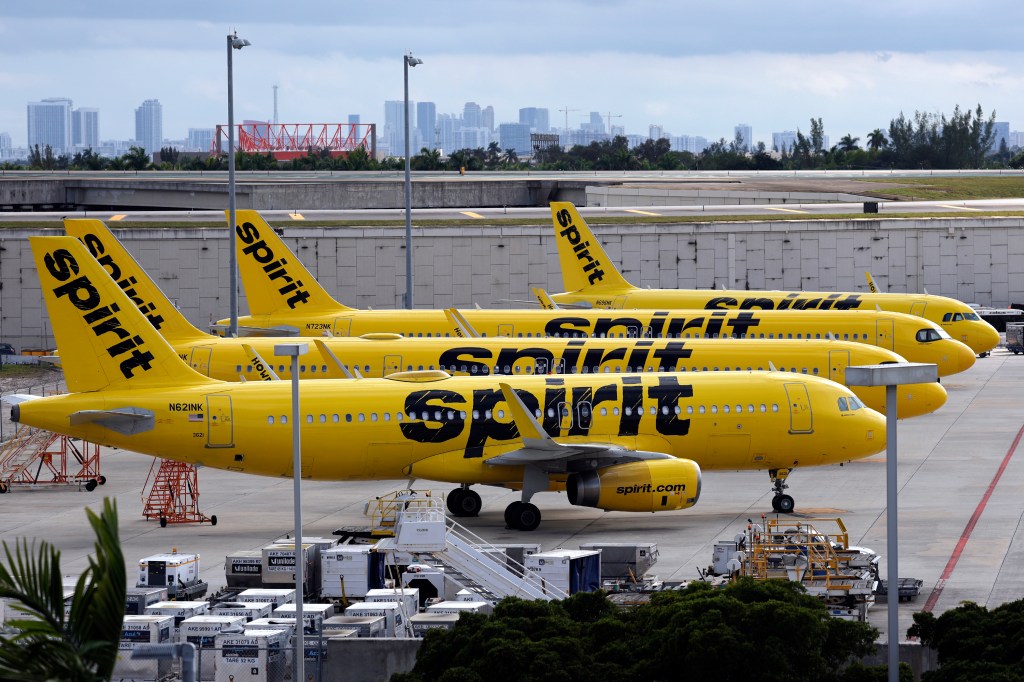
Spirit Airlines, which hopes to exit Chapter 11 bankruptcy proceedings early this summer, has acknowledged that spiking fuel prices driven by war in the Middle East could well hamper its business prospects.
In a recent disclosure statement filed in U.S. Bankruptcy Court in New York, management listed the rising price of fuel as one of the more prominent risks confronting the company as it prepares a new life as a smaller airline with a lighter debt load.
“Recent fluctuations in the price and availability of fuel arising out of the conflict in the Middle East and Iran could negatively impact the Debtors’ financial results,” according to the disclosure statement filed by Spirit Aviation Holdings, parent of Dania Beach-based Spirit Airlines and other subsidiaries operating under Chapter 11.
“The Debtors’ operating results are significantly impacted by changes in the price and availability of aircraft fuel,” the statement added. “Periods of high volatility in jet fuel costs, increased jet fuel prices, and significant disruptions in the supply of jet fuel could have a material adverse impact on the Company’s business, financial condition, and operating results.”
Spirit to focus on Fort Lauderdale, Orlando, New York and Detroit after leaving bankruptcy
The makeup of the airline’s fleet also looms as a factor. As a key element of its size reduction, the airline has been shrinking its fleet of Airbus jetliners, selling some but mostly ending lease agreements on others. Many of the planes the airline is retaining are older and less fuel efficient, industry analysts have said.
A Spirit spokesman said Wednesday the company had nothing to add to the court filing.
Multiple business obstacles
The fuel risks, the Dania Beach-based company acknowledged in its filing, are among a thicket of ongoing obstacles facing the airline, which has seen bigger and stronger competitors siphon off customers and crowd Spirit out of various U.S. and foreign markets.
“The airline industry is highly competitive, including in the markets in which the Debtors operate,” the disclosure statement said. “The Company has already faced, and may in the future face, increased competition from existing and new participants in the markets in which it operates, including full-service and low cost carriers. The air transportation sector is highly sensitive to price discounting and the use of aggressive pricing policies.”
“Other factors, such as flight frequency, schedule availability, brand recognition, and quality of offered services and other amenities also have a significant impact on market competitiveness,” the statement added. “Thus, there can be no assurance that the Reorganized Debtors will be able to preserve their current market positions.”
The company announced last Friday that it filed its reorganization plan with the bankruptcy court and entered into an agreement with leading lenders who have helped finance Spirit’s recovery.
Ultimately, the company said in that announcement, Spirit will be operating a fleet of 76 to 80 Airbus jetliners by the third-quarter of this year, down from the 214 operated before it filed for Chapter 11 bankruptcy protection.