
1 / 4
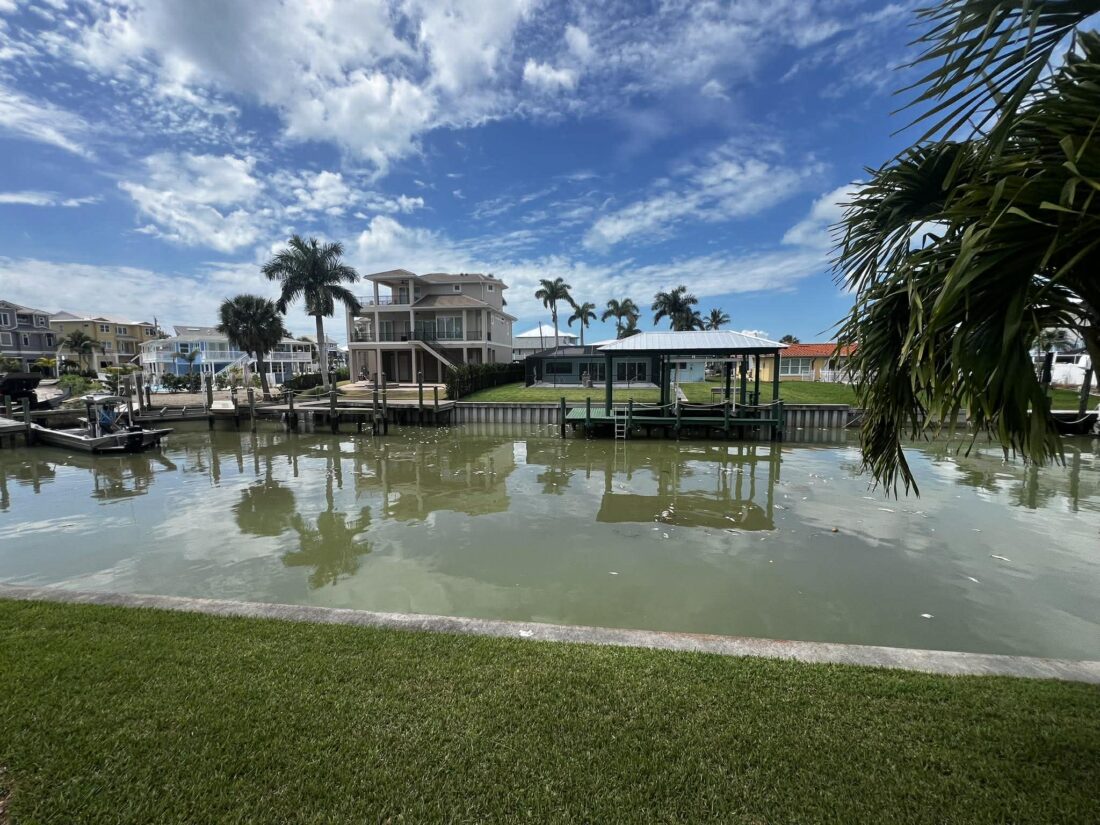
The Town of Fort Myers Beach announced that test results showed low oxygen levels in Buccaneer Lagoon, likely due to excessive fertilizer runoff, was the cause of last Friday’s large fish kill event. Photo by Stephen Clark.
2 / 4
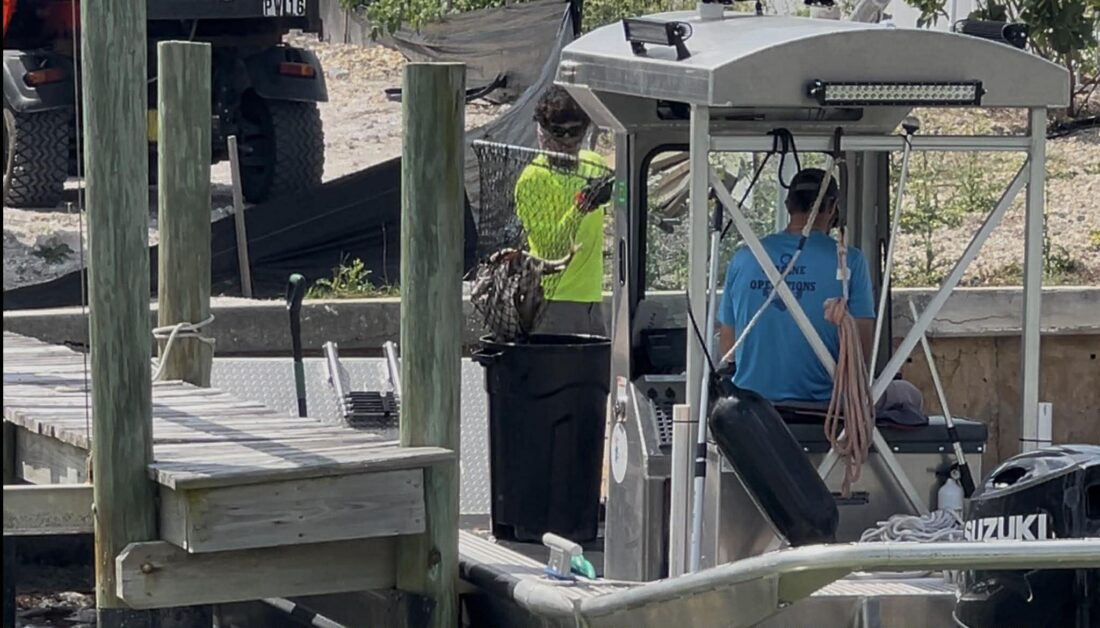
Town of Fort Myers Beach staff recovered scores of dead fish from Buccaneer Lagoon on Friday after what appears to have been an incident related to fertilizer runoff in the area. Photo by Stephen Clark
3 / 4
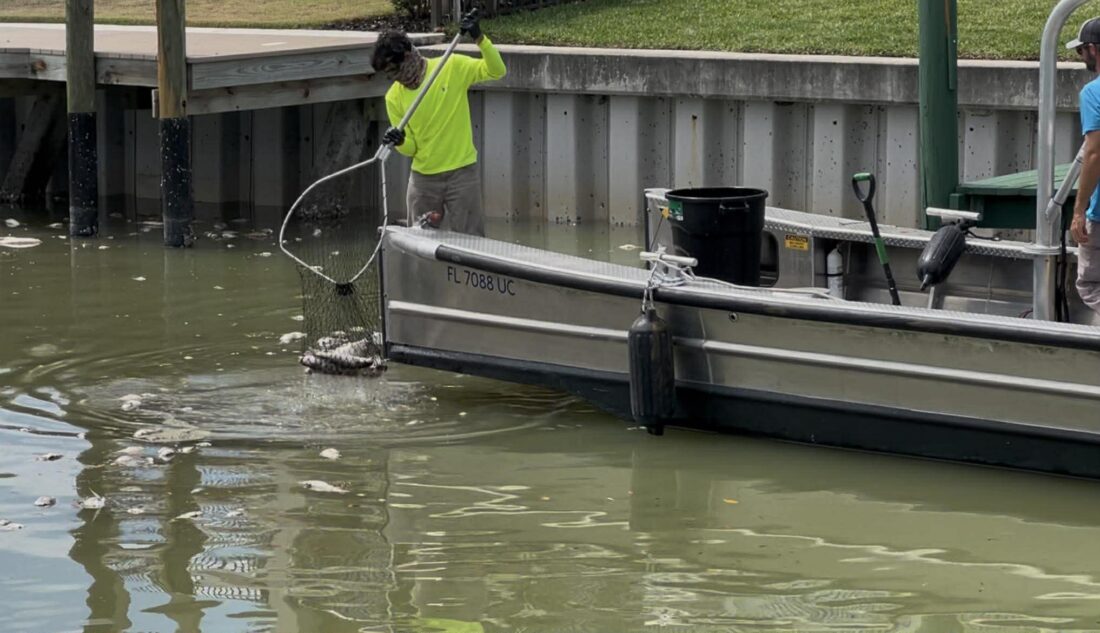
The Town of Fort Myers Beach has a fertilizer ordinance in place which limits the use of nitrogen and bans the use of phosphorus fertilizer. Photo by Stephen Clark
4 / 4
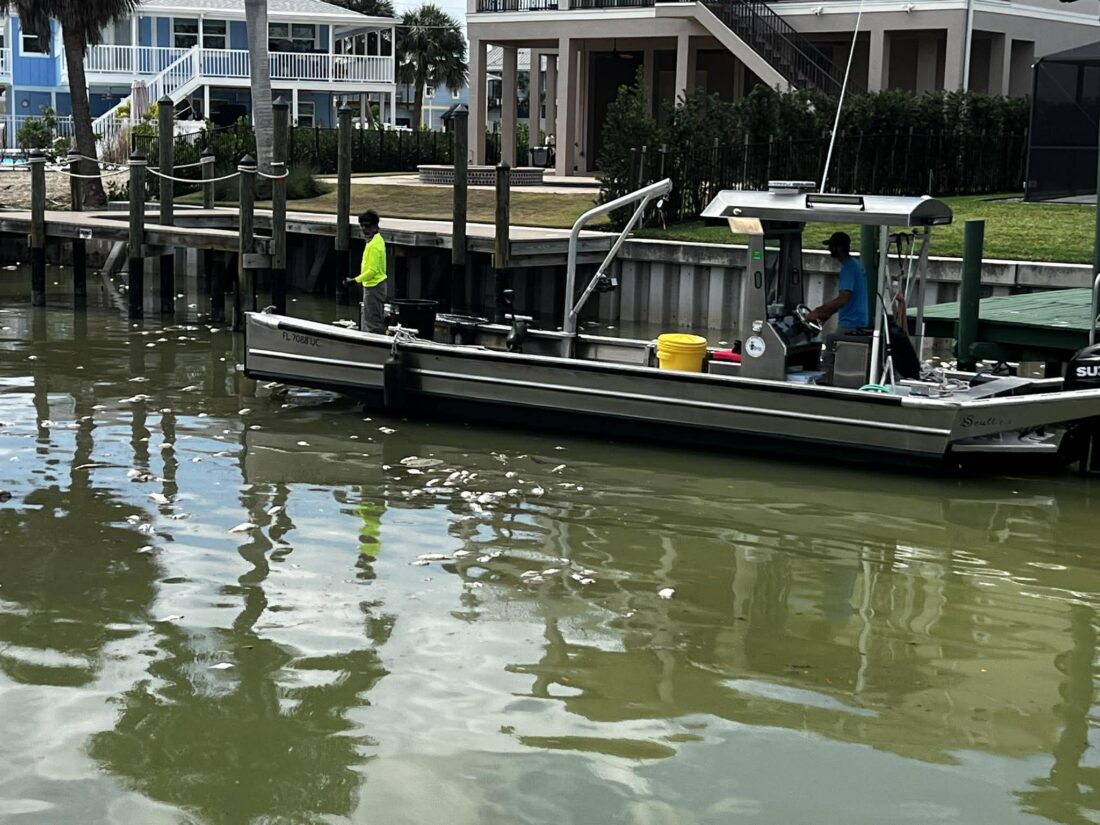
Fort Myers Beach Environmental Project Manager Chadd Chustz is calling for town residents to limit the use of fertilizer and to plant native vegetation after Friday’s large fish kill event that town officials believe may have been caused by fertilizer runoff. Photo by Stephen Clark
[expand]
close
The Town of Fort Myers Beach Environmental Project Manager Chadd Chustz is urging property owners to limit fertilizer use and to plant native vegetation after a large fish kill event at Buccaneer Lagoon last week in which town staff removed scores of dead fish from the water.
The Town of Fort Myers Beach announced today that test results of the water at Buccaneer Lagoon by Florida Gulf Coast University and the Sanibel-Captiva Conservation Foundation after Friday’s fish kill event indicated low dissolved oxygen levels and identified non-toxic dinoflagellates in the water.
Chustz noted that low oxygen levels are frequently caused by excessive nutrients entering the local waterway through fertilizer runoff, the town said in a statement.
Chustz is urging property owners to limit fertilizer use and to plant native vegetation, which doesn’t require the use of fertilizer. The town also has a fertilizer ordinance which bans fertilizer from being applied within 15 feet of any canal, lake, pond, stream, wetland or from the top of a seawall. Newly planted turf or landscape plants in those zones can only be fertilized within a 60-day period beginning 30 days after plantings.
The town’s fertilizer ordinance, which was last updated in 2020, also limits any use of fertilizer in the town to one pound of total nitrogen per 1,000 square feet per application. No more than four pounds of nitrogen can be applied to any 1,000 square foot area in any calendar year. Fertilizer can not be applied to any landscape area more than four times a year.
Fertilizer with nitrogen must contain no less than 50% slow release nitrogen.
In addition, the town’s fertilizer ordinance bans the use of any fertilizer containing phosphorus unless a soil or plant tissue deficiency is verified by a testing methodology approved by the University of Florida, Institute of Food and Agricultural Sciences.
The ordinance also bans any mowed or cut vegetative material from being deposited into the water.
In addition, any commercial applicator of fertilizer in the town is required at all times to have and carry certification by the Florida Department of Agriculture and Consumer Services as a commercial fertilizer applicator.
The ordinance allows town code enforcement to regularly inspect the use of fertilizer. The town can issue fines of $250 per day to violators or $500 per day for repeat violators.
Town of Fort Myers Beach staff fished out scores of dead fish from a lagoon last Friday in a large fish kill event that was being investigated by the Florida Fish and Wildlife Conservation (FWC).
The FWC is working to have water samples collected to determine the cause. Buccaneer Lagoon is located on the south bay side of Fort Myers Beach near an outlet to Big Carlos Pass.
“FWC’s fish kill hotline staff have received calls regarding this fish kill event. We are working to have water samples collected and sent to our lab at FWRI for analysis,” Johnson said last week. “The Town of Fort Myers Beach are cleaning up the dead fish. At this time, the cause of the event has not been identified. The best thing members of the public can do is report fish kills to the FWC fish kill hotline at 1-800-636-0511 or online at MyFWC.com/reportfishkill.”
On Friday afternoon, the Town of Fort Myers Beach issued an announcement about the unusually high amount of fish kills reported in the lagoon on the town’s south side.
“The health and safety of our community and its natural environment are our top priorities,” the town’s statement said. “Out of an abundance of caution, we ask that residents avoid contact with the lagoon until further notice. The town will be conducting a fish cleanup of the lagoon. Further cleanup is pending sample test results. We are committed to keeping you informed and will share updates as soon as more information becomes available. If you have any questions or observations to share, please contact us at abigail.eberhart@fmbgov.com.”
A preliminary fish removal was conducted Friday “in order to make the lagoon more manageable and reduce odor concerns,” Fort Myers Beach Abigail Eberhart said. Eberhart said a formal environmental cleanup has not been conducted at this stage.
At this time, Buccaneer Lagoon is the only body of water believed to be affected, Eberhart said.
Stephen Clark, a musician who lives nearby, said the dead fish stopped showing up on Sunday. “The dolphins and manatees have returned to the lagoon and canal,” Clark said. “Whatever happened seems to have stopped.”