
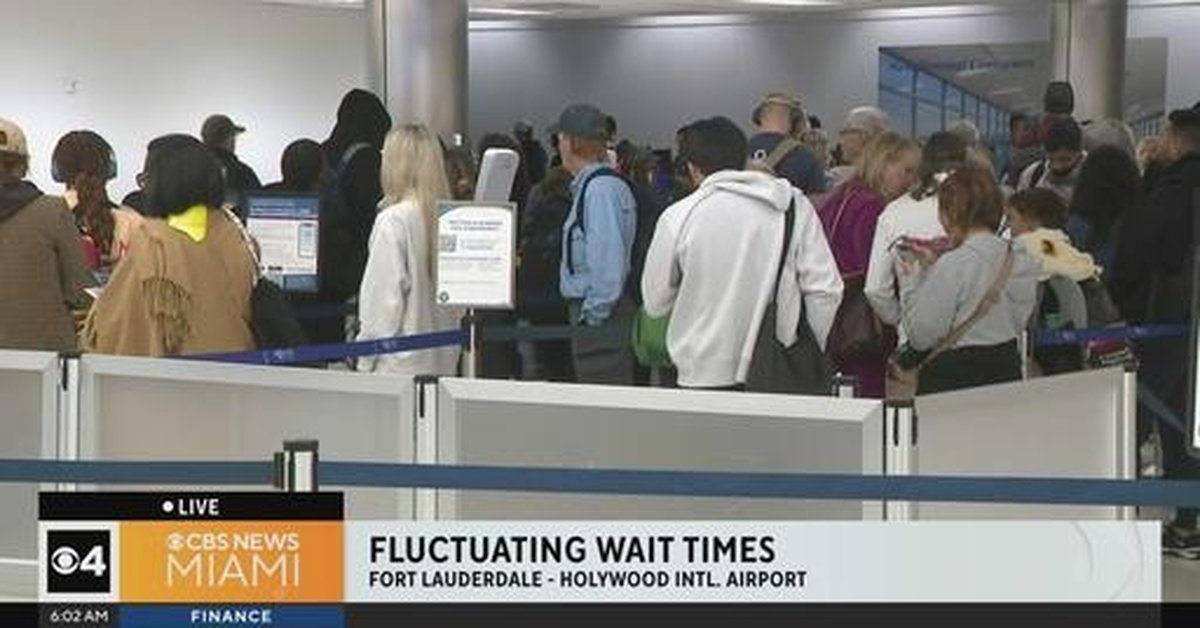
Travelers hoping for a smooth return home from South Florida this week were met with a perfect storm of complications—quite literally—as severe weather and a partial government shutdown upended travel plans at the region’s three major airports. From tornadoes in the South to blizzards blanketing the Midwest, extreme weather battered the nation and left thousands of passengers stranded, frustrated, and sleeping on terminal floors.
At Fort Lauderdale-Hollywood International Airport (FLL), the chaos was palpable. On Tuesday, March 17, 2026, digital information boards glowed with grim news: 300 delays and 98 cancellations by late afternoon, following an even worse Monday with 429 delays and 286 cancellations, according to the Sun-Sentinel and FlightAware. Miami International Airport (MIA) and Palm Beach International Airport (PBI) fared no better, each reporting hundreds of delays and scores of cancellations over the same period.
“Pretty brutal, a lot of waiting,” said traveler Mike Vero to WSVN, echoing the sentiments of many. “My flight was supposed to leave at 3:30 on Sunday, and then Monday, like 6 a.m., it kept getting delayed, delayed, delayed and canceled. They had a backup flight at 7:30, canceled. Now they’re saying the earliest [available flight] is Thursday; that’s two days from now.”
For some, the ordeal began days earlier. Alajah Buchanan, who was trying to get home to Michigan after a spring break trip to Texas, recounted, “I came here, it was the 16th, it was a layover, and I’ve been stuck here since. And they booked the flight for me for the 19th, it’s the 17th. Why am I stuck here?” She tried her luck repeatedly in the check-in lines, hoping for an earlier departure, and finally managed to secure a slightly sooner flight.
These stories were far from unique. Tracy Brown, a Michigan resident, summed up the fatigue: “I’m tired, I’m exhausted, but I know that this too shall end. My husband said, ‘This is the last time.’”
The root causes of the disruption were multifaceted. Severe storms swept across the United States, with tornadoes wreaking havoc in the South and heavy snow shutting down roads and airports in the Midwest. One man who witnessed the chaos firsthand told WSVN, “Jumped up to see what was going on, that’s when I saw the pallet from the pallet company, and it was literally blown up into the air.” For many, the scale of the disruption was unexpected. “I didn’t expect it to be as bad as they said it was going to be,” a woman admitted to local reporters.
But Mother Nature wasn’t acting alone. The partial federal government shutdown, which began on February 14, 2026, continued to ripple through the nation’s transportation systems. TSA workers, missing their first full paycheck as of Friday, March 13, began calling out sick or seeking other work, leading to longer security lines and even more delays. As CBS News Miami reported, officials at FLL urged passengers to allow extra time to get through security and to check with airlines before heading to the airport.
Acting Deputy TSA Administrator Adam Stahl didn’t mince words in an interview with Fox News: “If this continues, it’s not hyperbole to suggest that we might have to quite literally shut down airports.” While larger hubs like FLL and MIA have so far avoided closure, the threat loomed over smaller airports, and the strain was evident everywhere. TSA union leaders warned at a news conference outside Atlanta’s Hartsfield-Jackson International Airport that officers were “coping with eviction notices, vehicle repossessions, empty refrigerators and overdrawn bank accounts,” according to the Associated Press. Supporters held signs reading, “We want a paycheck, not a rain check.”
On Tuesday evening, more than 1,100 U.S. flights had been canceled and about 7,300 others delayed, according to FlightAware. Monday’s nationwide total was even more staggering, with nearly 4,800 flights canceled. In South Florida, the combination of spring break crowds, stormy skies, and diminished TSA staffing created a bottleneck that left some travelers waiting up to 10 hours just to board—or even to rebook—a flight.
Some travelers tried to make the best of a bad situation. Alec Fisher, visiting from Minnesota, said, “We got like 12 inches of snow, it’s horrible. I do not want to go back to it, but I need to.” He tried to treat the delay as an extended vacation, keeping his spirits up. Others, like Kentucky visitor Hannah Hendrickson, found the experience draining: “We’ve just spent hours in lines. Some people have been great, some people have been snotty. That just makes the experience not so fun.”
For those stuck overnight, the situation was even bleaker. “There’s nowhere to sleep, there’s – the vending machine is empty. There’s a water fountain, and that’s it,” Vero lamented to WSVN. “People are sleeping everywhere, sleeping lined up, like, in the bathroom hallway. It was crazy.” With local hotels fully booked thanks to spring break and seasonal vacationers, and rental car prices soaring, some desperate travelers even considered taking trains home or simply sleeping in the terminals until flights resumed.
The airports themselves scrambled to manage the crisis. FLL experienced two ground stops—one at about 7 p.m. Monday, lifted at 9:30 p.m., and another from 1:30 a.m. to 3:30 a.m. Tuesday—to address what Broward County Aviation Department spokesperson Arlene Satchell called an “imbalance issue with more aircraft arriving than departing the airport during the late evening hours.” The ground stops allowed passengers to deplane and helped restore some order, but normal operations remained elusive for much of the day.
MIA spokesperson Greg Chin described the night as “rough,” noting that thunderstorms triggered a ground stop for all inbound flights between 8:00 and 8:30 p.m. on Monday, followed by sporadic departure delays late into the night. Departures from Miami were being delayed by an average of 15 minutes—and that number was still climbing by Tuesday afternoon, according to the Federal Aviation Administration.
Palm Beach International Airport, though smaller, was not spared. Spokesperson Rebeca Krogman advised travelers to “arrive at the airport two hours prior to scheduled departures and to double check with their airlines for the most current flight information.” She noted that while operations had improved compared to the previous day, delays and cancellations continued due to ongoing weather and residual effects.
Despite the mounting frustration, many travelers expressed empathy for TSA employees caught in the shutdown’s crossfire. “Given what the TSA employees are going through right now it’s hard to get bitter about all of these things because I know they are in a really tough spot,” one traveler told WPLG Local10.com.
As the week wore on, officials continued to advise travelers to plan ahead, arrive early, and remain patient. For many, though, the ordeal was a stark reminder of just how quickly travel plans can unravel when nature and politics collide. For now, South Florida’s airports remain open—but with the weather still unpredictable and the government shutdown unresolved, travelers and officials alike are bracing for more turbulence ahead.