
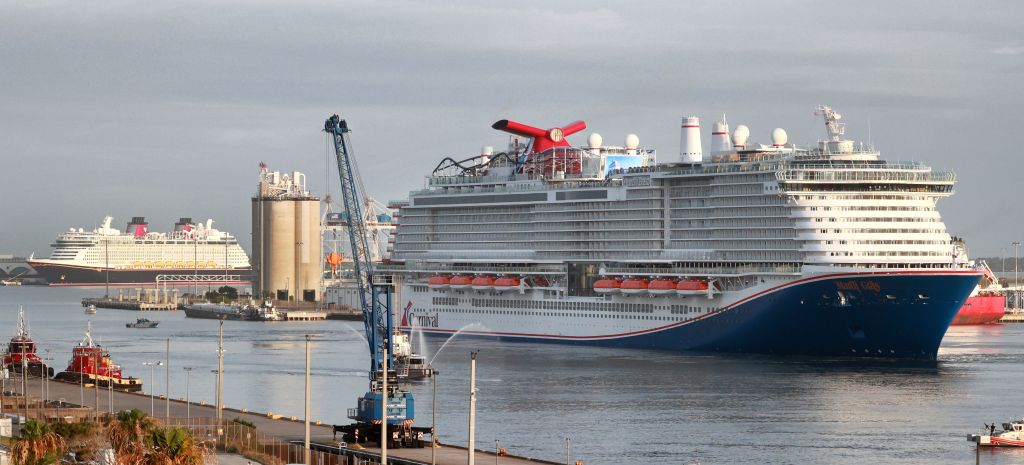
Liquefied Natural Gas (LNG) is a current transportation fuel used by the space, maritime, rail and over the road trucking industries across Florida and the United States. Yet the Space Coast region does not have its own LNG production and storage facility to sustain launches or cruises. In fact, all of the LNG fuel used today in the community must be barged or trucked from outside the Space Coast.
Recently, a proposal for an LNG production and storage facility near the port has drawn some pushback from those in the community because of a skewed understanding of the physical and chemical properties of LNG. As a veteran of 28 years with the Fire Service, State of Florida Fire Instructor, and educator of public officials, first responders, maritime and regulatory professionals in Jacksonville, I believe it is important to help educate the community on what LNG is, as well as what it is not.
Any discussion about LNG should begin with what it is and how it actually behaves. LNG is natural gas that has been cooled to a very low temperature where it can be then stored as a liquid. In that state, it is a non-toxic, non-corrosive, and non-flammable commodity. LNG cannot explode. For ignition of the natural gas to occur, LNG must first vaporize, then mix with the exact oxygen concentration range and then encounter an ignition source — all at the same time. LNG facilities are closely regulated and specifically engineered to safely produce and store LNG through design, continuous monitoring, redundant safeguards and automatic shutdown systems.
Another concern I frequently hear involves emissions and potential health impacts. LNG does not produce harmful emissions during production or storage. When used as a fuel, it is widely recognized as the cleanest transportation fuel available today. Compared to traditional marine fuels, LNG virtually eliminates sulfur emissions and significantly reduces nitrogen oxides and particulate matter, the pollutants most closely associated with air-quality concerns in port communities.
Spills are also commonly misunderstood. If an LNG spill would occur, they are fundamentally different from oil or gasoline spills. LNG does not pool, soak into soil or contaminate waterways. If spilled, it rapidly warms, vaporizes, and disperses into the atmosphere, leaving no residue behind. From an emergency-response perspective, LNG presents a lower environmental and cleanup risk than other hydrocarbons responders routinely manage.
It is also important to recognize that natural gas infrastructure already exists throughout the Space Coast. Homes, businesses, churches, schools, and critical facilities like hospitals rely on it every day. LNG facilities operate safely across the country, including in port communities. This is not experimental technology, it is well understood, tightly regulated, and familiar to emergency responders.
The lack of local LNG production and storage also increases public highway safety. Without nearby supply, LNG must be transported long distances by truck or barge to the Space Coast which increases traffic, emissions and exposure on our roadways and waterways. Locating LNG closer to where it is used can reduce those risks and improve reliability, particularly during severe weather or emergency situations.
 I encourage community members to ask questions and become properly informed before making a decision on the value of the proposed Canaveral LNG project. In my opinion, decisions should be informed by accurate information. From my professional experience, many of the safety concerns being raised reflect misunderstandings of LNG rather than its real-world behavior, safety track record along with the added benefit to boost maritime commerce and space exploration, while providing cleaner air along the Space Coast.
Richard Barrett of Jacksonville has been an instructor for 25 of his 28 years serving the Florida Fire Service.