
“That’s when I turned on a VPN,” Dowd told me, referring to an encrypted connection to hide her sleuthing. “I started digging into everything I could find on these two guys”—the Chinese buyer and property manager. The trail led northwest, to a red-walled compound south of Orlando, emblazoned with Chinese writing and—apparent in satellite imagery and property records—housing two large residences, greenhouses, a pond, and, she said, a small broadcast facility labeled Florida Chinese TV.
When I asked Dowd what she thought she’d uncovered, she didn’t hedge. “An intelligence-gathering syndicate,” she said. “It didn’t seem kosher. And I felt like someone who knew how to do this properly should probably take a look.”
She phoned the FBI. The call did not go well.
Dowd claimed she reached the Tampa field office last April and began laying out what she’d found: the cash purchase, the proximity to a Space Force base, and so on. She said she hadn’t gotten far before the intake agent cut her off. The tone, Dowd recalled, was accusatory. She was told she was engaging in racial profiling, and the line, she said, soon went dead.
“That was a defining moment for me,” she explained. “I had to decide whether I was just some paranoid civilian or whether I’d actually stumbled onto something real.” She called back.
This time, she asked for a supervisor and led with disclaimers rather than conclusions. “I’m a military spouse,” she told him. “I promise I’m not an idiot. I just need five minutes of your time.” There was a pause, she recalled, and then, “Okay. You’ve got five.”
Shortly thereafter, Dowd found herself inside the FBI’s resident agency in Brevard County, where she was debriefed by a special agent. The focus, Dowd said, was narrow: the property manager and the suspicious residences. The agent asked questions, took notes. The tenor, as Dowd put it, was “curious but careful.” When the meeting ended, the agent supposedly said, firmly but politely, “We’ll take it from here.”
Dowd never heard back.
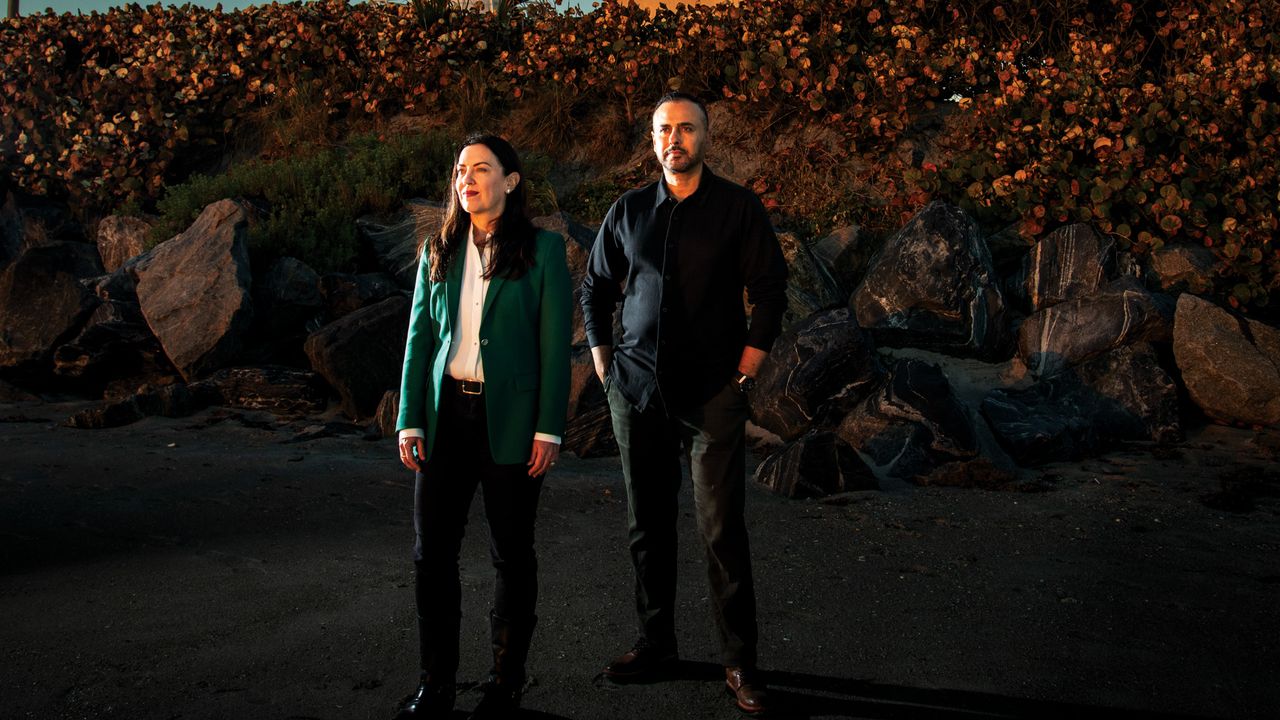
Undeterred, she kept digging. Last November, through a mutual acquaintance, she met Michele Rigby Assad, the former CIA officer who’d spent years separating real threats from imaginary ones. Over coffee, Dowd laid out her story—the house, the emissions, the compound, the calls to the FBI. Rigby Assad listened.
“I walked away thinking two things,” the ex-spy told me later. “Either she’s crazy—or was onto a potential Chinese espionage operation.” What struck Rigby Assad wasn’t the amateurism of the inquiry but its internal logic. “This is what counterintelligence actually looks like,” she said. “Someone notices something that doesn’t quite fit, and instead of explaining it away, they start pulling on the thread.” She added emphatically, “People who don’t want to find something rarely do.”
On the Space Coast, there is no shortage of threads. What is less clear is who will pull them.