

By Martin Taylor
Jacksonville is in an affordability crisis, and JEA (as our public utility) should be part of the solution — not making electricity even more expensive by committing billions of dollars to a new natural gas power plant.
As a solar owner, I’ve spent years helping neighbors understand their energy choices, especially seniors, working families and veterans living on fixed incomes. I’ve seen firsthand how rising electric bills strain household budgets. That’s why I oppose JEA’s decision to pursue an oversized, risky new gas plant.
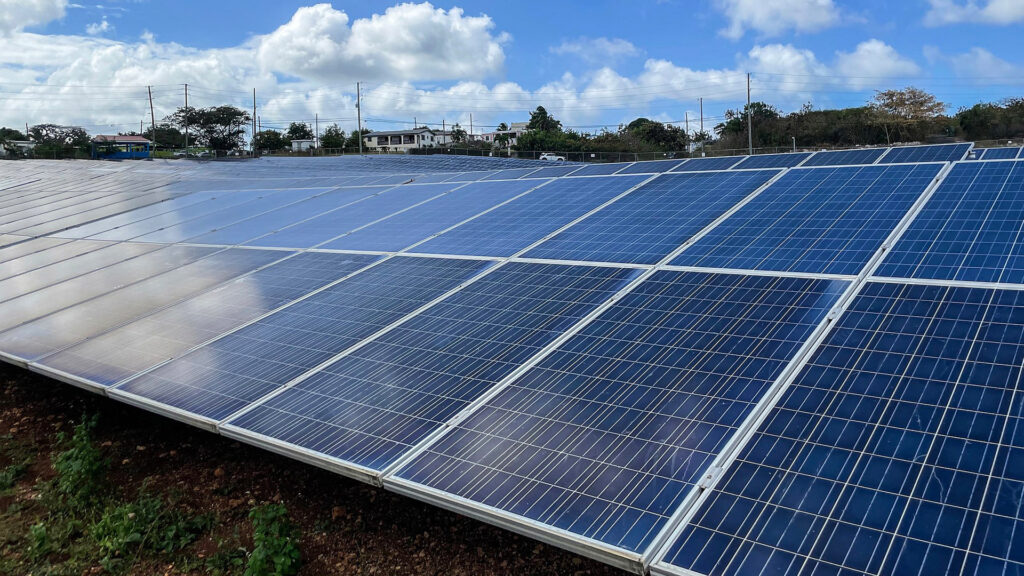 Solar power has become one of the cheapest sources of new electricity generation. (U.S. Department of Agriculture via Wikimedia Commons)
Last August, JEA’s board approved plans for a 675-megawatt natural gas plant with a price tag of $1.57 billion. This figure is already 139% higher than the utility’s original estimate due to supply chain problems and construction delays.
Even more troubling, an independent analysis by the Rocky Mountain Institute finds that this project could ultimately cost customers up to $2.5 billion more than cleaner, less volatile alternatives like utility-scale solar, battery storage and energy efficiency.
Gas turbines are in short supply nationwide, pushing costs higher and delaying projects across the country. For this plant, the timeline has already slipped by at least two years (from 2029 to 2031) leaving customers exposed to fuel price spikes in the meantime. These are exactly the kinds of risks utilities are supposed to protect customers from, not lock us into — again
What makes this especially frustrating is that better options are readily available. According to the Rocky Mountain Institute’s analysis, portfolios built around utility-scale solar, energy storage and efficiency can meet Jacksonville’s reliability needs at lower cost and with far less financial risk. Clean energy alternatives outperformed the gas plant once updated market conditions were taken into account.
Even JEA did not dispute the report’s technical findings; it simply disagreed with the conclusions.
Solar power has become one of the cheapest sources of new electricity generation. It can be deployed faster than gas plants, avoids fuel price volatility entirely and produces no harmful emissions. Just as importantly, Jacksonville should be expanding access to customer-owned solar.
Restoring fair net metering — known as rooftop solar credits — would allow customers to receive credit for the electricity they generate and feed it back into the grid.
Net metering is a proven policy that lowers bills, strengthens grid resilience and keeps energy dollars circulating locally. I can say from personal experience and without hesitation that distributed solar paired with battery storage improves household affordability. These benefits multiply when more customers are allowed to participate, while also providing backup power during major storms.
Restricting net metering does the opposite: It discourages local investment and limits consumer choice, while harming residents and local businesses.
 Martin Taylor
Jacksonville residents are still paying for past mistakes and JEA customers currently face higher bills tied to debt from Georgia’s Plant Vogtle nuclear project, which ballooned to roughly double its original cost. Building another large, delay-prone power plant risks repeating history at a time when families can least afford it.
Beyond repeating history, there are real health and economic risks. Fossil fuel generation today contributes to air pollution that worsens asthma and other respiratory conditions, which drives up health care costs. Clean energy alternatives reduce these risks while creating hundreds of millions of dollars in local economic benefits that can’t be outsourced.
Jacksonville deserves an energy strategy that reflects today’s realities, not yesterday’s assumptions. Investing billions in a new gas plant makes no sense when cheaper, cleaner and more flexible alternatives are available. JEA should pause this project, update its analysis, restore net metering, accelerate utility-scale solar and battery storage and expand energy efficiency programs.
We don’t have to choose between reliability and affordability. We can have both — if JEA is willing to choose a future that works for the people it serves, not against them.
Martin Taylor is an Air Force veteran and a proud solar owner. He lives in Jacksonville. This opinion piece was originally published by the Florida Times-Union, which is a media partner of The Invading Sea. Banner photo: A natural gas power plant (iStock image).
Sign up for The Invading Sea newsletter by visiting here. To support The Invading Sea, click here to make a donation. If you are interested in submitting an opinion piece to The Invading Sea, email Editor Nathan Crabbe.