
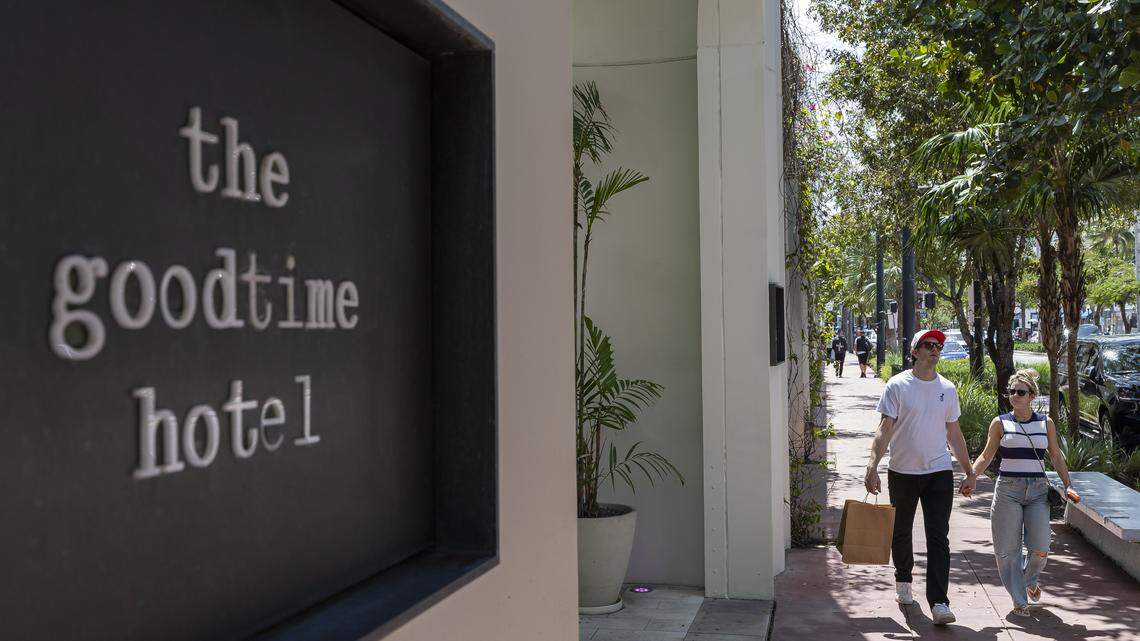
The entrance to The Goodtime Hotel opens to Washington Avenue in South Beach.
Photo by Matias J. Ocner
mocner@miamiherald.com
Five years after its much-hyped South Beach debut featuring celebrity frontman Pharrell Williams, The Goodtime Hotel is in bad trouble.
A California real estate fund has filed a $150 million foreclosure action against the hotel’s owners in Miami-Dade Circuit Court, raising questions about its future, as well as Miami Beach’s broader efforts to revitalize Washington Avenue, where Goodtime occupies a full block.
The lawsuit by an affiliate of CIM Group, a prominent commercial real estate investor and developer, claims that Goodtime’s owner, Washington Squared Owner, is in default of a $152 million loan that financed the project. Washington Squared is controlled by a New York-based hospitality developer, Dreamscape Companies.
When the hotel opened, extensive news coverage and publicity prominently identified Williams, a highly successful pop-music producer who is also a creative director for Louis Vuitton, as a co-developer or partner in the Goodtime venture with Miami nightlife and dining entrepreneur David Grutman, of LIV nightclub fame.
It’s unclear whether the pair had a financial interest in the project or any role beyond running the dining and entertainment program. Neither is named in the foreclosure suit. A representative said Grutman and Pharrell have not been involved in the hotel since mid or late 2024.
The extravagant 266-room hotel, which features club-like vibes, florid tropical decor and weekend pool parties on its expansive rooftop deck, was touted as a harbinger of a long-sought turnaround for down-at-the heels Washington Avenue. Its construction was made possible by city zoning incentives designed to foster hotel development along the historic Art Deco District commercial corridor.
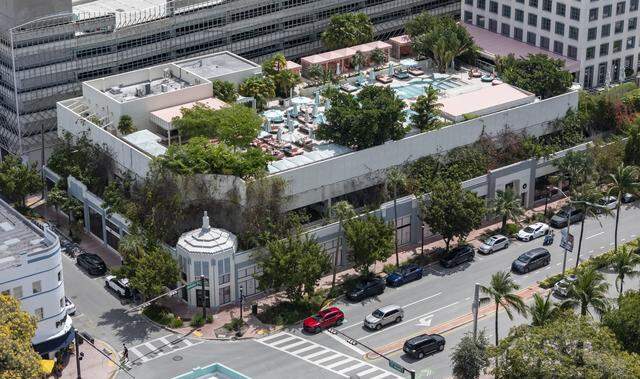 The Goodtime Hotel and its expansive pool and entertainment deck occupy a full city block behind historic Art Deco storefronts on South Beach’s Washington Avenue. Photo by Matias J. Ocner mocner@miamiherald.com
But the foreclosure suit alleges the hotel has been struggling. So has Washington Avenue, now the focus of a renewed effort by Miami Beach officials to revive the corridor’s still-stagnant fortunes by potentially rezoning to incentivize residential development instead.
The seven-story hotel was built behind a block of historic Art Deco storefronts that were renovated and incorporated into Goodtime, but virtually all of those have remained vacant. The company that owns the hotel takes its name from a live-music club, Washington Square, that occupied one of those spaces in the early 1990s.
According to the complaint by CIM subsidiary CMMT, the lender has helped cover payroll, delinquent Florida sales taxes and other expenses for Goodtime because the hotel has been operating in the red. Washington Squared’s attorneys have not filed a response to the lawsuit and did not respond to a request for an interview from the Miami Herald.
CIM, which is based in Los Angeles, has played a significant role in Miami real estate development. The firm has been a principal financial backer of Miami Worldcenter, a massive mixed-use project occupying 10 blocks north of downtown that is now nearing completion after years of development.
The Goodtime foreclosure action, filed Jan. 27, comes after months of legal and financial wrangling between the hotel’s developers and their lenders. According to a complicated lawsuit filed late last year in New York by CIM, the Real Deal news website reported, Goodtime had been in default of the loan for months, and negotiations were underway to surrender control of the property in lieu of a formal foreclosure.
The CIM suit alleges that the partners behind the hotel development — Dreamscape CEO Eric Birnbaum and Michael Fascitelli, managing partner of Imperial Companies — were personally on the hook for at least $10 million in payments required by the terms of the loan to cover operating losses at Goodtime, but failed to pay.
In a counterclaim, Birnbaum and Fascitelli said the lender was attempting to exploit a drafting error by their lawyer in a clause of the loan agreement to press for substantially more than they actually owe.
That unresolved dispute serves as the backdrop to the Miami foreclosure suit, filed on behalf of CIM and CMMT by the Miami office of the Greenspoon Marder law firm.
According to the complaint, CIM and its affiliate agreed in 2021 to provide a loan to the Goodtime developer of up to $164 million, later reduced to $152 million.
Following months of nonpayment from Goodtime’s owner, the suit says, the lenders declared the hotel in default of the loan in 2024. It puts the amount due at $149,256,306.73, “plus accrued and unpaid interest, default interest, late fees” and other costs.
Greenspoon Marder partner Jeffrey Gilbert, who is handling the case, declined a request for an interview, saying the firm does not comment on pending litigation.
Attorneys at King & Spalding’s Miami office, representing Goodtime’s owners, did not respond to a request for an interview.
What happened to The Goodtime Hotel? 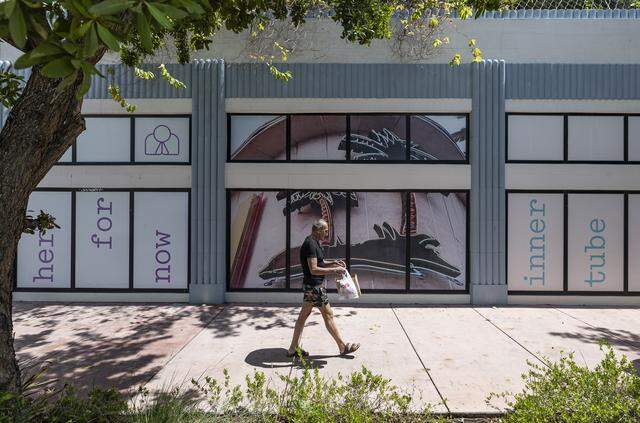 A man strolls past vacant historic Art Deco storefronts that were incorporated into The Goodtime Hotel, which opened in 2021 on South Beach’s Washington Avenue as part of a revitalization effort that has not panned out. Photo by Matias J. Ocner mocner@miamiherald.com
Goodtime has failed to live up to its promise for several reasons, observers say.
Its troubles come as tourism and hotel occupancy have flattened in Miami Beach. According to 2025 figures, hotel occupancy dipped 1%, to 71.4%, according to real estate data and analytics firm CoStar, while revenue per room stalled, falling by 0.1% to $205.99. The numbers would have been worse were it not for the high-end luxury segment, which experienced disproportionate growth. However, Goodtime’s rates, which range from around $240 to over $400 at peak times, don’t put it in that category.
The hotel sits two blocks from the beach in the heart of South Beach’s Art Deco District, but Washington Avenue, historically a commercial corridor of small one-story shops, has long faced competition from Collins Avenue and Ocean Drive’s more appealing shops and dining spots.
In the decade before the Goodtime’s opening, the street was plagued by vacant and boarded-up storefronts, said Daniel Ciraldo, former longtime executive director of the Miami Design Preservation League.
A Washington Avenue plan approved by the city allowed property owners to build higher if they occupied a certain amount of street frontage, a strategy designed in part to help fill those vacant storefronts. Under the initiative, hotel projects could go up to 75 feet, compared to 50 feet previously.
Goodtime was one of the big catalysts of that initiative, said Ciraldo. It was also one of the biggest beneficiaries. But it didn’t pan out. The scruffy ambience along Washington did not help the hotel’s appeal or its ability to fill its retail shops.
“The goal was to bring in more retail,” said Ciraldo, but that did not happen. The hotel over-relied on the weekend pool parties, which have cooled.
“Goodtime ended up going the way of the party scene,” Ciraldo said.

Miami Herald
Andres Viglucci covers urban affairs for the Miami Herald. He joined the Herald in 1983.
Miami Herald
Vinod Sreeharsha covers tourism trends in South Florida for the Miami Herald.