
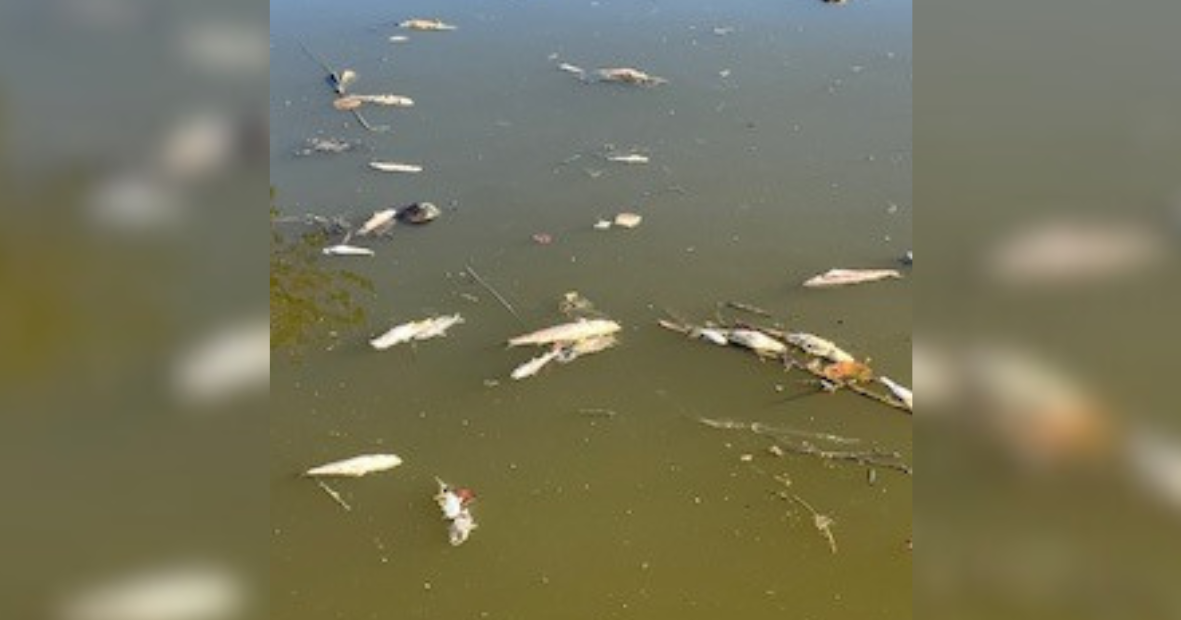
FORT MYERS BEACH, Fla. (WINK) — Just days after a massive fish kill along Buccaneer Lagoon, the air has cleared — a sign, experts say, that the water is beginning to recover.
In tidal areas like Buccaneer Lagoon, constant water movement helps flush out pollution. It’s known as tidal flushing — when incoming and outgoing tides push contaminated water out and bring in cleaner water. Recent rain also helped move stagnant water and restore oxygen levels.
But while conditions are improving, what caused the die-off is drawing attention — especially because much of it may have been preventable.
“It seems like it had to be a lot of fertilizer for that many fish to be dead,” said Teresa Miller, who lives along the lagoon.
Environmental experts say events like this point to a deeper imbalance.
“Anytime you see a fish kill of this magnitude, it’s indicative of something not being right in the system,” said Matt DePaolis with the Sanibel-Captiva Conservation Foundation.
Fertilizer runoff is believed to be a major factor. When excess nutrients wash into the water, they can trigger growth that drains oxygen, creating conditions in which fish can’t survive.
Experts say other factors likely made things worse: a recent cold snap, an unusually dry season, and a lack of freshwater releases, all of which can weaken the ecosystem and amplify the impact.
Even so, the scale of the fish kill surprised them.
Because much of this is tied to human activity, experts say prevention starts with everyday choices — like cutting back on fertilizer, avoiding use before rain, watering less, and switching to native plants. Even washing your car can contribute, as runoff flows into storm drains and eventually into local waterways.
“If you’re making choices to garden with native plants, to irrigate your lawn less… you don’t have to use fertilizer as much,” DePaolis said.
In Fort Myers Beach, where water systems are closely connected, those decisions can have an immediate impact.
The town does have seasonal fertilizer restrictions in place, but they are not currently in effect.
The water may be clearing, but the takeaway is straightforward: what ends up in the lagoon often starts on land — and avoiding the next fish kill may come down to what people do at home.