
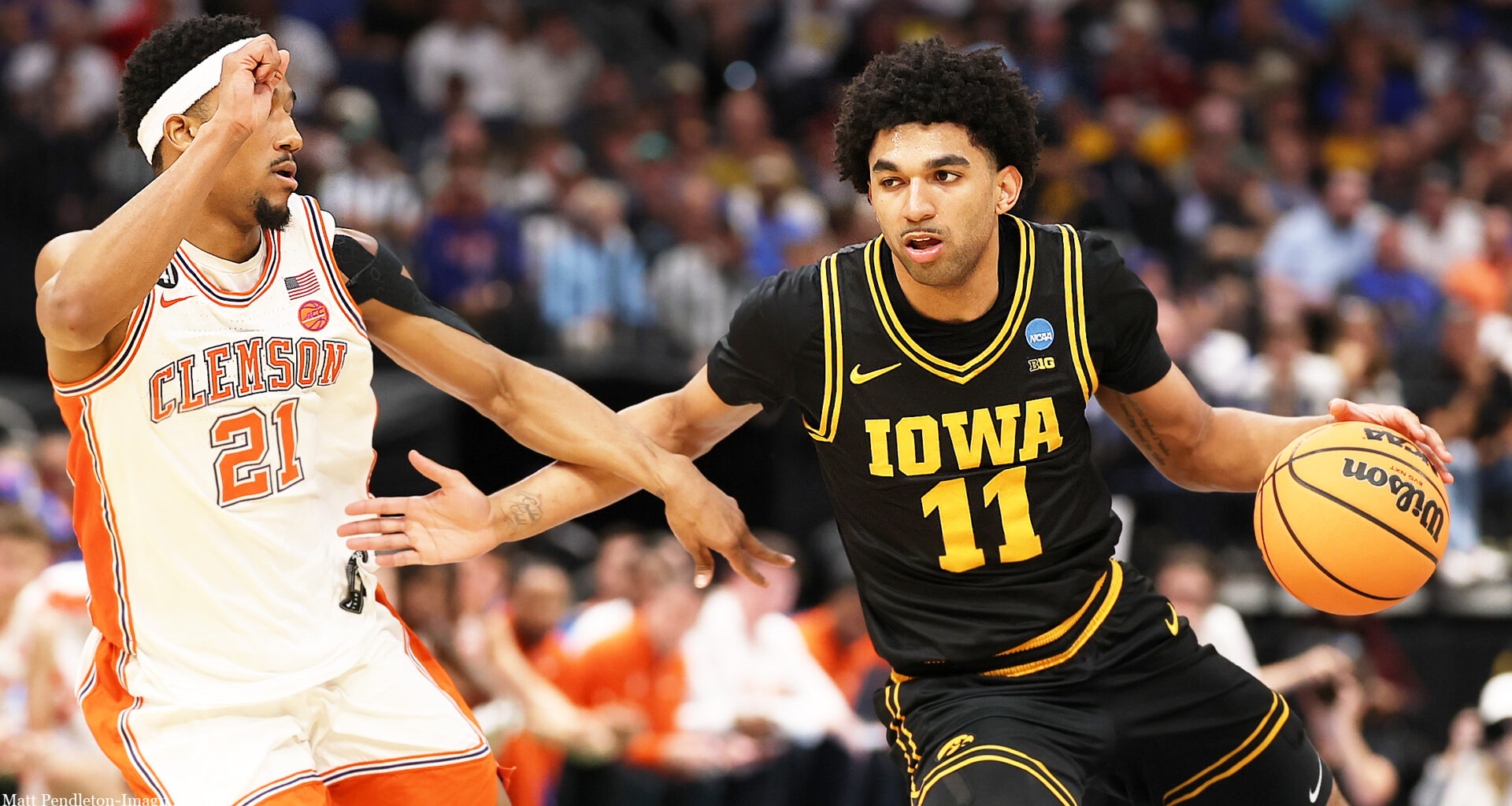
March Madness is supposed to be unpredictable.
For Clemson, it’s started to feel a little too familiar.
A year after a historically slow start against McNeese State, the Tigers again spent most of the night trying to climb out of a hole they created themselves, this time in a 67–61 loss to Iowa Friday night in the first round of the NCAA Tournament in Tampa, Fla.
BECOME A TIGERILLUSTRATED.com SUBSCRIBER!
And in a game with limited possessions, the reasons why weren’t complicated. They just carried a lot of weight.
It starts with two numbers that ultimately decided the game: free throws and offensive rebounds.
Clemson (24-11) actually shot the ball better than Iowa (22-12) and won the turnover margin.
The Tigers finished at 40.7 percent from the field and 34.6 percent from three, both ahead of Iowa’s 38.3 percent overall and 28 percent from deep.
But Iowa dictated how the game was played. The Hawkeyes attempted 31 free throws and made 24. Clemson took just 12, converting eight.
That gap didn’t just show up on the stat sheet, it controlled the rhythm.
It showed up most clearly in the second half. Iowa went more than eight minutes without a field goal, finally breaking the drought with 56 seconds left. In most games, that’s where things flip. Instead, Iowa lived at the line, going 12-for-16 in that stretch. Clemson attempted just three free throws during the same window.
That’s how a lead holds even when the shots stop falling.
The rebounding told a similar story, and maybe an even more important one.
Iowa finished with 15 offensive rebounds and turned them into 16 second-chance points. Clemson had 10 offensive boards but managed just four points off them. In a slow-paced matchup, where both teams are comfortable shrinking the number of possessions, those extra opportunities aren’t just helpful, they’re often the difference.
And they came at the exact moments Clemson needed stops.
Early in the second half, Clemson made its push. An 8–0 run cut the deficit to two with 14:09 to play, the closest it would get all night. It felt like the game was starting to tilt.
Then Iowa went right back to the glass.
Three offensive rebounds during a 9–0 response immediately flipped momentum.
That stretch grew into a 16–4 run and pushed the lead to 14, the largest of the night. Clemson spent the rest of the game trying to erase that sequence.
To its credit, it nearly did.
Down 49–37 with just over nine minutes left, Clemson chipped away. The Tigers cut it to four at 61–57 with 1:28 to play, forcing Iowa into a late-game situation.
That’s when Kael Combs stepped in.
Combs, who entered averaging 5.9 points per game, scored eight points in the first six minutes and finished with 15 on just seven shots. None were bigger than his driving layup with 56 seconds left, stretching the lead back to six and effectively ending Clemson’s comeback.
It was the kind of performance Clemson has built its season on, production from the unexpected.
This time, it came from the other side.
Iowa’s primary scorer, Bennett Stirtz, never found a rhythm from the field, finishing 4-of-17. But he controlled the game in other ways, getting to the line to finish with 16 points, pulling down five boards and playing all 40 minutes. Clemson never quite matched that balance.
Instead, its production came in pieces.
RJ Godfrey was the most consistent presence, finishing with 15 points on efficient looks and adding seven rebounds. He was decisive around the rim, one of the few Tigers who consistently turned touches into points.
But Clemson’s size advantage largely stopped there.
Nick Davidson struggled to find rhythm, finishing 2-of-7 from the field.
Clemson, as a team, had trouble generating clean interior looks and when it did, it didn’t always convert finishing 8-of-13 on layups alone.
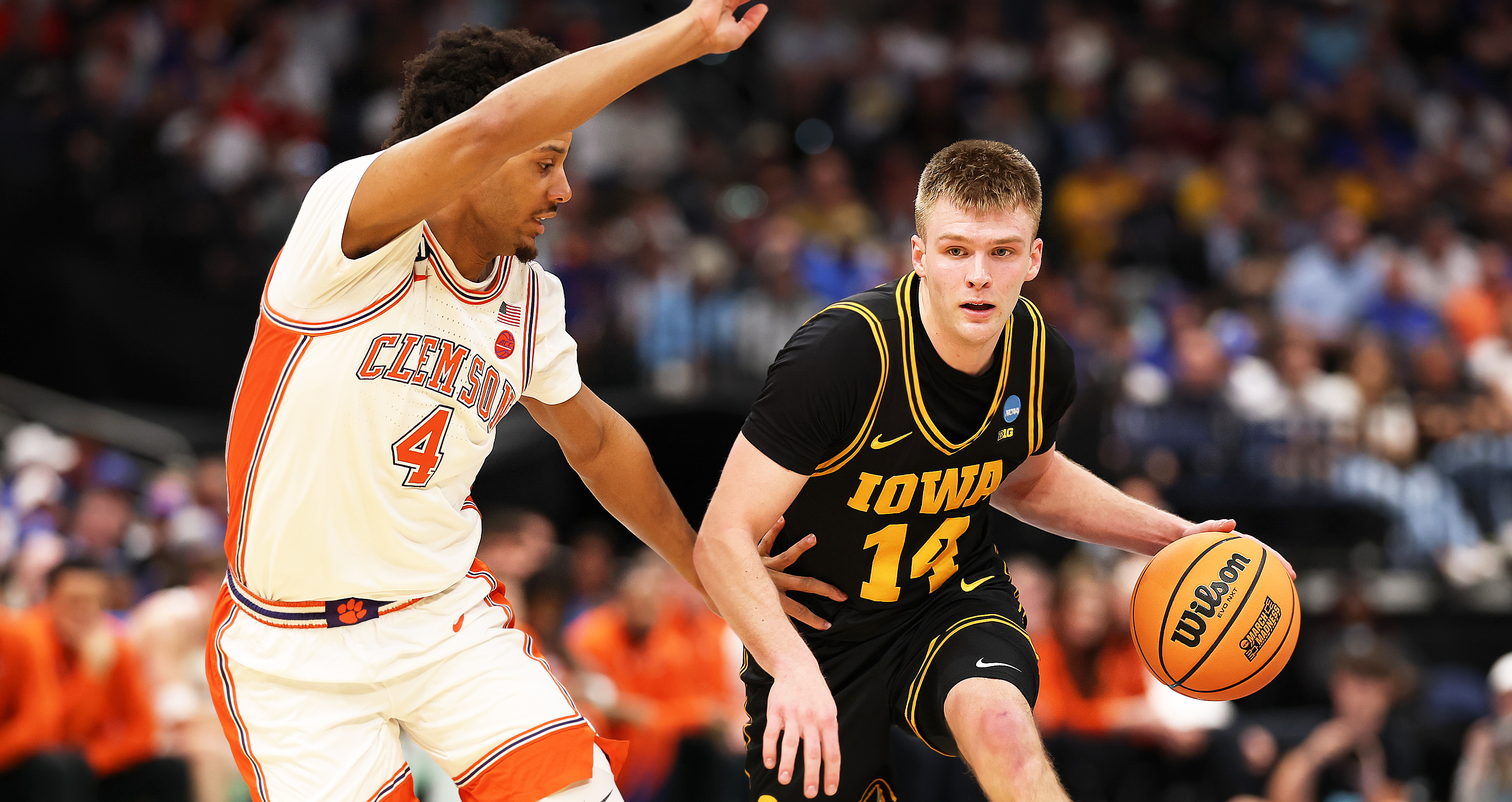 Unsurprisingly, Iowa guard Bennett Stirtz turned in a game-high 16 points Friday night, though he was just 4-of-17 from the floor. © Matt Pendleton-Imagn Images
The absence of Carter Welling was noticeable in those moments, particularly on the glass and in rim protection.
On the perimeter, the impact came in flashes rather than sustained stretches.
Butta Johnson helped stabilize things early, knocking down back-to-back threes during a first-half push and finishing with 11 points. But after that initial burst, his scoring disappeared until the closing seconds.
Jestin Porter added nine points, all from three-point range, while Dillon Hunter showed signs of rediscovering his shot with eight points on efficient attempts.
It just never came together for long enough.
Part of that goes back to the start, and how quickly Clemson put itself behind.
The Tigers opened 3-of-14 from the field. Iowa hit 60 percent of its shots and went 4-of-6 from three in the first seven minutes. That’s how it became 18–6 almost immediately.
Clemson settled in from there, even closing the half by making five of its last six shots to cut the deficit to seven. But in a game played at Iowa’s pace, that early stretch mattered more than usual.
There simply weren’t enough possessions to waste.
There were also smaller moments that reflected a bigger theme.
One late first-half sequence stood out: Clemson forced a turnover and had numbers in transition. The ball got into the paint, and then everything stopped. The possession reset, the pace slowed, and the Tigers settled for a contested three.
It wasn’t just a missed shot. It was a missed opportunity to play faster in a game that didn’t offer many. The Tigers only had seven fast-break points all night.
Iowa, on the other hand, stayed comfortable in its structure. The Hawkeyes repeatedly worked through ball screens, sometimes one into another, probing for mismatches and forcing Clemson into decisions.
Go under, and there’s space for a three. Go over, and there’s a driving lane.
Clemson never consistently disrupted that rhythm.
In the end, the numbers tell a straightforward story. Clemson shot well enough to win. It defended stretches well enough to win. It even gave itself a chance late.
But it also gave up too many second chances, allowed too many free throws, and spent too much of the night playing from behind.
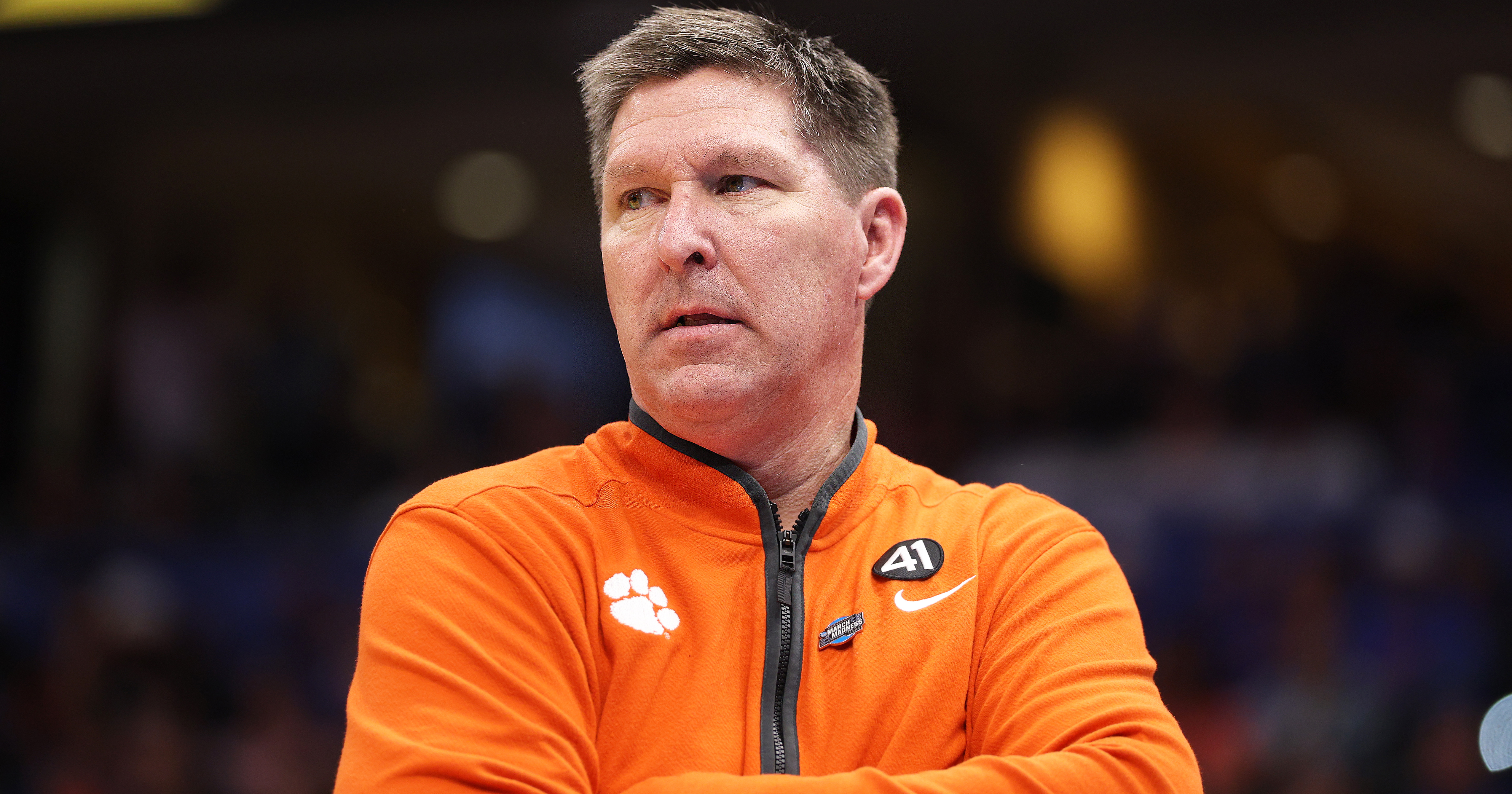 Clemson head coach Brad Brownell looks out over the court during the Tigers’ NCAA Tournament matchup with Iowa Friday night in Tampa. © Nathan Ray Seebeck-Imagn Images
In March, that combination is usually decisive.
The broader picture is harder to define. Clemson reached a third straight NCAA Tournament and finished with 24 wins, a season that, on balance, exceeded expectations for Brad Brownell’s group.
But context shapes how it feels.
DISCUSSION: Join Tigerillustrated.com subscribers on The West Zone Forum
Losing seven of the final 11 games, combined with injuries, leaves a different kind of ending.
Not a collapse, and not a failure.
DISCUSSION: Join Tigerillustrated.com subscribers on our off-topics forum
Just a lingering sense of what might have been, and a reminder of how thin the margin is this time of year.
Not a Tiger Illustrated member, Clemson fans? Join today!
Tigerillustrated.com, established in 1999, is the No. 1 Authority On Clemson Football & Recruiting. A subscription is a must-have for hardcore Clemson Football fans. You won’t find more exclusive, detailed, info on Clemson football and recruiting anywhere else. We guarantee it! CLICK HERE TO CHECK OUT OUR SPECIAL SUBSCRIPTION PROMO!