
Home » America Travel News » Miami International Joins Orlando, Fort Lauderdale-Hollywood, Tampa, George Bush, Phoenix Sky Harbor and More US Airports Dominate in This Spring Break Travel Demand, But Frequent Holidaymakers Should Prepare of Long TSA Lines
Published on
March 21, 2026
By: Tuhin Sarkar
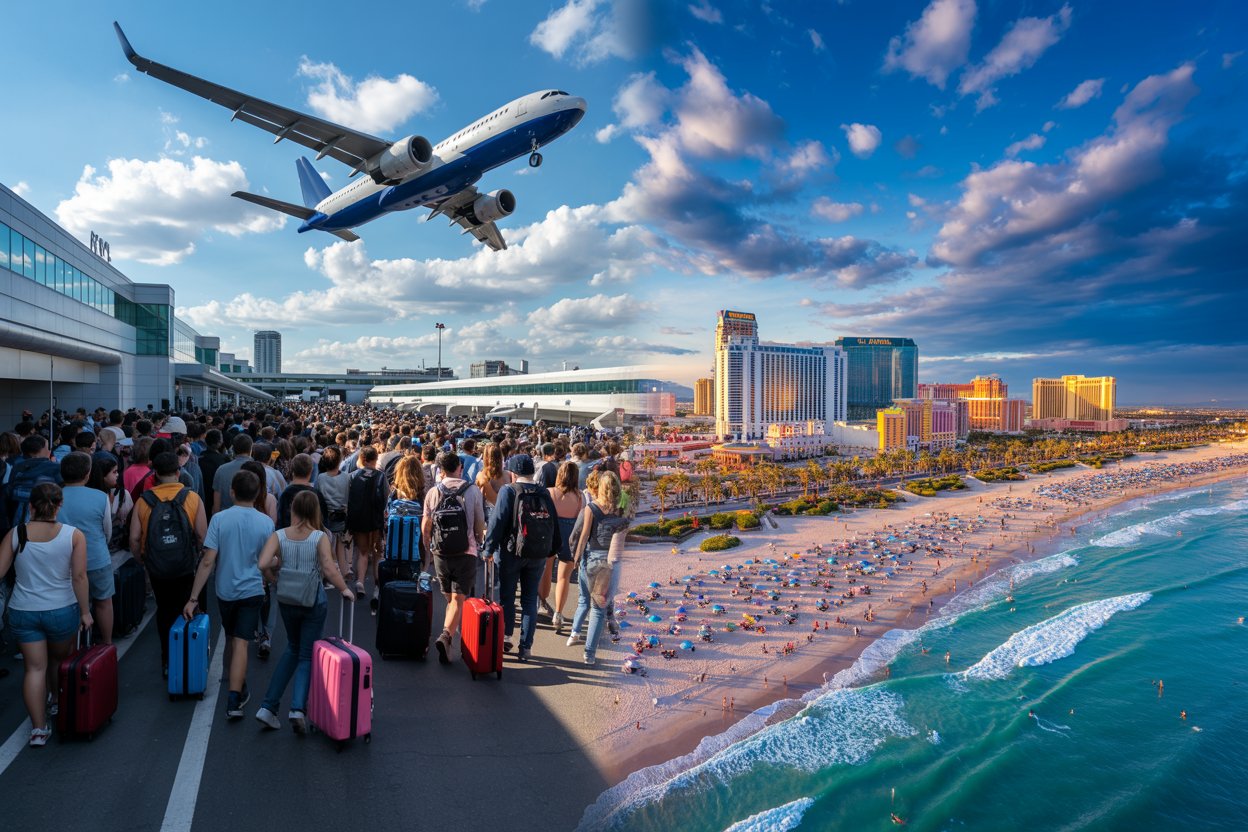
Image generated with Ai
Miami International joins Orlando, Fort Lauderdale-Hollywood, Tampa, George Bush, Phoenix Sky Harbor and more US airports dominate in this spring break travel demand, but frequent holidaymakers should prepare of long TSA lines.
Miami International joins Orlando, Fort Lauderdale-Hollywood, Tampa, George Bush, Phoenix Sky Harbor and more US airports dominate in this spring break travel demand, but frequent holidaymakers should prepare of long TSA lines. Now, this surge is accelerating. Moreover, Miami International joins Orlando, Fort Lauderdale-Hollywood, Tampa, George Bush, Phoenix Sky Harbor and more US airports dominate in this spring break travel demand, but frequent holidaymakers should prepare of long TSA lines as passenger volumes explode.
Airports are filling fast. Flights are oversubscribed. Security checkpoints are stretched. Therefore, long TSA lines are becoming unavoidable. Meanwhile, Miami International, Orlando, Fort Lauderdale-Hollywood and Tampa lead Florida’s tourism wave. At the same time, George Bush and Phoenix Sky Harbor absorb massive domestic flows. Consequently, the network is overloaded.
Additionally, frequent holidaymakers must prepare early. Arrive sooner. Plan smarter. Because Miami International joins Orlando, Fort Lauderdale-Hollywood, Tampa, George Bush, Phoenix Sky Harbor and more US airports dominate in this spring break travel demand, but frequent holidaymakers should prepare of long TSA lines across all major hubs.
Travel And Tour World urges readers to read the entire story. Because this is not routine travel. This is peak-season disruption. This is the new normal of US spring break aviation.
Why Are Certain US States Dominating Spring Break Travel Demand?
Spring break travel is exploding across the United States. Yet the surge is not evenly spread. New York, California, Texas, Illinois and Ohio dominate spring break travel demand. These states generate the highest number of domestic travellers. The reason is clear. Population density is high. Disposable income is strong. Travel culture is deep. Moreover, cold weather in northern states pushes travellers to warmer regions. As a result, spring break travel becomes a seasonal migration. New York, California, Texas, Illinois and Ohio repeatedly appear as top origin markets. This trend defines US tourism flows. It shapes airline routes. It drives hotel pricing.
How Does Weather Influence Spring Break Travel Patterns Across States?
Weather plays a decisive role. Northern states face cold temperatures. Snow still lingers. People want sun. People want beaches. Therefore, travellers from New York, Illinois and Ohio move south. They target Florida, Texas coast and California. Meanwhile, warmer states like Texas still generate travel. However, their travellers often seek coastal escapes or international trips. Weather contrast drives urgency. It creates peak demand. Spring break travel becomes predictable. Cold states export tourists. Warm states receive them. This cycle repeats every year. It strengthens domestic tourism patterns. It ensures consistent travel flows across the United States.
Advertisement
Advertisement
Why Do New York and California Lead the Spring Break Travel Economy?
New York and California stand at the top. These states combine population, wealth and connectivity. Airports are busy. Flights are frequent. Travel options are wide. New York travellers dominate East Coast departures. California travellers dominate West Coast flows. Both states show high search demand for spring break destinations. Beaches, theme parks and cruises attract them. Moreover, both states influence travel trends nationally. When New York and California travel rises, the entire tourism sector reacts. Airlines increase capacity. Hotels adjust pricing. Therefore, these states are not just participants. They are drivers of spring break travel.
What Makes Midwest States Like Illinois and Ohio Key Travel Contributors?
Midwest states are powerful contributors. Illinois and Ohio lead this region. Winters are harsh. Cabin fever builds. People seek escape. Spring break offers that opportunity. Families travel. Students travel. Groups travel. Destinations include Florida, Arizona and Texas. Road trips are common. Flights also increase. Illinois and Ohio generate consistent outbound travel volume. Their central location helps. Accessibility is strong. Travel costs are moderate. Therefore, Midwest travellers are essential to the spring break ecosystem. They fill flights. They fill hotels. They sustain tourism demand across multiple states.
Advertisement
Advertisement
How Does Texas Shape Domestic Spring Break Movement?
Texas is unique. It is both an origin and a destination. Texas travellers move within the state. They also travel outward. South Padre Island becomes a hotspot. Gulf Coast beaches attract millions. At the same time, Texas residents fly to Florida and California. The scale is massive. Texas airports handle huge passenger volumes during spring break. This makes Texas a critical node in US tourism. It connects regions. It balances demand. Therefore, Texas does not just participate. It shapes the flow of spring break travel across the country.
Are Southern States Driving Short-Haul Travel Trends?
Southern states are key players. Georgia, North Carolina and Tennessee generate strong travel demand. However, their patterns differ. Travel distances are shorter. Road trips dominate. Families prefer nearby beaches. Florida becomes a primary target. Gulf Coast destinations also benefit. Travel is frequent but shorter in duration. This creates high turnover. Hotels see rapid occupancy cycles. Southern states contribute volume. They stabilise tourism flows. Therefore, they are essential to maintaining consistent spring break activity across the United States.
Why Are Western States Producing High-Spending Travellers?
Western states show a different pattern. California, Nevada and Washington produce high-spending travellers. These travellers often choose premium experiences. Hawaii is a top choice. Mexico is another major destination. Domestic coastal travel is also strong. Spending per traveller is high. Travel distances are longer. Flight bookings increase significantly. This segment boosts airline revenue. It supports luxury hospitality. Therefore, Western states play a critical role in revenue generation during spring break. Their impact goes beyond volume. It extends to profitability.
Why Are US Airports Preparing for an Unprecedented Spring Break Travel Surge?
Spring break travel is surging across the United States. Airports are preparing. Passenger numbers are rising fast. The pattern is clear. Millions are moving from cold regions to warm destinations. Airports in Florida, Nevada and Arizona are under pressure. At the same time, major hubs in New York and Chicago are seeing heavy outbound traffic. This dual movement defines the season. Airlines are adding flights. Airports are extending operations. Spring break travel is no longer a short spike. It is a sustained surge. Orlando, Miami, Las Vegas, New York and Chicago airports are now central to this movement. The scale is massive. The impact is national.
Which Airports Are Seeing the Highest Passenger Growth During Spring Break?
Airports in leisure destinations are experiencing the highest growth. Orlando International Airport leads. Miami International Airport follows closely. Fort Lauderdale and Tampa also see sharp increases. These airports receive travellers from across the country. Beach tourism drives demand. Theme parks boost family travel. Cruise ports increase traffic. Meanwhile, Las Vegas airport records strong growth due to entertainment tourism. Phoenix airport benefits from warm weather and resort travel. These airports are not just busy. They are overwhelmed during peak days. Passenger volumes spike sharply. Hotels fill quickly. Transport systems stretch. These airports define spring break travel demand in the United States.
How Do Florida Airports Dominate the Spring Break Travel Map?
Florida remains the epicentre. Orlando, Miami, Fort Lauderdale and Tampa dominate. These airports handle millions of passengers within weeks. Orlando attracts families. Theme parks drive demand. Miami attracts international and domestic travellers. Beaches and nightlife boost arrivals. Fort Lauderdale serves cruise passengers. Tampa balances leisure and family tourism. Together, these airports form a powerful cluster. Airlines prioritise routes to these destinations. Flight frequency increases. Prices rise. Demand remains strong. Florida airports are designed for high capacity. Yet spring break pushes them to limits. This dominance is consistent every year. Florida remains unmatched in spring break tourism.
Why Are Northeast Airports Facing Intense Departure Pressure?
Airports in the Northeast are seeing heavy outbound traffic. New York’s JFK, LaGuardia and Newark airports are packed. Boston Logan also experiences strong demand. Travellers are leaving cold climates. They seek warmer destinations. Flights to Florida, California and the Caribbean increase. Early morning and late-night departures become common. Terminals are crowded. Security lines grow longer. Airlines adjust schedules. Additional flights are introduced. These airports act as primary departure points. They feed passengers into the national network. Without them, the system would slow down. Northeast airports are critical during spring break. They drive the initial movement of travellers.
What Role Do Midwest Airports Like Chicago and Detroit Play?
Midwest airports are key contributors. Chicago O’Hare leads the region. Detroit and Minneapolis also play major roles. These airports handle large volumes of outbound travellers. Weather again is the trigger. Cold conditions push people south. Families travel. Students travel. Group bookings increase. Flights to Florida and Arizona fill quickly. Airlines expand capacity. Chicago becomes a major redistribution hub. Passengers connect through it to reach final destinations. This increases its importance. Midwest airports may not be final destinations. However, they are essential transit points. They ensure smooth flow across the country.
How Are Southern Airports Managing Both Incoming and Outgoing Traffic?
Southern airports operate differently. Atlanta, Charlotte and Dallas handle both inbound and outbound flows. These airports are major hubs. They connect regions. Travellers pass through them to reach destinations. At the same time, local travellers depart for vacations. This creates a dual load. Passenger numbers increase from both directions. Airlines optimise connections. Airports manage congestion carefully. Atlanta remains the busiest hub. Dallas supports massive domestic travel. Charlotte connects East Coast routes. These airports stabilise the system. They prevent bottlenecks. Their role is critical. Without them, delays would increase significantly.
Why Is Las Vegas Experiencing a Sharp Seasonal Passenger Spike?
Las Vegas becomes a hotspot during spring break. The airport sees a rapid increase in passengers. Entertainment drives demand. Nightlife attracts younger travellers. Events and shows add to the appeal. Weekend traffic surges are common. Flights arrive full. Departures are equally strong. Hotels operate at high occupancy. Airlines increase frequency. The airport handles high turnover. Unlike Florida, Las Vegas attracts short stays. Travellers come for quick breaks. This creates continuous movement. Passenger flow remains high throughout the period. Las Vegas airport is a key leisure hub. Its importance grows every spring break season.
How Is Phoenix Airport Benefiting from Spring Break Travel Trends?
Phoenix is gaining popularity. The airport sees increased passenger numbers. Warm weather is the main driver. Golf tourism adds value. Resort travel expands demand. Spring training events attract visitors. Families and retirees prefer quieter destinations. Phoenix offers that balance. Airlines respond by increasing routes. Passenger traffic grows steadily. Unlike Florida, growth is more controlled. However, the trend is strong. Phoenix is becoming a major alternative. It attracts travellers who avoid crowded beaches. This shift supports diversification in US tourism. Phoenix airport benefits directly from this evolving preference.
Are West Coast Airports Like Los Angeles and San Diego Seeing Increased Traffic?
West Coast airports are also active. Los Angeles International Airport sees strong passenger flow. San Diego follows closely. These airports handle both domestic and international travellers. Beach tourism remains strong. Cruise travel contributes to growth. Flights from the Midwest and Northeast increase. Travellers seek milder climates. California offers that advantage. Airports operate at high efficiency. Passenger management systems are tested. Airlines adjust schedules. These airports support both inbound and outbound travel. Their role is balanced. They contribute to the overall system stability during spring break.
What Challenges Are Airports Facing During the Spring Break Rush?
Airports face multiple challenges. Congestion is the biggest issue. Security wait times increase. Baggage handling systems are under pressure. Flight delays occur more frequently. Weather disruptions add complexity. Staffing becomes critical. Airlines and airports coordinate closely. Technology is used to manage flow. Digital check-ins reduce pressure. Passenger communication improves. Despite challenges, the system holds. Airports adapt quickly. Experience improves gradually. However, peak days remain difficult. Travellers must plan carefully. Early arrivals are advised. Spring break testing is intense. It pushes infrastructure to its limits.
Is Spring Break Travel Reshaping Airport Operations Across the US?
Yes. Spring break is changing operations. Airports are becoming more flexible. Seasonal planning is improving. Airlines adjust capacity dynamically. Infrastructure upgrades are ongoing. Passenger experience is prioritised. Data analytics drives decisions. Airports predict demand more accurately. This leads to better management. Spring break is no longer a temporary event. It is a major operational phase. Airports treat it seriously. Investments increase. Efficiency improves. The entire aviation ecosystem evolves. Spring break travel is shaping the future of airport management in the United States.
How Are Emerging States Contributing to Spring Break Growth?
Emerging states are gaining importance. Colorado, Utah and Missouri are examples. These states show rising travel demand. Their populations are growing. Income levels are improving. Travel awareness is increasing. As a result, more people participate in spring break travel. These states often rely on air travel. Group travel is common. Student travel is strong. Their contribution may be smaller than major states. However, growth rates are high. Therefore, they represent the future of domestic tourism expansion in the United States.
What Role Do Airports and Airlines Play in This Travel Surge?
Airports are under pressure. Passenger volumes surge during spring break. Airlines respond quickly. They add routes. They increase frequency. New York, California, Texas, Illinois and Ohio airports become major hubs. Flights to Florida and coastal destinations multiply. Ticket prices rise. Demand remains strong. Airlines optimise schedules. Airports manage congestion. This coordination ensures smooth travel flow. Without this system, spring break travel would collapse. Therefore, aviation infrastructure is the backbone of the spring break economy.
Why Are TSA Rules Changing Across US Airports Now?
TSA rules are changing across US airports. The shift is clear. Passenger volumes are rising. Security systems must adapt. Therefore, TSA is modernising. The focus is speed and safety. Advanced scanners are replacing manual checks. Digital systems are improving flow. As a result, travellers are seeing new procedures. These are not random changes. They are structured upgrades. Airports are under pressure due to record travel demand. Spring break and holiday seasons push capacity limits. TSA must respond. This is why rules are evolving. The aim is efficiency. The goal is stronger security with less friction. Travellers must understand this transition. It affects every journey.
How Has the Removal of Shoe Screening Changed the Airport Experience?
One of the biggest changes is shoe screening. Travellers no longer need to remove shoes at many airports. This rule existed for years. Now it is being phased out. The reason is technology. Modern scanners detect threats without physical removal. This reduces time. It improves passenger flow. However, this is not universal. TSA may still require shoe removal if needed. Random checks remain. Secondary screening is still possible. Therefore, travellers must stay alert. Even with this change, security remains strict. The removal of shoe screening is a major improvement. It reflects confidence in new systems. It also signals a move towards faster airport experiences.
Why Is REAL ID Now Mandatory for Domestic Travel?
REAL ID is now critical. Travellers must carry compliant identification. Standard licences may not be accepted. This rule is strictly enforced. Without REAL ID, delays are likely. Additional screening may occur. In some cases, boarding issues can arise. The reason is national security. Identity verification must be stronger. Digital systems rely on accurate ID. Therefore, REAL ID becomes essential. Passengers must check their documents. Preparation is key. This rule affects all domestic travellers. It is not optional. Airports are enforcing it more strictly now. This is one of the most important TSA updates. Ignoring it can disrupt travel plans significantly.
Are Liquid Rules Changing or Staying the Same?
Liquid rules remain largely unchanged. The 3-1-1 rule still applies. Each container must be under 100 ml. All liquids must fit in one bag. This rule continues. However, the screening process is evolving. New CT scanners allow liquids to remain in bags. This reduces inconvenience. Travellers no longer need to unpack items at some airports. This is a major improvement. However, not all airports have this technology. Therefore, experiences vary. Travellers must be prepared for both scenarios. The rule itself is stable. The process is changing. This reflects TSA’s gradual transition to advanced systems.
What New Rules Apply to Electronics and Batteries?
Electronics rules are strict. Lithium batteries are a major focus. Power banks are not allowed in checked luggage. They must be carried in cabin bags. This is due to fire risk. TSA is enforcing this rule strongly. Smart bags are also monitored. Large electronics may receive additional screening. However, at some airports, laptops can stay in bags. This depends on scanner technology. The goal is safety. At the same time, TSA is reducing inconvenience where possible. Travellers must pack carefully. Mistakes can cause delays. Understanding these rules is essential. Electronics are now a key part of security checks.
How Is Biometric Screening Changing Airport Security?
Biometric screening is expanding. Facial recognition is being introduced. Some airports now use touchless systems. Travellers can verify identity without showing documents. This speeds up the process. It reduces physical contact. It improves efficiency. However, this system is not universal yet. It is still being rolled out. Participation is often optional. Privacy concerns exist. Despite this, adoption is growing. TSA sees biometrics as the future. It enhances accuracy. It reduces fraud. It improves passenger experience. This is a major shift. Airport security is becoming digital. Travellers must adapt to these changes.
What Do These Changes Mean for Travellers in 2026?
TSA rules are evolving, not tightening. This is important. The system is becoming smarter. Automation is increasing. Manual checks are decreasing. However, enforcement remains strict. Travellers must prepare. Arrive early. Carry correct ID. Pack properly. Follow liquid rules. Understand battery restrictions. Expect variation between airports. Not all upgrades are universal. Flexibility is essential. These changes improve efficiency. They also increase detection capability. This balance is crucial. Security remains the priority. At the same time, passenger experience is improving. This is the future of air travel.
Is Spring Break Travel Reshaping the US Tourism Industry?
Yes. Spring break travel is transforming US tourism. It creates seasonal peaks. It drives revenue. It influences marketing strategies. States compete for travellers. Destinations innovate. Experiences expand. Beaches, theme parks and cruises evolve. Digital booking platforms grow. Travel behaviour shifts. Short trips increase. Experience-based travel rises. New York, California, Texas, Illinois and Ohio remain central to this transformation. Their travellers define demand. Their movement shapes the industry. Therefore, spring break is not just a holiday. It is a powerful economic engine.
Spring break travel across the United States is structured. It is driven by key states. New York, California, Texas, Illinois and Ohio lead the surge. The cause is seasonal demand. The answer lies in population, income and weather patterns. The reason is simple. People seek escape. They seek experience. They seek warmth. As a result, these states generate massive travel flows. The system is predictable. The impact is powerful. Spring break travel continues to grow. It continues to shape US tourism. It continues to redefine travel behaviour across the nation.
The cause is clear. Seasonal travel demand spikes sharply. The answer lies in preparation and capacity expansion. The reason is simple. Millions are travelling at once. Miami International joins Orlando, Fort Lauderdale-Hollywood, Tampa, George Bush, Phoenix Sky Harbor and more US airports dominate in this spring break travel demand because warm destinations attract massive crowds. This creates long TSA lines. This creates congestion. Therefore, frequent holidaymakers must act early. Plan arrival times. Use digital check-ins. Travel light. The system is under pressure. The surge is real. Spring break travel will continue growing. Airports will remain crowded. Prepared travellers will benefit the most.
