
A Pinellas-wide, multi-jurisdictional flood vulnerability assessment has been completed by the Public Works Department, illustrating the most critical areas and facilities that require adaptation to resist storm surge and damage.
The study examined four categories of infrastructure: community and emergency facilities, critical infrastructure, natural, cultural and historical resources and transportation and evacuation routes.
Using these categories, the Public Works Department considered 21 flood scenarios and projected those scenarios over three time horizons: 2018, the baseline for the assessment, and projections for 2040 and 2070.
The assessment “provides a road map for prioritizing infrastructure, investments and designing facilities that can withstand storm and flood,” said Public Works Director Kelli Hammer Levy during a Pinellas Commission meeting March 19.
The assessment’s projections reveal exposure across critical facilities, with emergency operations centers and fire stations among the most vulnerable. Of the 56 emergency operations centers, 12, or 25%, are projected to be significantly exposed to storm surge; of the 66 fire stations, 16 are exposed.
Police facilities were also vulnerable, with 3 of the 15 facilities exposed, and 74 of the 405 drinking water facilities as well. However, storm shelters are largely insulated from storm surge: of the 26 shelters, none are exposed, according to Public Works data.
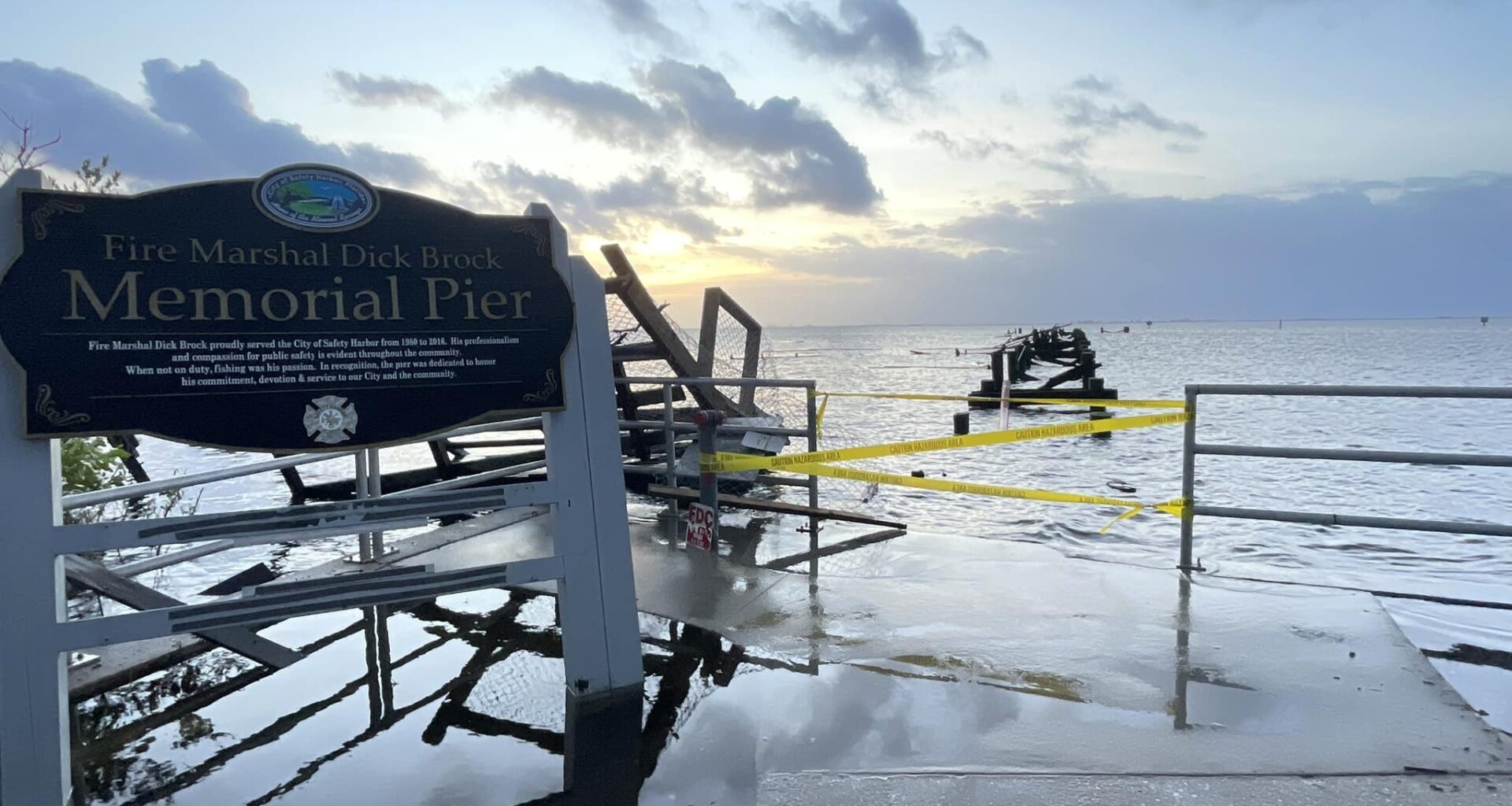
Hurricanes Helene and Milton exposed how vulnerable those facilities are, as St. Pete Beach and Clearwater are rebuilding new fire stations as a consequence of the immense damage those facilities sustained, with officials from other affected facilities seeking to build or overhaul stations to better stave off damage.
Pinellas is able to stretch its penny for resiliency updates through the Resilient Florida Grant, which disperses $100 million statewide. Part of the necessity of this vulnerability assessment is to ensure Pinellas remains eligible for the grant.
In the March 19 commission meeting, Levy contextualized how indispensable the funding has been.
“Our utilities department received over $25 million for the wastewater collection system upgrades for priority mobile home parks and $3.5 million for utility reliability upgrades under Resilient Florida.”
“Public Works received $129,000 toward the living shoreline project,” Levy continued. “That protects Philippe Park shoreline, $27.9 million for Joe’s Creek Greenway Project and an additional $13 million for the Cross Bayou Canal improvement project.”
A final vulnerability study will be submitted to the state by the end of March, which will determine if Pinellas remains eligible for Florida resiliency grants. A final adaptation plan, incorporating recommendations from the study, will be submitted in September.