
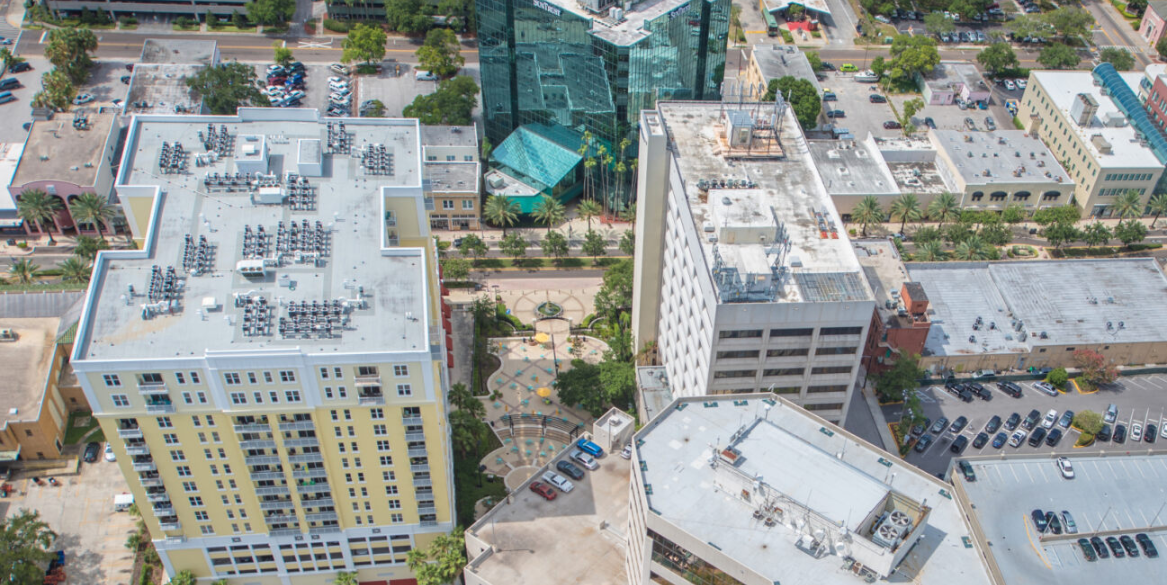
Downtown Clearwater’s long-anticipated redevelopment effort may be inching closer to its next phase, as the city weighs a proposed request for negotiation (RFN) to solicit proposals for a large-scale, mixed-use renaissance of its urban zone.
If approved, the RFN would impact 25 acres across 17 properties and would enable agile negotiation between developers and the City, rather than a request for proposal (RFP), which limits options to static developer proposals with less wiggle room.
An RFN also addresses a more practical question: how the City will handle redevelopment across a mix of public and private parcels. Rather than negotiating site by site, the process allows Clearwater to evaluate proposals at a district level and guide how those pieces come together.
Clearwater’s goal is to attract development that blends residential, hospitality, retail and “creative sector” uses “that complement Clearwater’s existing tourism base,” according to Lee Ann Korst of CBRE Group (a national, commercial real estate investment firm), while building a more consistent, year-round downtown presence.
The proposed phase of redevelopment builds on projects already approved and underway in Clearwater.
“We want to strengthen that connectivity between Coachman Park, Cleveland, Osceola and build on that city investment,” Korst said during a March 19 Pinellas County Commission meeting.
For context on those city investments, the Osceola Avenue roadway project, a $12.4 million effort, is transforming the corridor from Court Street to Drew Street into a more pedestrian-friendly spine that mirrors the design of Coachman Park and Cleveland Street.
Coachman Park’s eastern edge will soon be home to The Ballad Hotel, a 10-story, 158-room project with ground-floor retail, adding new activity to the waterfront.
Nearby, a new 397-space public parking garage with first-floor retail is under construction at Pierce Street and Osceola Avenue. The garage is intended to support a “park once” strategy, allowing visitors to move through downtown on foot rather than relying on parking at each destination.
Additional projects, including a planned residential tower on the former City Hall site, are expected to expand downtown’s residential base and support consistent activity beyond peak tourism seasons.
The RFN intends to build on that extant development momentum, opening the door for private developers to shape the remaining parcels into a cohesive mixed-use environment.
If the RFN is approved and released, developers would have 90 days to respond.
The timeline raised questions in the meeting about whether it provides enough runway for proposals of that scale. Korst assured the window is consistent with 20 or so past efforts, and the timeline sufficed.
According to Korst, the city has issued roughly 20 similar solicitations in recent years, and a 90-day response period has proven sufficient.
More information and plans will be concretizes by this summer, providing a glimpse into how Clearwater’s skyline may shift.
Importantly, the proposed RFN is not yet approved. Questions about zoning, land use, development restrictions, as well as public meetings and input, among other discussions are still unfolding.