
A shiny black box no bigger than a car battery sits on a table in the back of a lab in Clearwater. Across the state, its sister hardware is installed on the Orion spacecraft at Kennedy Space Center, ready to launch on the Artemis II moon mission.
Built by Honeywell Aerospace, this small device is the spacecraft’s Inertial Measurement Unit, filled with gyroscopes and sensors designed to figure out just where in space the capsule is located at any moment. Kendall Bjorge, the company’s senior program director, ranks it among the most valuable things on board.
“I would argue that it’s the No. 1 thing, because if all else fails in that capsule, besides life support, that box is going to get them back to the Earth,” Bjorge said during a recent tour of the company’s campus near Tampa.
His coworkers then dived into a healthy debate of whether it ranks higher than the display units and hand controllers the Artemis II astronauts will use during the planned 10-day mission to fly around the moon.
Both items are manufactured by Honeywell, which supplies them to Orion’s main contractor Lockheed Martin for the spacecraft.
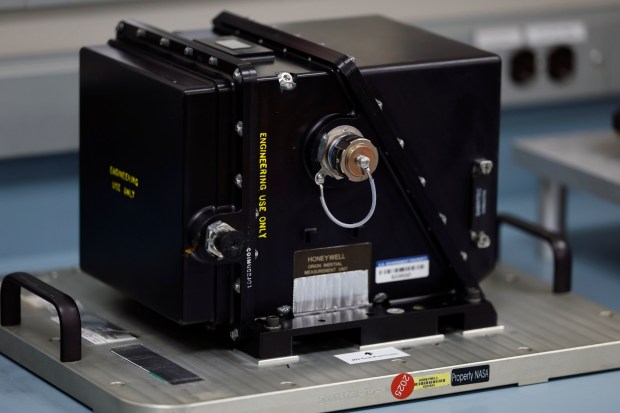 Orion Inertial Measurement Unit during a tour of the Honeywell Aerospace Clearwater, Fla. facility where mission-critical systems for the Orion spacecraft and the Space Launch System (SLS) rocket are designed, built, and tested, on Friday, February 27, 2026. (Ricardo Ramirez Buxeda/ Orlando Sentinel)
When asked to put a value on the IMU, Bjorge replied, “priceless,” but explained each one could cost several million dollars.
“There’s certain card assemblies that go into that unit over there that are the price of your house. And there’s 14 of them in there,” he said.
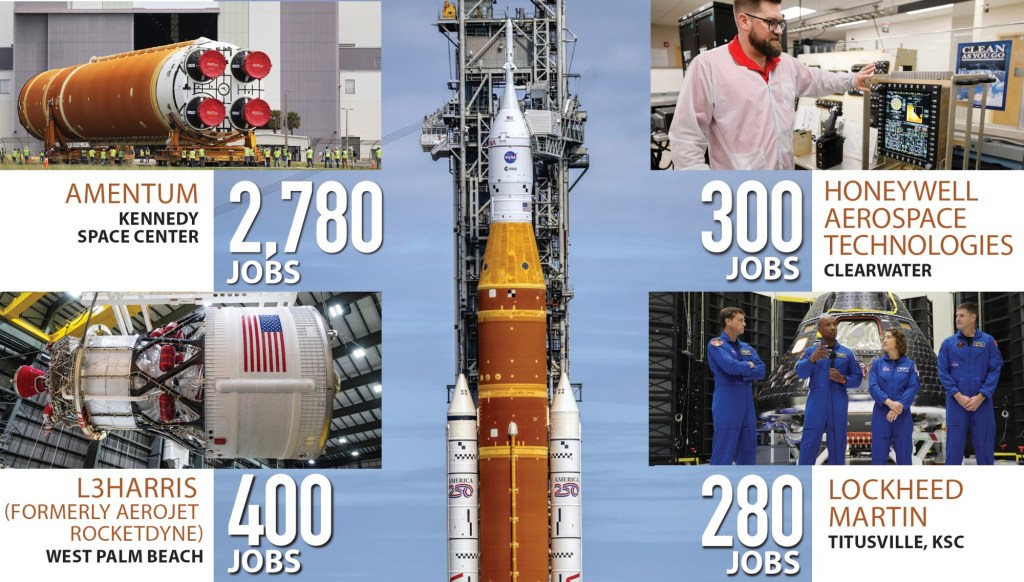
About 300 of the 1,700 employees based at Honeywell Aerospace’s sprawling campus south of Tampa have had their hands on NASA’s hardware contracts. It’s an example of how far the tendrils of the Artemis program extend across the Sunshine State, even to places hundreds of miles from the Space Coast.
All told, Florida has reaped more than 13,000 jobs and $3 billion in annual spending from the controversial, oft-delayed but historic Artemis effort, according to the most recent NASA estimates. That makes it one of the most lucrative cash cows in state history — and one that keeps on giving.
NASA’s overall Artemis-related annual spending has grown since 2020 to the $6 billion to 8 billion range each year, with Florida seeing increased jobs and economic impact as the program grows.
“We’re always looking for the next generation to come up through and be a space nerd and love space and love the technology,” said Bjorge. “You don’t have to be a rocket scientist.”
Feeding Artemis
Artemis, 16 years in the making, is the nation’s moon-to-Mars program. But so far it’s launched just a single mission, the uncrewed Artemis I flight that orbited the moon in late 2022.
The second mission, Artemis II, will be the first crewed flight of Orion, a lunar fly-by, that could launch as soon as April 1. NASA Administrator Jared Isaacman recently announced a revamp of the planned future flights to increase the launch rate to as fast as once every 10 months.
Artemis III, originally targeted to be the nation’s return to the lunar surface, is now set to fly a mission close to Earth in mid-2027 to test out Orion’s ability to dock with landers. It wouldn’t be until Artemis IV in early 2028 that NASA will send a crewed lunar lander to the surface, marking humans’ first return since the end of the Apollo program in 1972.
Taxpayers have spent more than $100 billion on the program across its various platforms, and its costs and continued delays have faced criticism that it’s not so much a space program as a jobs program.
NASA touts that every state plus Puerto Rico has a hand in the moon rocket.
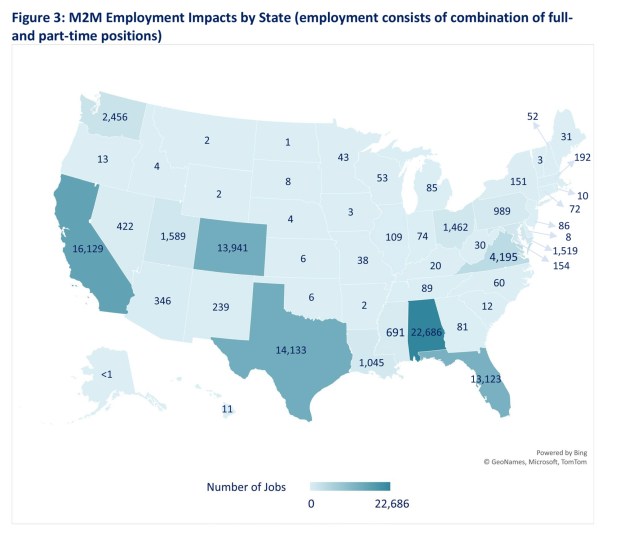 NASA’s estimated moon-to-Mars program employment impacts by state as of 2023’s fiscal year. (Courtesy/NASA)
What’s Florida’s take?
Of NASA’s 2,749 government jobs across the nation working on Artemis, 688, or 25%, were based in Florida according to a 2024 report, amounting to $123.2 million in annual income.
Adding other direct jobs such as contractors and indirect jobs generated within the community, Florida’s overall total comes to 13,123, amounting to $1.1 billion in annual income for the state with the positions averaging about $84,000 a year. That translates into $94.2 million in state and local government taxes, NASA says. As far as money flowing to Florida-based companies, NASA tallied $883.9 million in 2023 for contracted work on parts and support for Artemis.
All in all, Artemis had a combined economic output total for Florida of $3 billion in fiscal year 2023, the most recent year for which that total has been released, making up more than a third of NASA’s overall economic impact in the state.
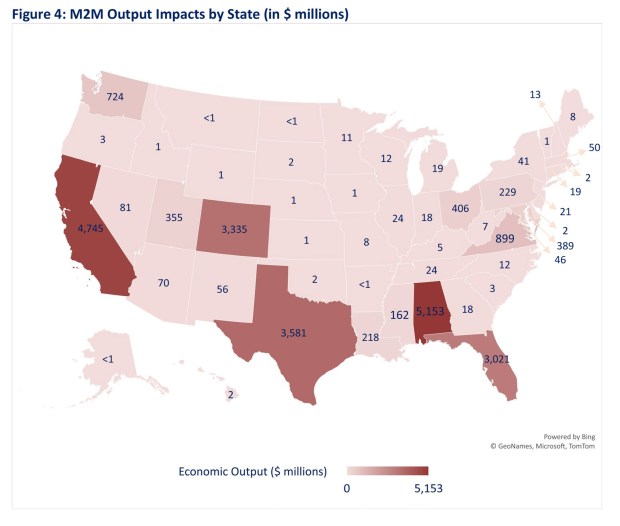 NASA’s estimated moon-to-Mars program output impacts by state in millions of dollars as of 2023’s fiscal year. (Courtesy/NASA)
Who gets the money?
NASA’s Office of the Inspector General assessed the massive supply chain that feeds into Artemis in an October 2023 audit, which found the agency pays 860 contractors across the nation to directly support the program.
Those include five prime contractors — Lockheed Martin for the Orion spacecraft, Boeing for the rocket’s core stage, Northrop Grumman for the solid rocket boosters, Amentum for ground systems, and L3Harris for the engines — which among them paid more than total 3,200 subcontractors across the U.S. to get their work done.
Lockheed Martin has two facilities in Florida to support Orion: the STAR Center in Titusville and the Operations & Checkout Building at Kennedy Space Center. It employs 280 people at those two locations, but another 320 people are employed among the 47 suppliers working there.
The Florida-based machine feeding the Orion supply chain includes Honeywell Aerospace in Clearwater as well as All Points Service-Disabled Veteran Small Business in Merritt Island and Avnet, Inc. in Orlando and Fort Lauderdale.
One of the biggest investments in Florida comes from NASA’s Exploration Ground Systems. Its prime contractor, Amentum, employs nearly 2,800 people at KSC, who have their hands on nearly every piece of hardware that comes into the space center.
Meanwhile, Aerojet Rocketdyne, bought by L3Harris 2023, has had 400 of its 500 employees at the upper stage RL-10 engine production facility in West Palm Beach involved in the Artemis program.
“We’ve been flying these engines for more than 60 years now. So it’s very reliable,” said Kristin Houston of L3Harris. “It has been proven to have precise operations, really making sure the payload gets exactly bullseye insertion, where it needs to go.”
That West Palm location also builds turbo pumps for the core stage RS-25 engines while relying on businesses around the state to feed its own supply lines, including a 3D printer in Daytona Beach and a machine shop in Stuart.
“We definitely have a good footprint between us and our supply base across Florida,” Houston said.
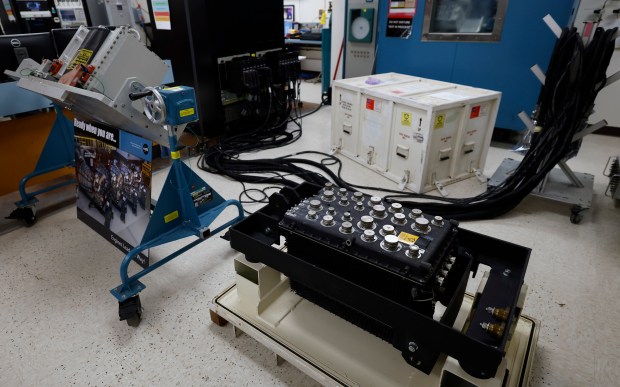 Left to Right, RS-25 engine controller for the SLS; and the previous generation controller from the Space Shuttle (serial number: 2); during a tour of the Honeywell Aerospace Clearwater, Fla. facility where mission-critical systems for the Orion spacecraft and the Space Launch System (SLS) rocket are designed, built, and tested, on Friday, February 27, 2026. (Ricardo Ramirez Buxeda/ Orlando Sentinel)
Honeywell Aerospace has its hands on parts other than Orion’s at its Clearwater facility. It works with L3Harris building the RS-25 engine controllers. Those companies each have their own suppliers with additional employees, even for as simple a step as getting unique parts from a small machine shop in Oldsmar.
“It’s the local businesses that we use to facilitate our testing aspects, our fixturing, our components,” Bjorge said. “I would say it’s a significant part of the pie.”
Space program or jobs program?
Throughout the program, Florida’s benefits have come at the federal taxpayer’s expense.
Not counting the billions in development spent in the last 16 years, NASA’s Office of the Inspector General estimates each launch of the Space Launch System rocket and Orion spacecraft at KSC costs about $4 billion. In comparison, each launch of the Space Shuttle grew to $1.45 billion by the program’s end in 2011.
“It’s a complex system that has received a lot of criticism for its complexity, and it is certainly behind schedule,” said UCF professor Greg Autry, the university’s “Space Czar.”
A lot of the rising costs stem from how the contracts were created among the legacy companies that worked on Artemis, like Boeing and Lockheed Martin, he said. Instead of a fixed price, NASA relied on what’s called a cost-plus contract, which allows companies to continue to pull in money if faced with development delays.
“Every component of this is behind schedule. It’s not like it’s this vendor or that vendor, or the rocket or the lander or the capsule,” Autry said. “All these things have taken more time than any of us would have hoped.”
Some aspects of Artemis, such as Blue Origin’s Blue Moon and SpaceX’s Starship lunar landers, are fixed-price. NASA has sought to transition to that approach where it can as the program ballooned toward $100 billion.
“In the case of the fixed-price contracts, the vendors are eating it, of course,” Autry said. “And I don’t think there’s any doubt that SpaceX has probably spent a lot more on Starship than they’re getting paid for the lander program, but that’s their problem. On the other programs, it’s often the taxpayer’s problem,” he said.
The end result, however, has been manufacturing jobs spread across the nation, a tried-and-true approach to keep members of Congress supportive of expensive projects. Autry noted that space has been one of the few areas where America has kept its manufacturing base and continued to be a global leader. But that’s been both good and bad under Artemis, he added.
“The geographic distribution, particularly when it’s used as a political tool to try to gain support for a program — not based on its actual performance, but based on whether it’s in your district or not — that’s unfortunate,” he said.
Florida’s piece of the Artemis pie, while significant, trails Alabama, California, Texas and Colorado in both dollars and jobs.
“I’m glad to see people across the country engaged in working on it, but I’m not I’m not necessarily happy to see it flouted as a jobs program instead of a success for the American taxpayers’ investment,” Autry said. “That doesn’t warm my heart.”
Where does Florida fit in the future?
Autry has applauded Isaacman’s push to speed up Artemis launch rates, and sees the potential for more reliance on commercial companies like SpaceX and Blue Origin to accomplish the nation’s moon goals.
While that might mean less money in all 50 states’ pockets, Autry thinks Florida is in a good position no matter how it plays out.
“We have a sustainable competitive advantage,” Autry said. “Any smart company is either moving out of the West Coast to Texas or to Florida, just how it is … I spent my whole life and career in California, and honestly, their elected officials just don’t care about space.”
And with the recent manufacturing wins such as SpaceX’s $1.8 billion foray to build a Starship factory at KSC and Blue Origin’s $3 billion investment for the New Glenn rockets and moon lander facilities in Merritt Island, the state’s helping of space dollars and jobs should continue to grow.
“Florida isn’t quite as hip and cool to live in as Southern California, probably, but it’s a lot happier and cooler than some other areas where rockets are made,” he said. “I take it over Texas or Alabama myself any day.”
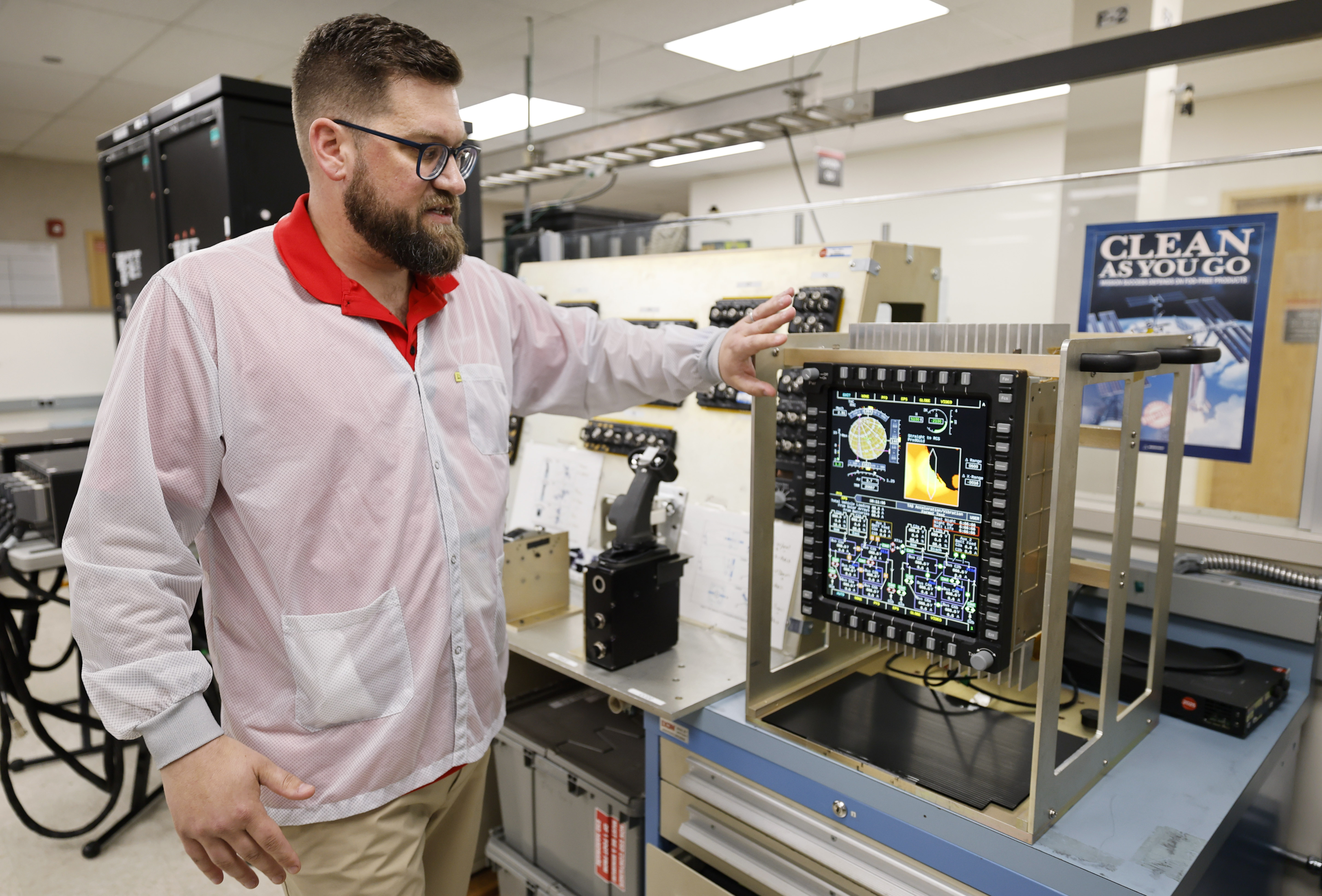
Stephen Doerbecker, Program Manager for Orion Space System, talks about the Display Unit for Orion — Honeywell Aerospace tour of their Clearwater, Fla. facility where mission-critical systems for the Orion spacecraft and the Space Launch System (SLS) rocket are designed, built, and tested, on Friday, February 27, 2026. (Ricardo Ramirez Buxeda/ Orlando Sentinel)
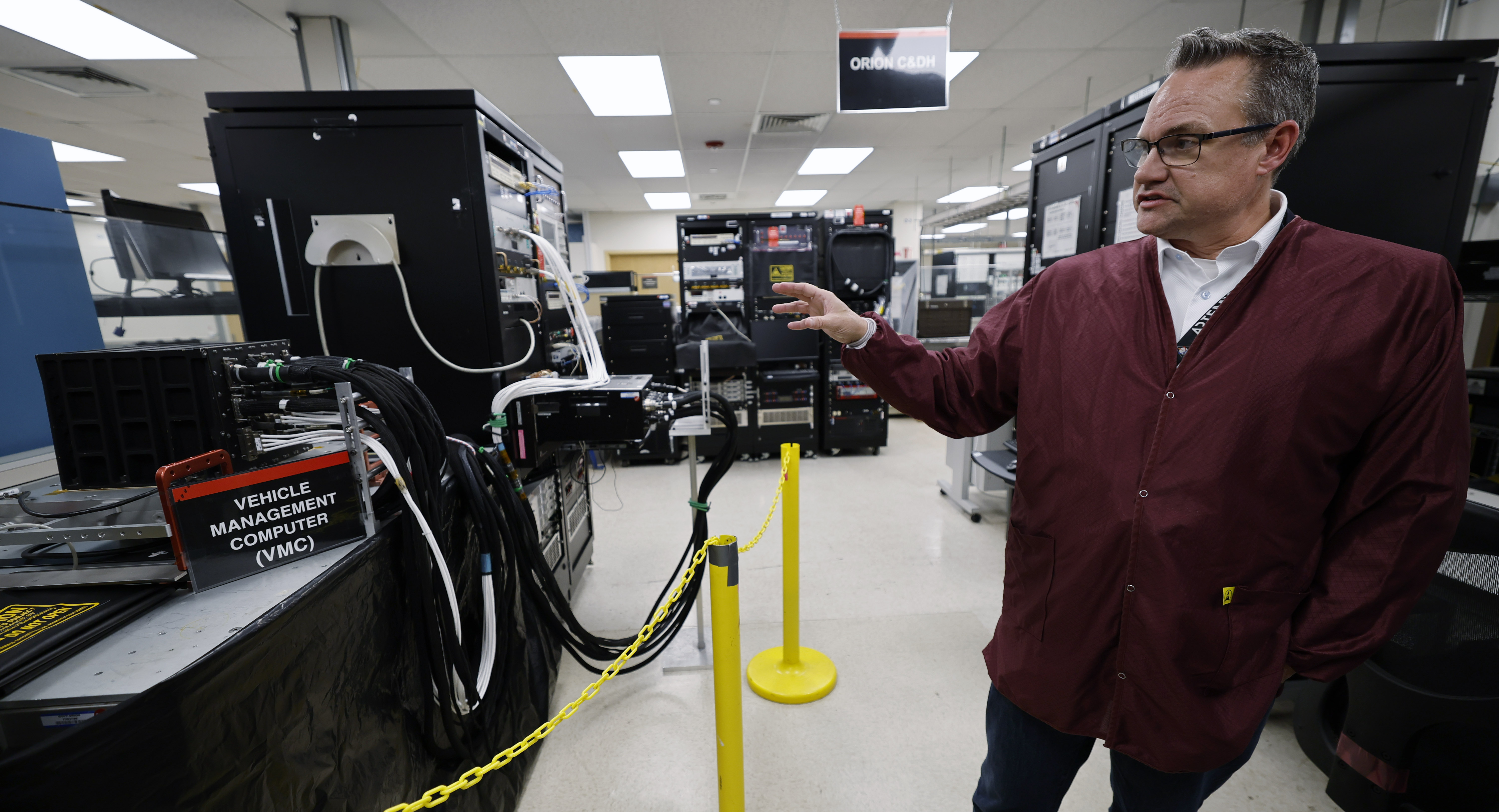
Honeywell Aerospace Senior Program Director Kendall Bjorge talks about the vehicle management computer during a tour of the Honeywell Aerospace Clearwater, Fla. facility where mission-critical systems for the Orion spacecraft and the Space Launch System (SLS) rocket are designed, built, and tested, on Friday, February 27, 2026. (Ricardo Ramirez Buxeda/ Orlando Sentinel)
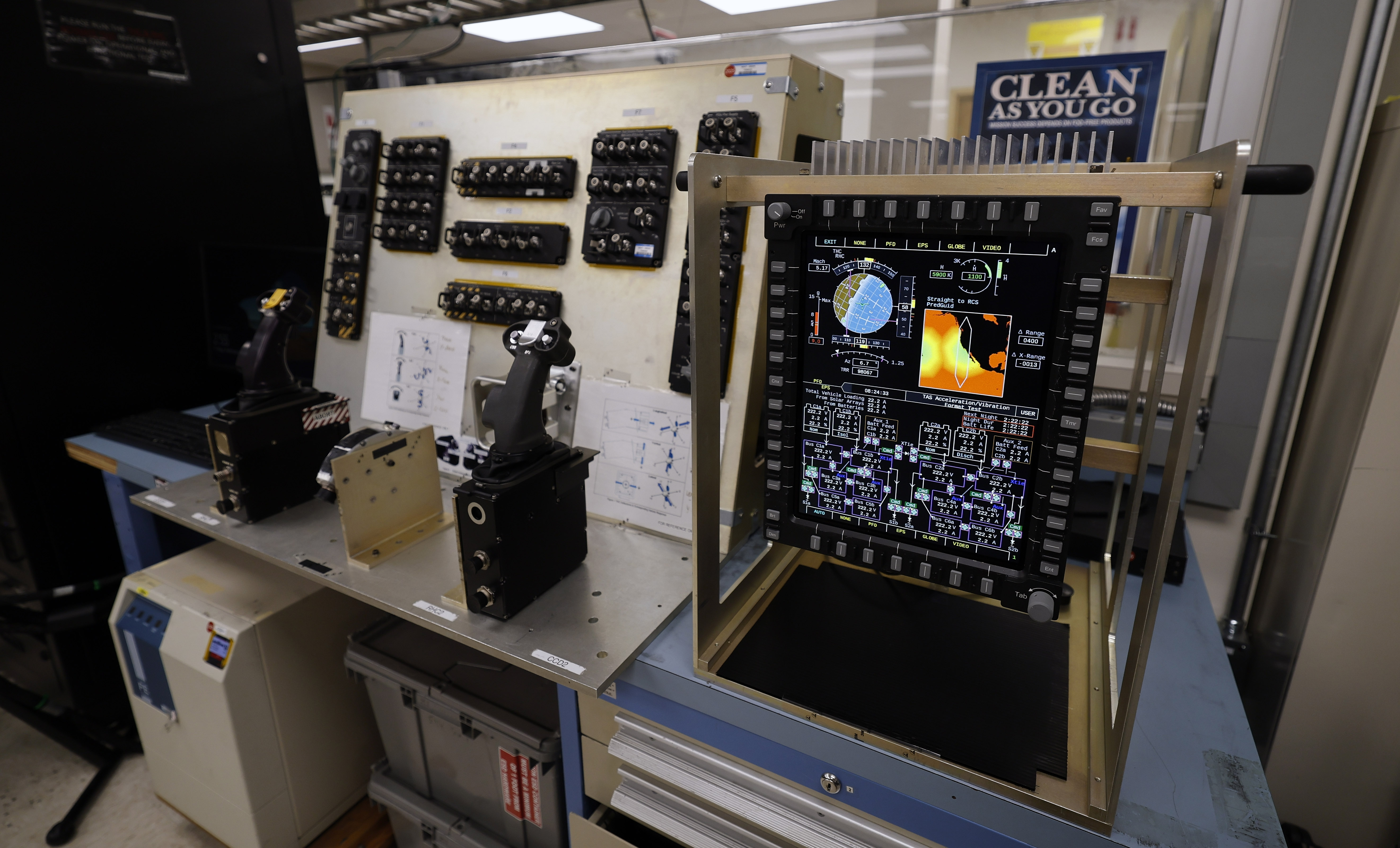
Controls for Orion, including switch interface panels; rotational hand controllers; cursor control device; translational hand controller; and a display unit; during a tour of the Honeywell Aerospace Clearwater, Fla. facility where mission-critical systems for the Orion spacecraft and the Space Launch System (SLS) rocket are designed, built, and tested, on Friday, February 27, 2026. (Ricardo Ramirez Buxeda/ Orlando Sentinel)
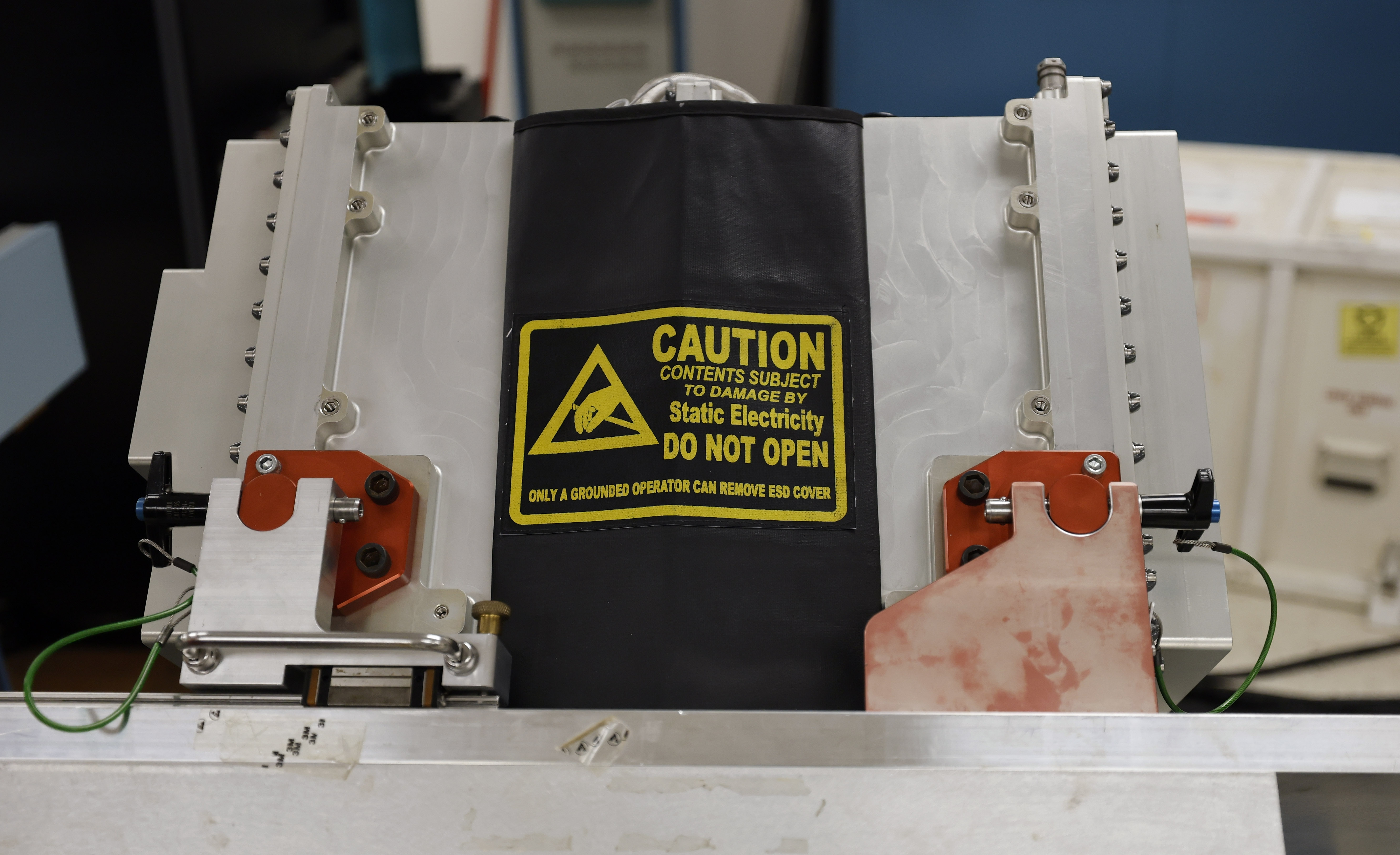
RS-25 engine controller for the SLS during a tour of the Honeywell Aerospace Clearwater, Fla. facility where mission-critical systems for the Orion spacecraft and the Space Launch System (SLS) rocket are designed, built, and tested, on Friday, February 27, 2026. (Ricardo Ramirez Buxeda/ Orlando Sentinel)
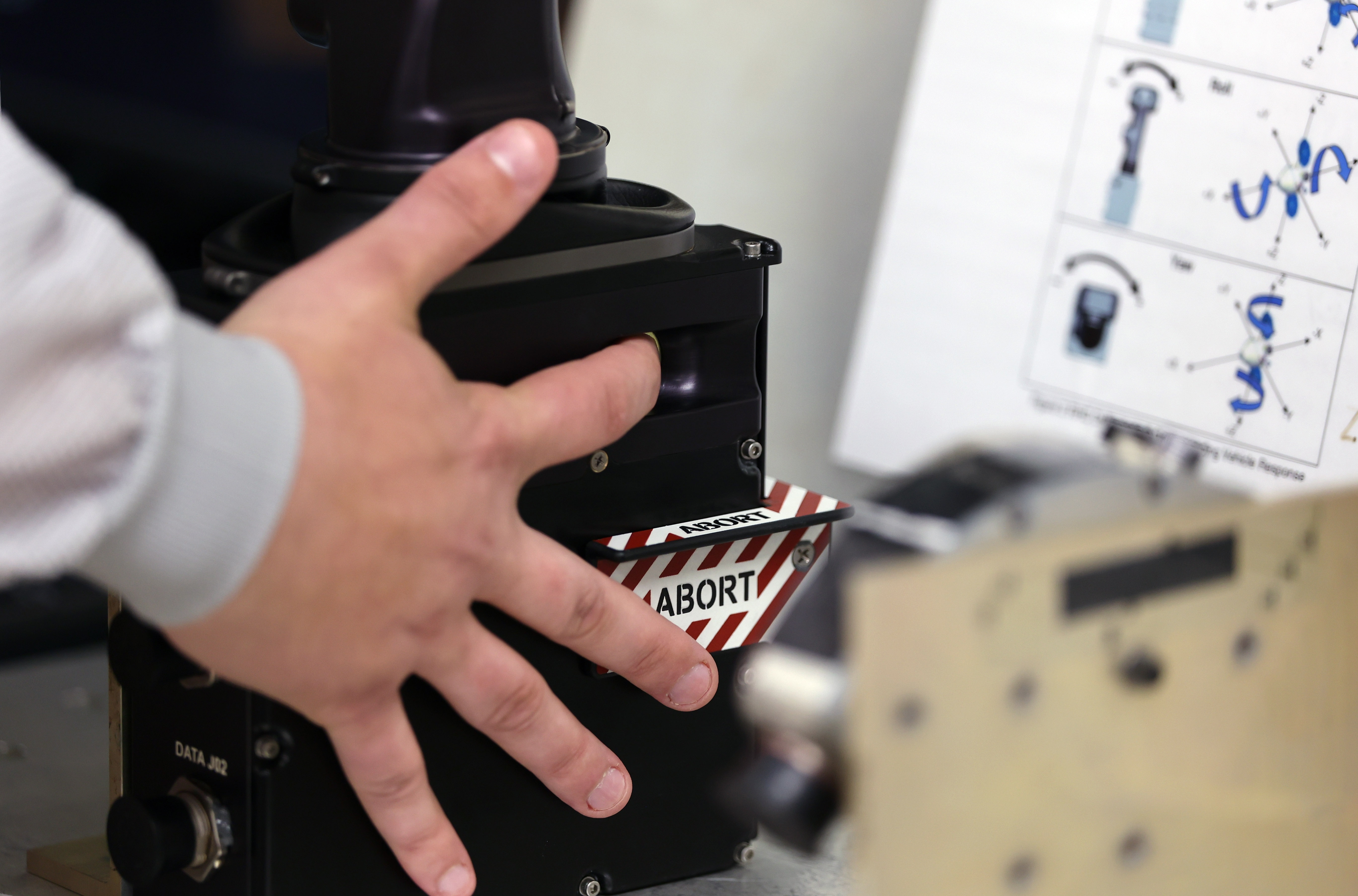
Stephen Doerbecker, Program Manager for Orion Space System, demonstrates the abort button on the rotational hand controller (RHC) during a tour of the Honeywell Aerospace Clearwater, Fla. facility where mission-critical systems for the Orion spacecraft and the Space Launch System (SLS) rocket are designed, built, and tested, on Friday, February 27, 2026. (Ricardo Ramirez Buxeda/ Orlando Sentinel)
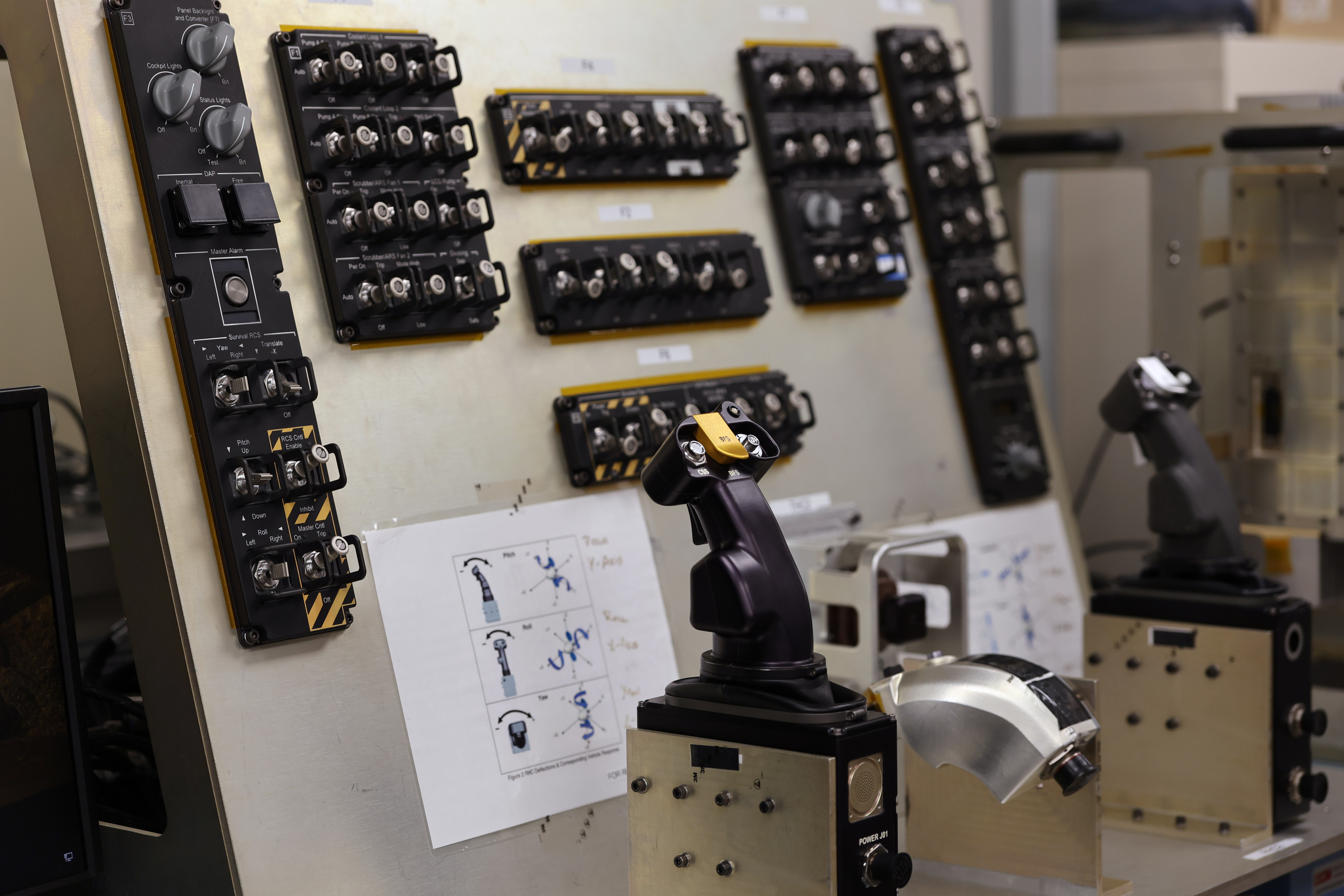
Controls for Orion, including switch interface panels; rotational hand controllers; cursor control device; and translational hand controller; during a tour of the Honeywell Aerospace Clearwater, Fla. facility where mission-critical systems for the Orion spacecraft and the Space Launch System (SLS) rocket are designed, built, and tested, on Friday, February 27, 2026. (Ricardo Ramirez Buxeda/ Orlando Sentinel)
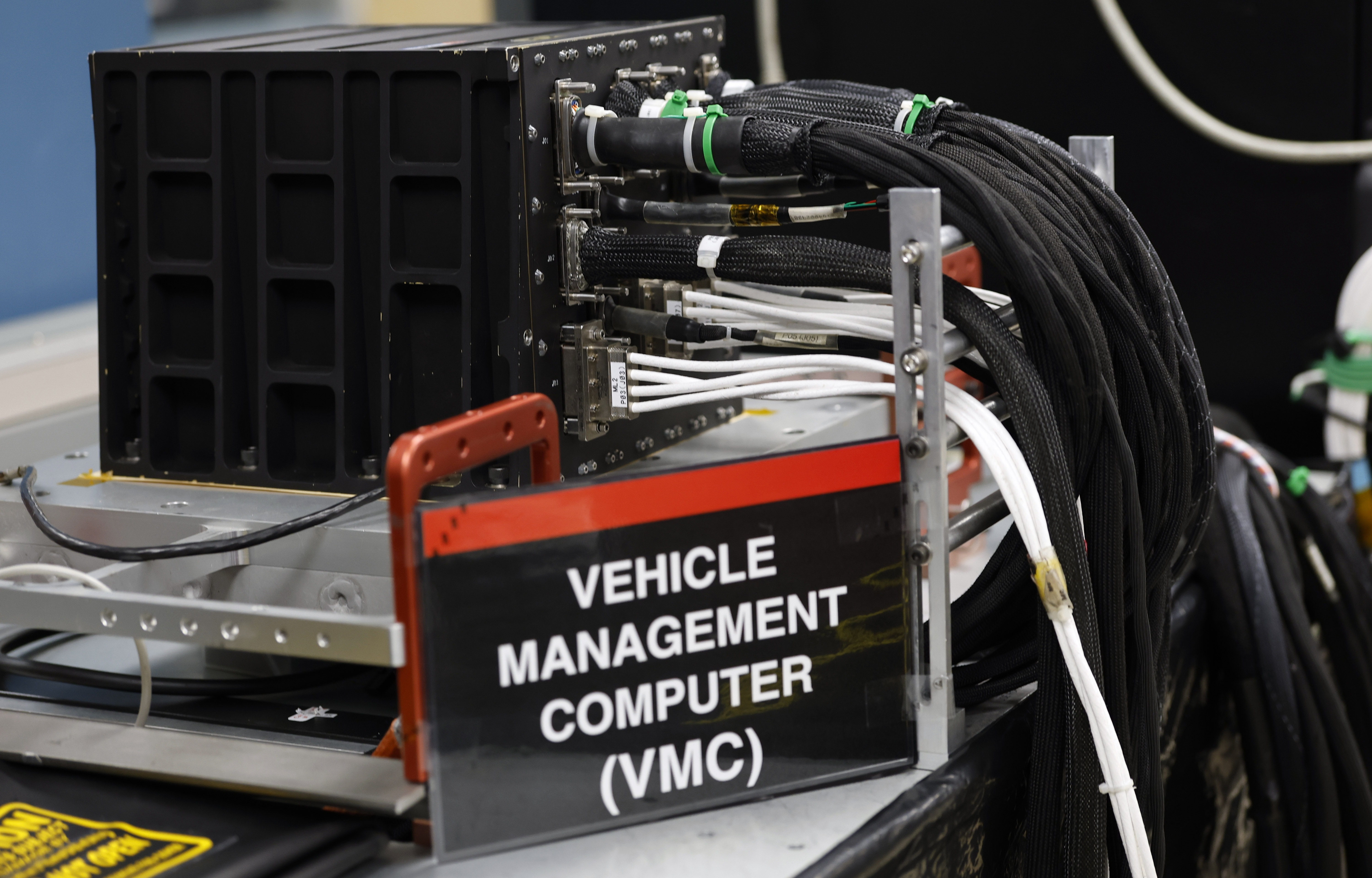
Vehicle management computer during a tour of the Honeywell Aerospace Clearwater, Fla. facility where mission-critical systems for the Orion spacecraft and the Space Launch System (SLS) rocket are designed, built, and tested, on Friday, February 27, 2026. (Ricardo Ramirez Buxeda/ Orlando Sentinel)
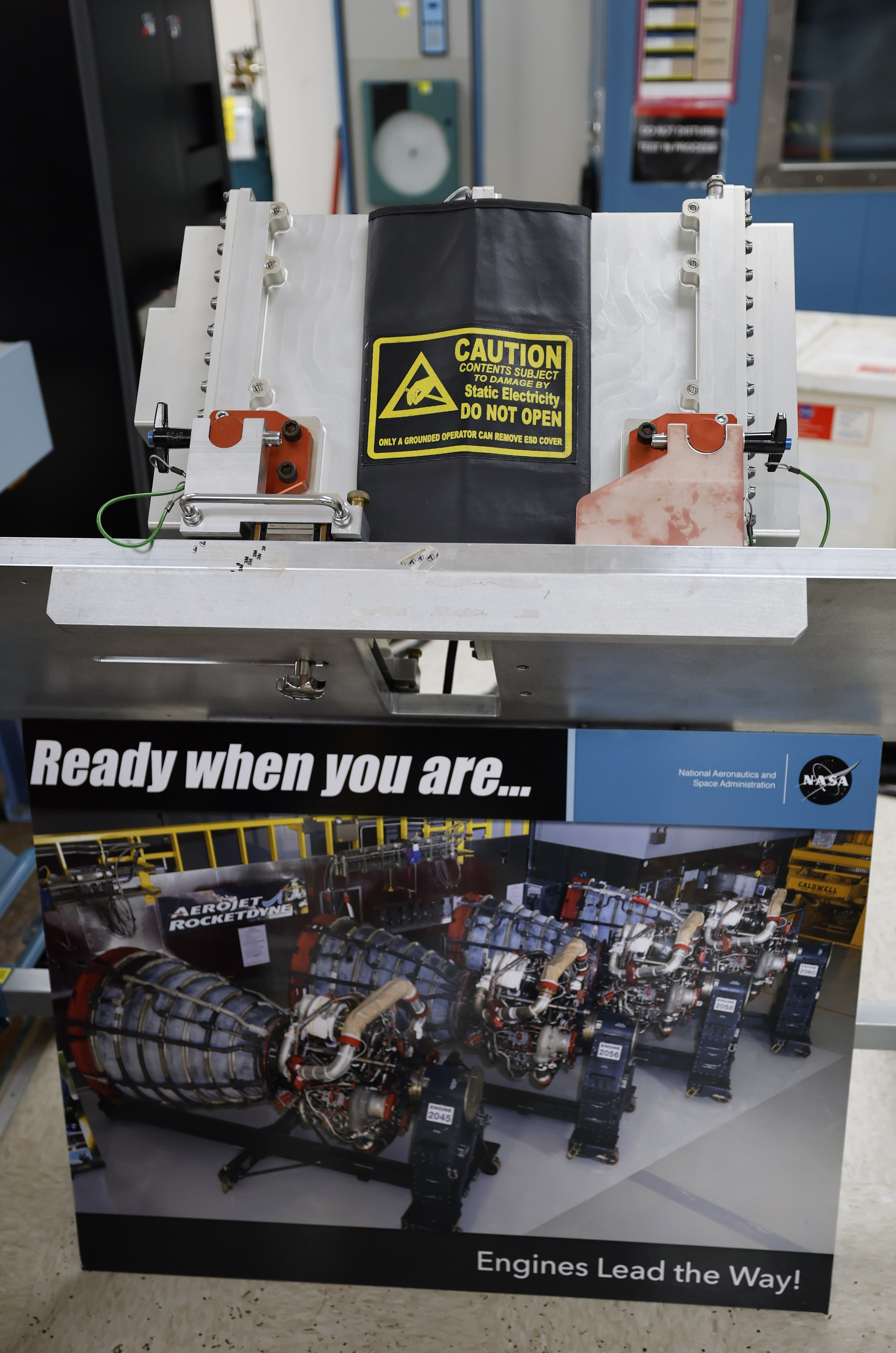
RS-25 engine controller for the SLS during a tour of the Honeywell Aerospace Clearwater, Fla. facility where mission-critical systems for the Orion spacecraft and the Space Launch System (SLS) rocket are designed, built, and tested, on Friday, February 27, 2026. (Ricardo Ramirez Buxeda/ Orlando Sentinel)
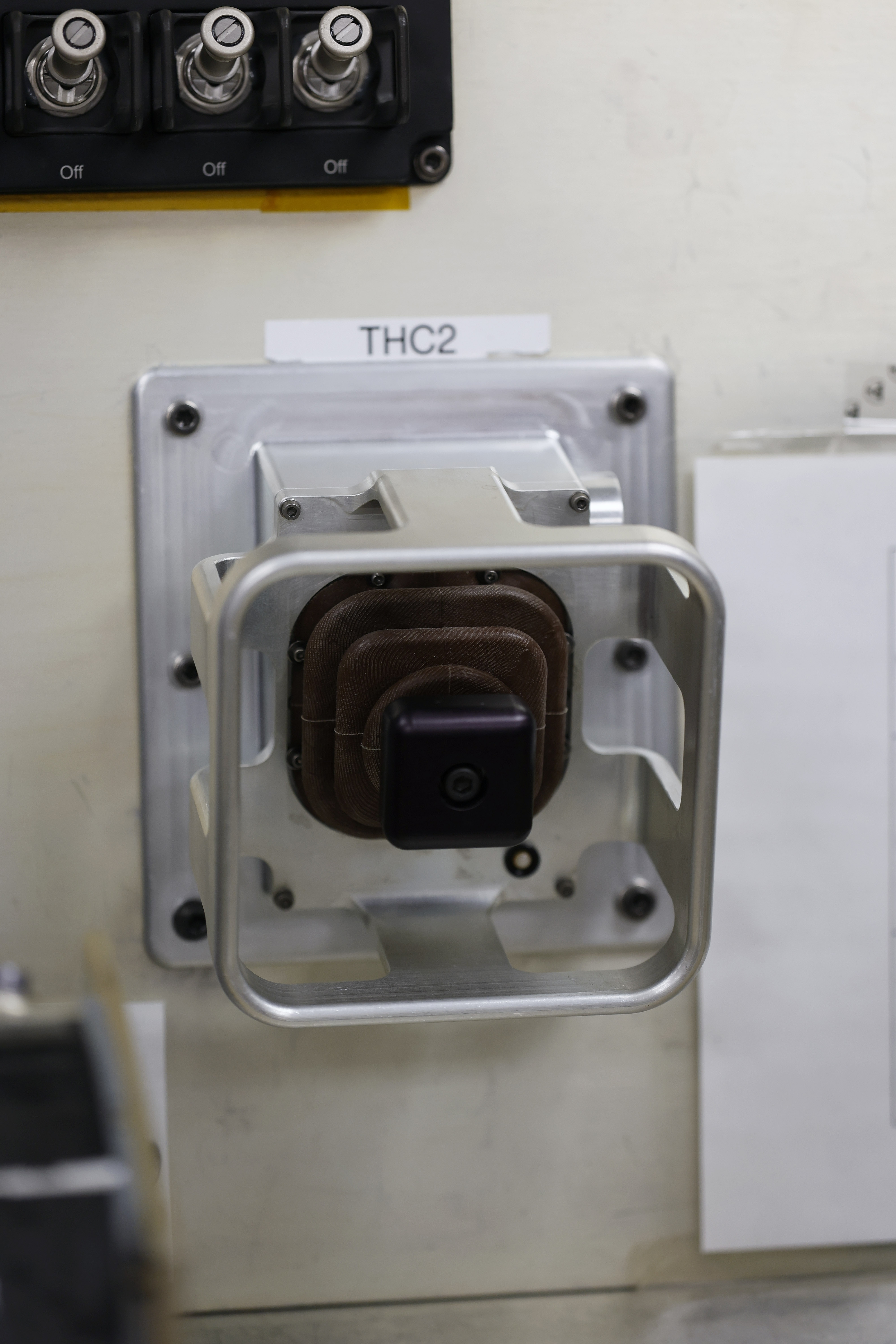
A translational hand controller during a tour of the Honeywell Aerospace Clearwater, Fla. facility where mission-critical systems for the Orion spacecraft and the Space Launch System (SLS) rocket are designed, built, and tested, on Friday, February 27, 2026. (Ricardo Ramirez Buxeda/ Orlando Sentinel)
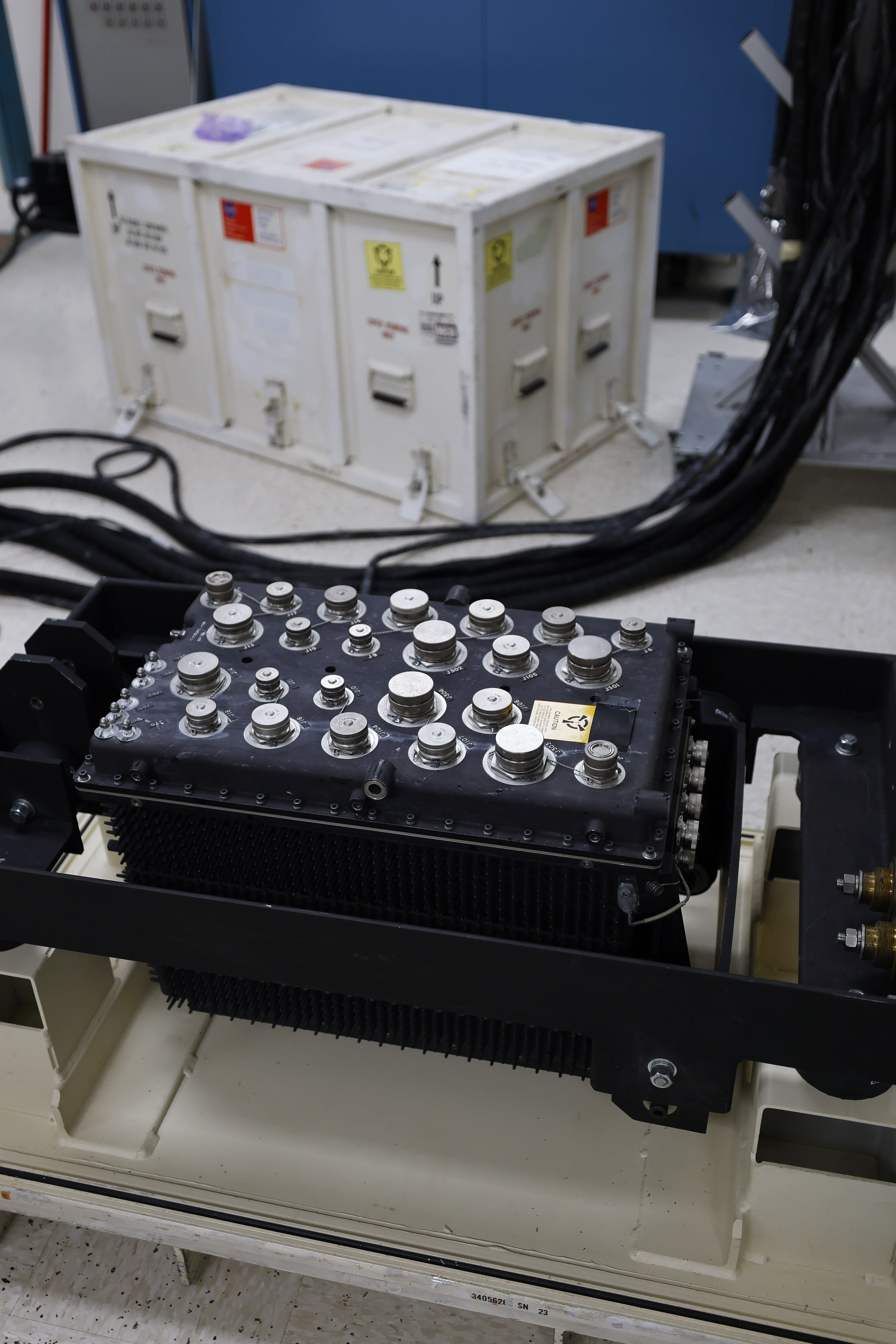
Left to Right, RS-25 engine controller the Space Shuttle (serial number: 2); during a tour of the Honeywell Aerospace Clearwater, Fla. facility where mission-critical systems for the Orion spacecraft and the Space Launch System (SLS) rocket are designed, built, and tested, on Friday, February 27, 2026. (Ricardo Ramirez Buxeda/ Orlando Sentinel)
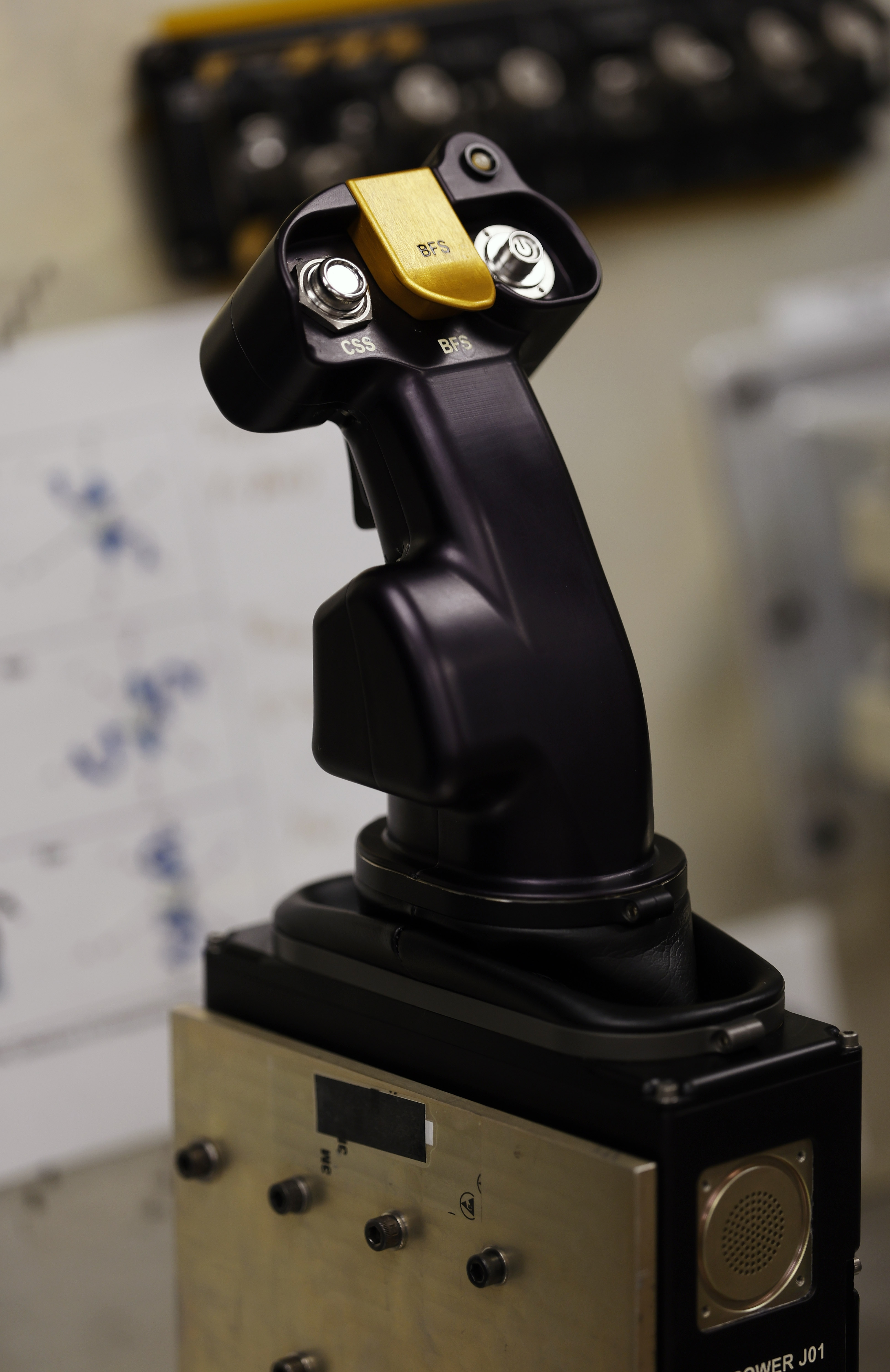
Rotational hand controller (RHC) during a tour of the Honeywell Aerospace Clearwater, Fla. facility where mission-critical systems for the Orion spacecraft and the Space Launch System (SLS) rocket are designed, built, and tested, on Friday, February 27, 2026. (Ricardo Ramirez Buxeda/ Orlando Sentinel)
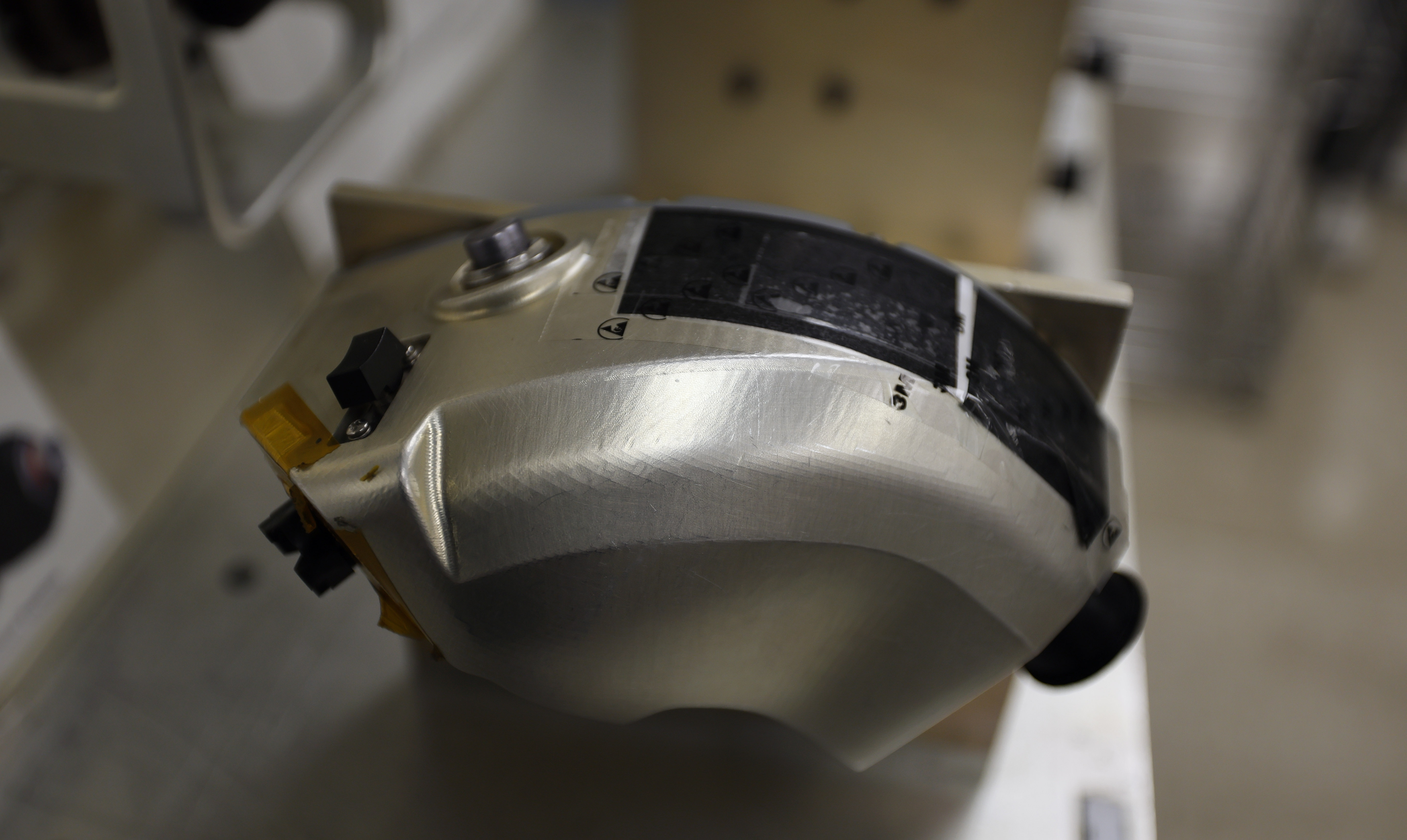
A cursor control device during a tour of the Honeywell Aerospace Clearwater, Fla. facility where mission-critical systems for the Orion spacecraft and the Space Launch System (SLS) rocket are designed, built, and tested, on Friday, February 27, 2026. (Ricardo Ramirez Buxeda/ Orlando Sentinel)
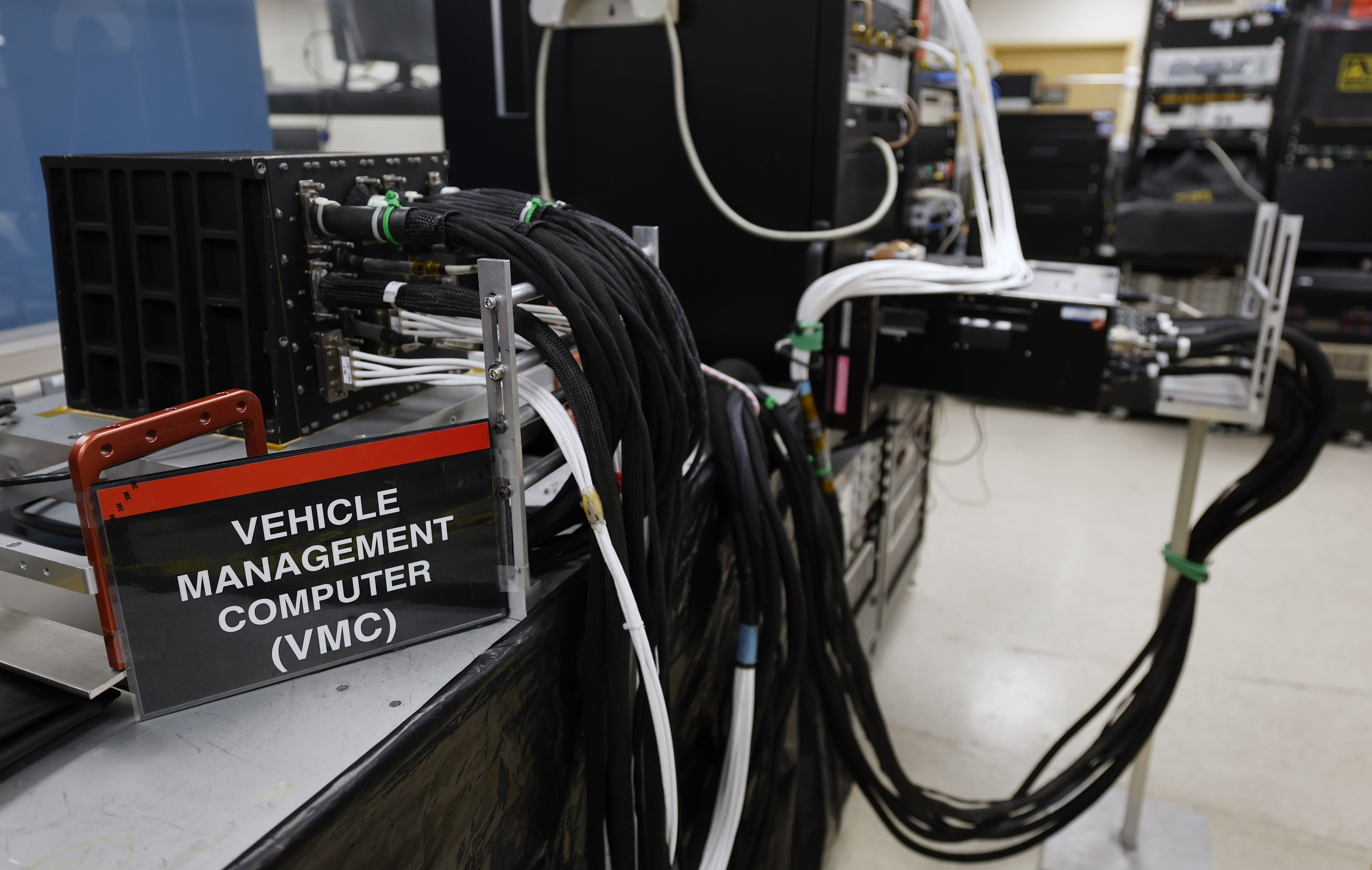
Vehicle management computer during a tour of the Honeywell Aerospace Clearwater, Fla. facility where mission-critical systems for the Orion spacecraft and the Space Launch System (SLS) rocket are designed, built, and tested, on Friday, February 27, 2026. (Ricardo Ramirez Buxeda/ Orlando Sentinel)
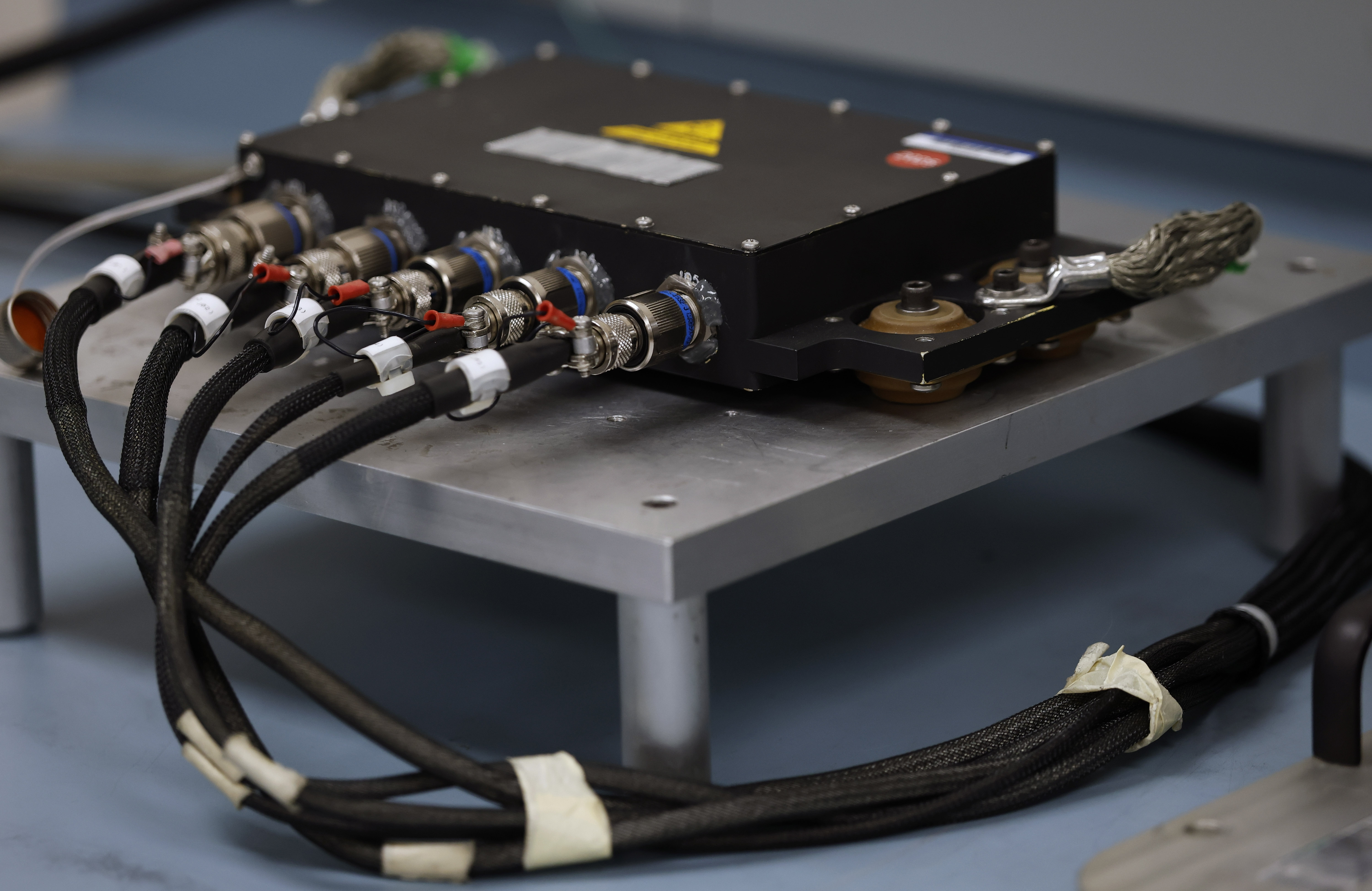
Barometric altimeter during a tour of the Honeywell Aerospace Clearwater, Fla. facility where mission-critical systems for the Orion spacecraft and the Space Launch System (SLS) rocket are designed, built, and tested, on Friday, February 27, 2026. (Ricardo Ramirez Buxeda/ Orlando Sentinel)
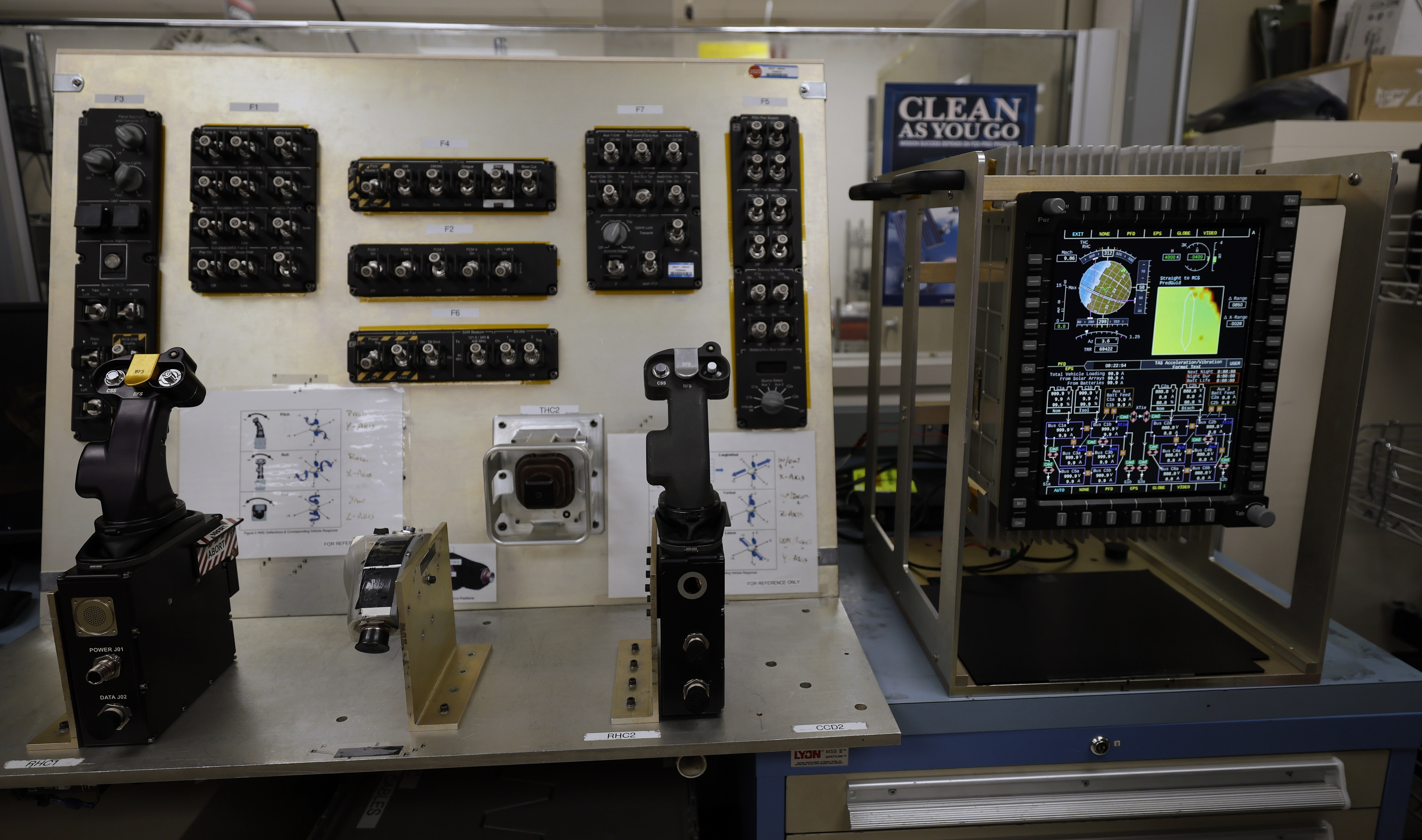
Controls for Orion, including switch interface panels; rotational hand controllers; cursor control device; translational hand controller; and a display unit; during a tour of the Honeywell Aerospace Clearwater, Fla. facility where mission-critical systems for the Orion spacecraft and the Space Launch System (SLS) rocket are designed, built, and tested, on Friday, February 27, 2026. (Ricardo Ramirez Buxeda/ Orlando Sentinel)
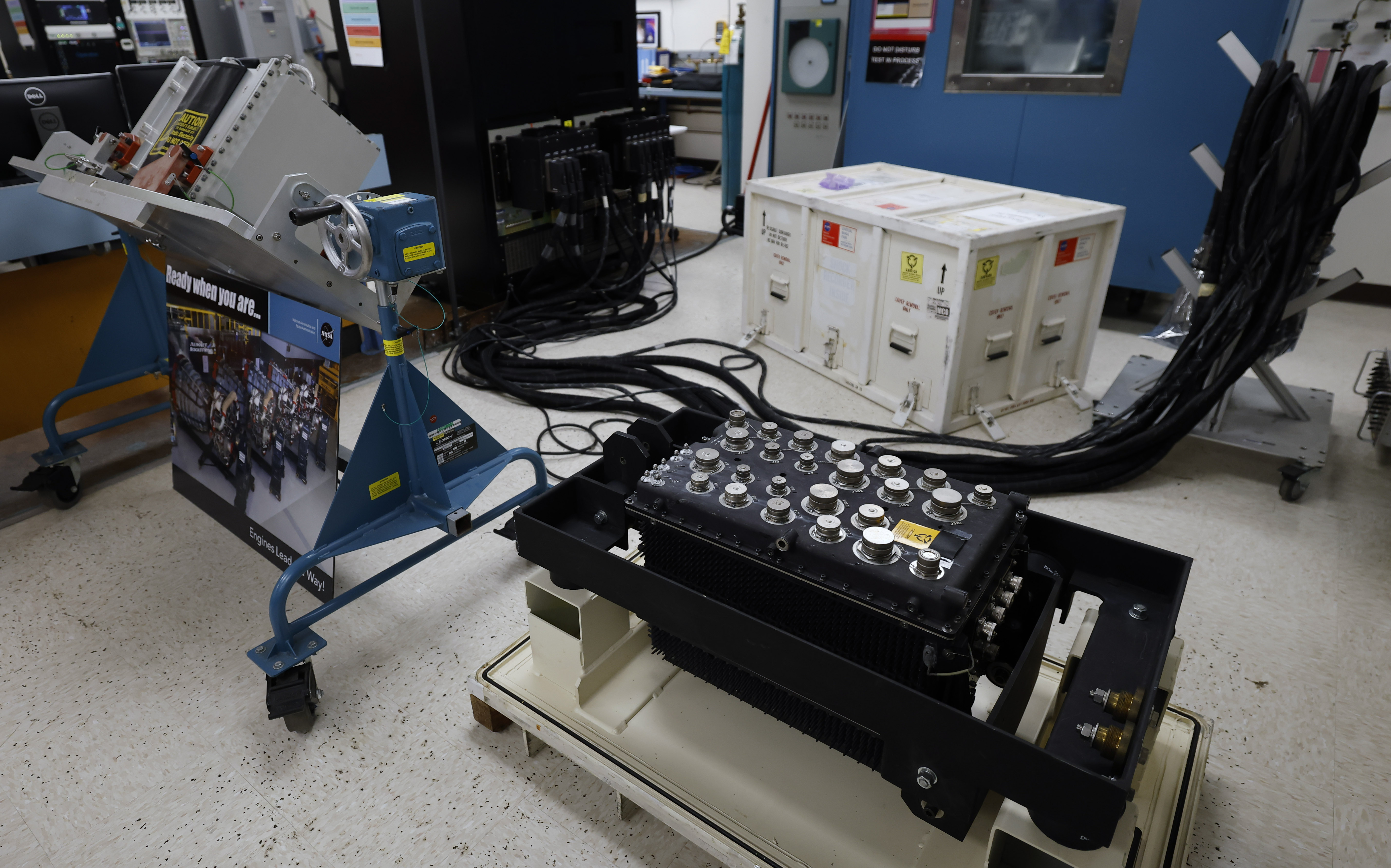
Left to Right, RS-25 engine controller for the SLS; and the previous generation controller from the Space Shuttle (serial number: 2); during a tour of the Honeywell Aerospace Clearwater, Fla. facility where mission-critical systems for the Orion spacecraft and the Space Launch System (SLS) rocket are designed, built, and tested, on Friday, February 27, 2026. (Ricardo Ramirez Buxeda/ Orlando Sentinel)
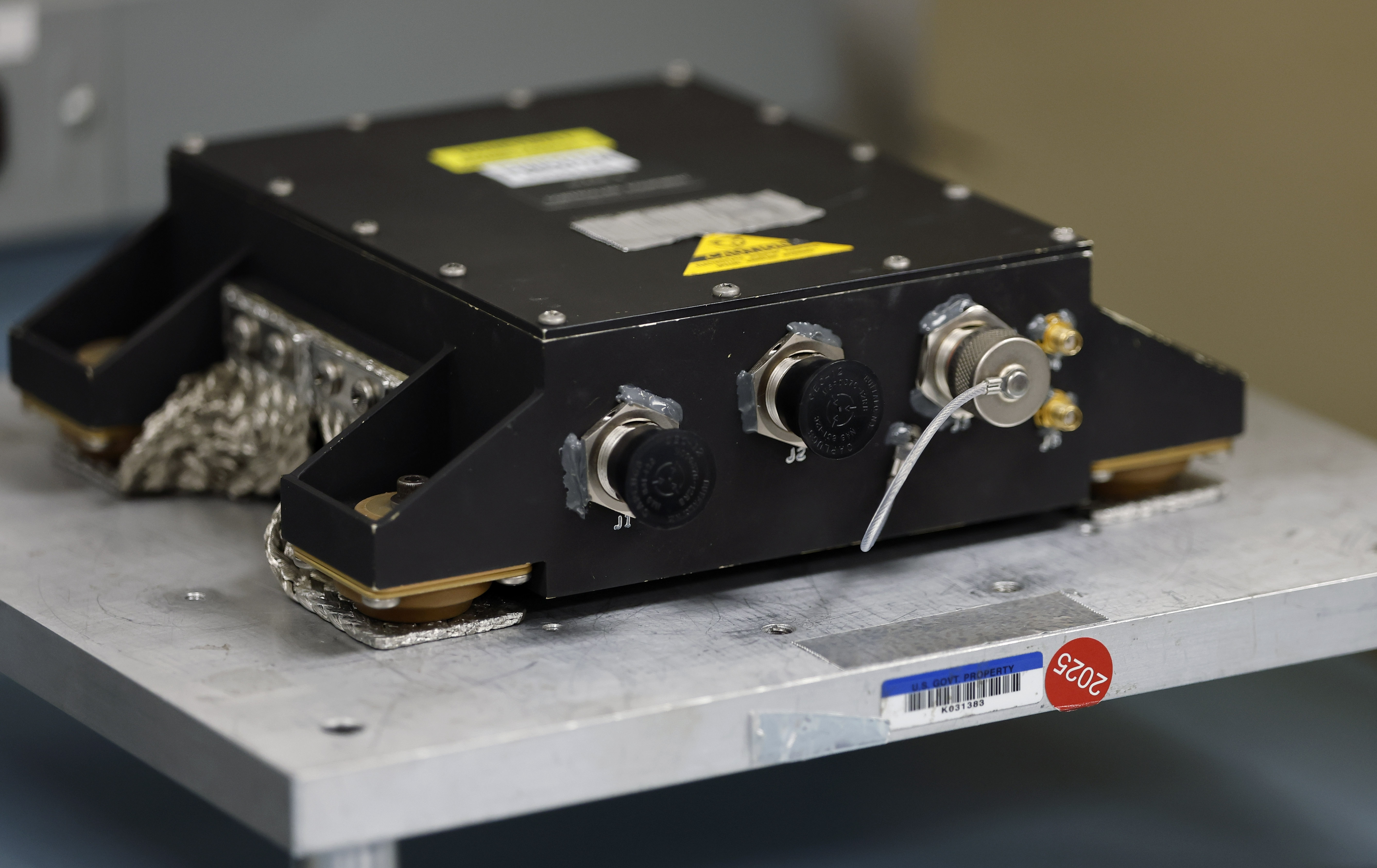
GPSR during a tour of the Honeywell Aerospace Clearwater, Fla. facility where mission-critical systems for the Orion spacecraft and the Space Launch System (SLS) rocket are designed, built, and tested, on Friday, February 27, 2026. (Ricardo Ramirez Buxeda/ Orlando Sentinel)
Show Caption
1 of 17
Stephen Doerbecker, Program Manager for Orion Space System, talks about the Display Unit for Orion — Honeywell Aerospace tour of their Clearwater, Fla. facility where mission-critical systems for the Orion spacecraft and the Space Launch System (SLS) rocket are designed, built, and tested, on Friday, February 27, 2026. (Ricardo Ramirez Buxeda/ Orlando Sentinel)