
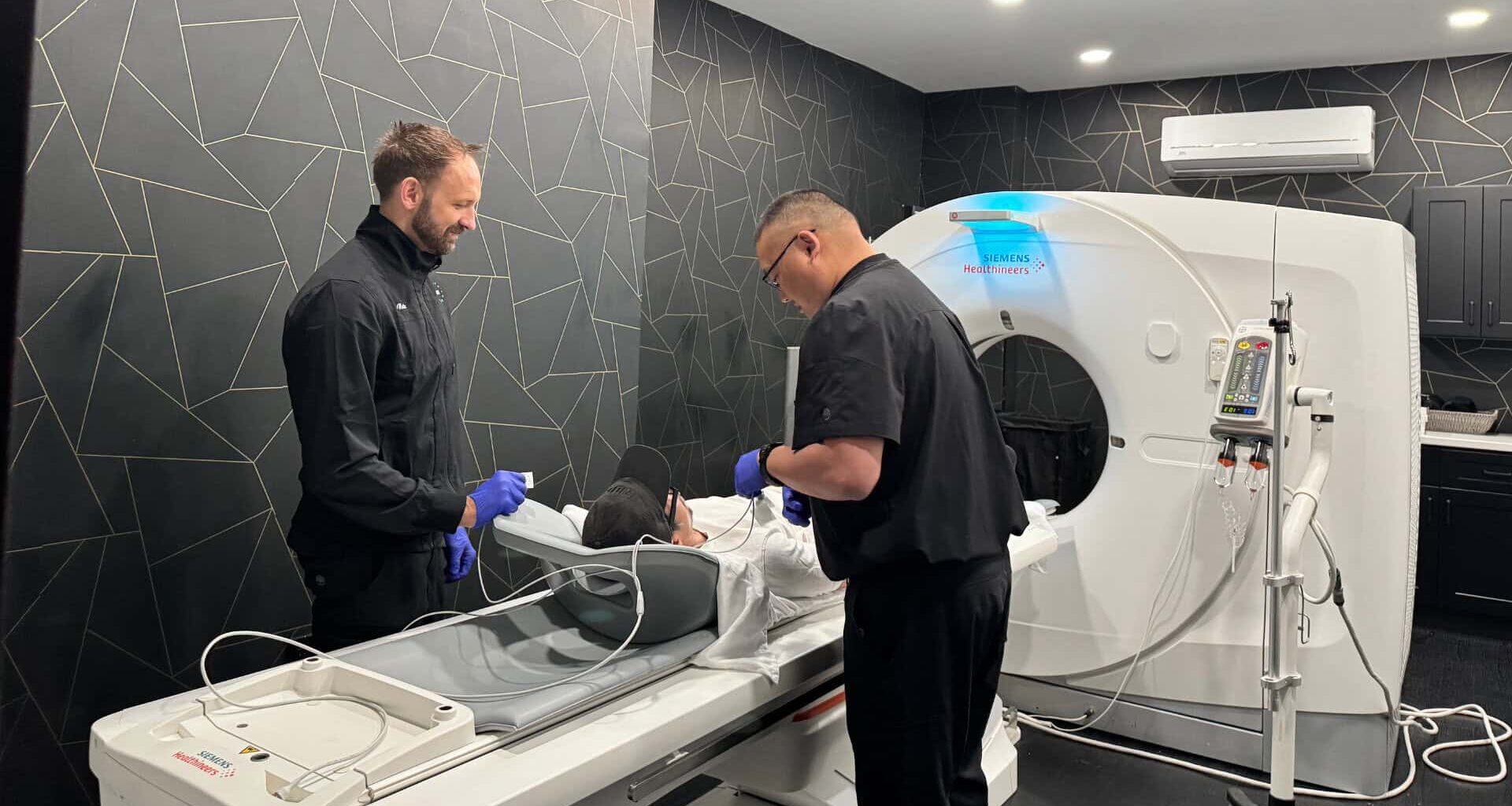

TrueScan, a leading proactive medical imaging center here in St. Pete, has become the first full-body MRI center in the country to offer Coronary CT Angiography (CCTA) with HeartFlow AI analysis. The 10-minute scan is groundbreaking in the fight against preventable heart disease, and you can get it right down the road in TrueScan’s facility at 5015 4th St N.
The advanced cardiac imaging technology represents a paradigm shift in how heart disease is detected and managed, providing patients with comprehensive plaque analysis and blood flow assessment in a single non-invasive scan. The addition of CCTA with HeartFlow AI positions TrueScan as one of the most comprehensive early detection facilities in the country, combining full-body MRI screening with cutting-edge cardiac imaging to detect disease before symptoms appear. Learn more here.
“We founded TrueScan with one mission: to detect life-threatening diseases early when they’re most treatable,” said Michael Andoniades, Founder and CEO of TrueScan. “Heart disease is the leading cause of death in the United States, and 50% of heart attacks happen in people with no prior symptoms. CCTA with HeartFlow AI allows us to identify high-risk patients years before they would have any warning signs.”
The heart disease detection gap
Cardiovascular disease remains the number one killer in America, claiming more than 695,000 lives annually according to the Centers for Disease Control and Prevention. Despite advances in medical technology, most heart disease is still detected after symptoms appear. Often, the first symptom is a heart attack. The new technology allows heart care to be proactive instead of only reactive.
Traditional cardiac screening methods have significant limitations:
Calcium Scoring: The most common screening test only detects calcified plaque: hard, stable deposits that have been present for years. It completely misses soft plaque, the unstable cholesterol-rich deposits that rupture and cause most heart attacks.
Stress Tests: These functional tests assess how the heart performs under physical exertion but cannot detect plaque buildup in coronary arteries. A patient can pass a stress test with flying colors while having extensive coronary artery disease that hasn’t yet restricted blood flow.
Standard Cholesterol Panels: Blood tests measure risk factors but don’t show what’s actually happening inside the arteries. Two patients with identical cholesterol levels can have vastly different amounts of arterial plaque.
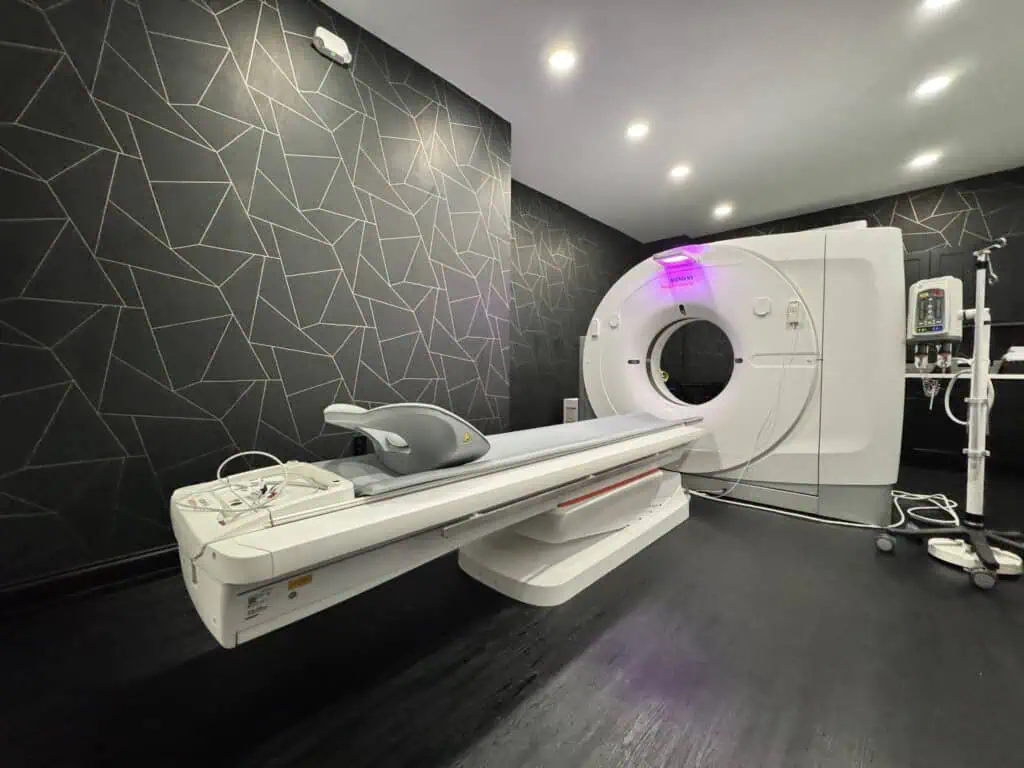
What is CCTA with HeartFlow AI?
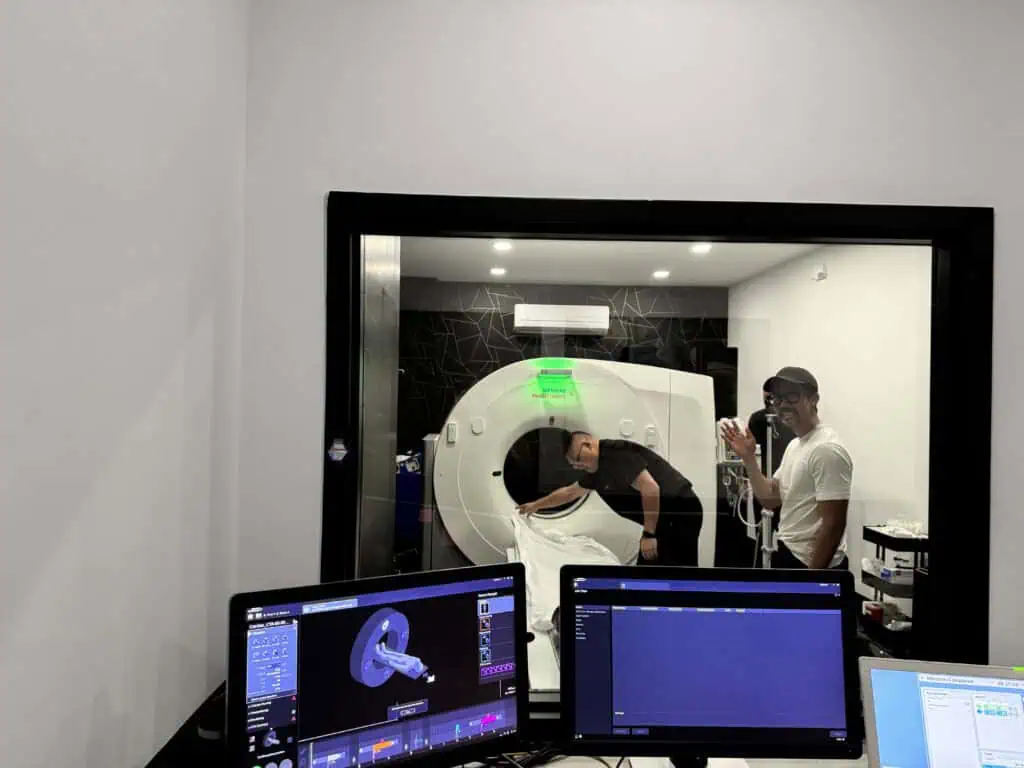
Coronary CT Angiography (CCTA) is a specialized CT scan that creates detailed 3D images of the heart’s blood vessels. During the scan, contrast dye is injected intravenously while the CT scanner captures high-resolution images of the coronary arteries, which are the vessels that supply oxygen-rich blood to the heart muscle.
The entire scan takes approximately 10 minutes. Unlike invasive cardiac catheterization, CCTA is completely non-invasive with no incisions, no hospital admission, and no recovery time.
But what makes this technology revolutionary is HeartFlow AI analysis.
HeartFlow, an FDA-cleared artificial intelligence platform, takes the raw CT images and performs two critical analyses: a Comprehensive Plaque Analysis, and an FFR Analysis (Fractional Flow Reserve).
HeartFlow provides a complete quantitative report showing total plaque volume, plaque composition percentages, and how a patient’s burden compares to others their age (patient percentile ranking).
The second component of HeartFlow analysis answers a critical question: Is the plaque actually restricting blood flow to the heart?
Using computational fluid dynamics, HeartFlow simulates blood flow through the patient’s actual coronary arteries and calculates FFR (Fractional Flow Reserve) values at every segment. FFR is a measurement of how well blood flows through an artery despite plaque narrowing.
“This is groundbreaking because FFR has traditionally required invasive cardiac catheterization,” explained Dr. Oliver Abela, an interpreting cardiologist who reviews HeartFlow analyses for TrueScan patients. “You would typically be admitted to the hospital, have a catheter threaded through your arteries, and a pressure wire advanced to take measurements. Now HeartFlow calculates this from a simple CT scan. It’s completely changed the game.”
Who Should Get CCTA with HeartFlow?
CCTA with HeartFlow AI is particularly valuable for:
Individuals with cardiac risk factors: Family history of heart disease, high cholesterol, hypertension, diabetes, smoking history, or obesity
Patients with atypical symptoms: Unexplained fatigue, shortness of breath, or chest discomfort that hasn’t been fully evaluated
Those with abnormal calcium scores: Calcium scores show calcified plaque but can’t determine total burden or functional significance.
Proactive health-conscious individuals: People who want to know their true cardiovascular risk before symptoms appear.
Patients considering starting or intensifying medical therapy: HeartFlow results can guide decisions about statin intensity, addition of PCSK-9 inhibitors, or other aggressive interventions.
How HeartFlow Changes Patient Care
The clinical implications of CCTA with HeartFlow AI are profound. For the first time, physicians can see:
✓ Total disease burden: Not just calcium, but all three plaque types
✓ Plaque composition: The percentage that’s stable versus dangerous
✓ Functional impact: Whether plaque is restricting blood flow
✓ Precise location: Which segments in which vessels are affected
✓ Treatment roadmap: Which vessels need intervention versus medical management
This level of detail enables precision medicine approaches that were previously impossible.
Case Example:
A 58-year-old male patient came to TrueScan for a proactive heart scan. He had no symptoms: no chest pain, shortness of breath, or other warning signs. He exercised regularly and felt completely healthy.
His CCTA with HeartFlow AI revealed:
Total plaque volume: 1,079 mm³ (94th percentile for his age)
Plaque composition: 68% soft plaque, 32% calcified
FFR analysis: Borderline blood flow restriction (FFR 0.75) in the left circumflex artery
Three-vessel coronary artery disease
If this patient had only received a calcium score, the soft plaque that puts him at highest risk for heart attack would have been completely invisible.
Based on his HeartFlow results, he was started on intensive medical therapy including high-dose statins, PCSK-9 inhibitors, and aspirin. He was referred to cardiology to discuss whether his borderline FFR warranted a stent. He’ll undergo repeat CCTA in 12 months to track whether medical therapy is stabilizing his plaque or if intervention is needed.
“Without this scan, my first symptom could have been a massive heart attack,” the patient said. “Now I have a roadmap. I know exactly what I’m dealing with and how to treat it. It’s given me years back.”
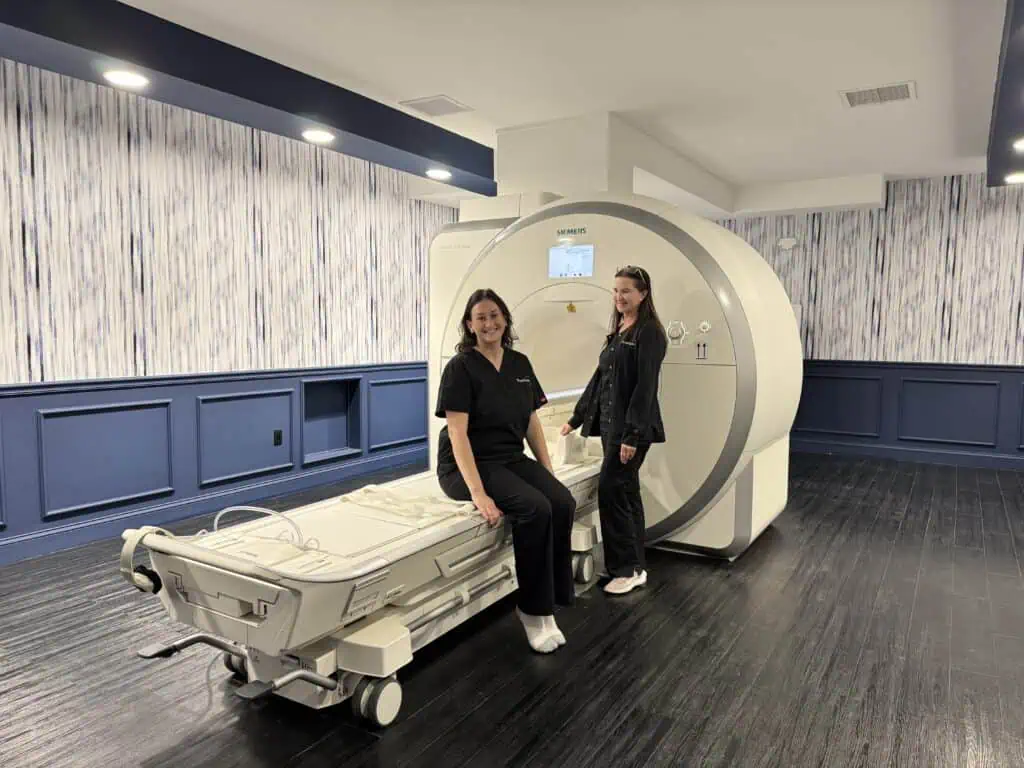 TrueScan’s MRI experience includes your pick of TV show to stream
The TrueScan Difference
TrueScan opened in 2024 with a mission to make advanced early detection imaging accessible. The facility specializes in proactive screening for individuals who want to take control of their health before disease progresses.
In addition to CCTA with HeartFlow AI, TrueScan offers:
Full-Body MRI: Advanced imaging from brain to ankle screening for over 500 medical conditions including cancers, aneurysms, autoimmune diseases, and musculoskeletal issues. Scans are interpreted by board-certified neuroradiologists with over 30 years of experience.
DEXA Scans: Bone density assessment for osteoporosis screening
Comprehensive Results Review: Every patient receives a 1:1 video consultation with a physician on the TrueScan medical team to review findings and discuss next steps
The facility is located at 5015 4th Street North in St. Petersburg and serves patients from across Florida and beyond, including a growing number of out-of-state and international patients seeking access to advanced screening technology not widely available elsewhere.
Pricing
TrueScan offers transparent, affordable pricing:
CCTA with HeartFlow AI: $108 per month
Includes complete plaque analysis, FFR analysis, detailed HeartFlow report, and physician consultation.
Full-Body MRI: $169 per month
Comprehensive screening for over 500 medical conditions including early-stage cancers, aneurysms, autoimmune diseases, and musculoskeletal issues.
Total Health Package (Full-Body MRI + CCTA with HeartFlow AI): $249 per month
Complete cardiovascular and whole-body disease screening in one visit.
Many patients use Health Savings Accounts (HSA) or Flexible Spending Accounts (FSA) to cover the cost. TrueScan also offers financing options through Affirm with flexible payment plans.
To schedule a scan or learn more about TrueScan:
📞 Phone: (727) 256-0095
🌐 Website:www.truescanmri.com
📍 Location: 5015 4th Street North, St. Petersburg, FL 33703
📧 Email: hello@truescanmri.com