
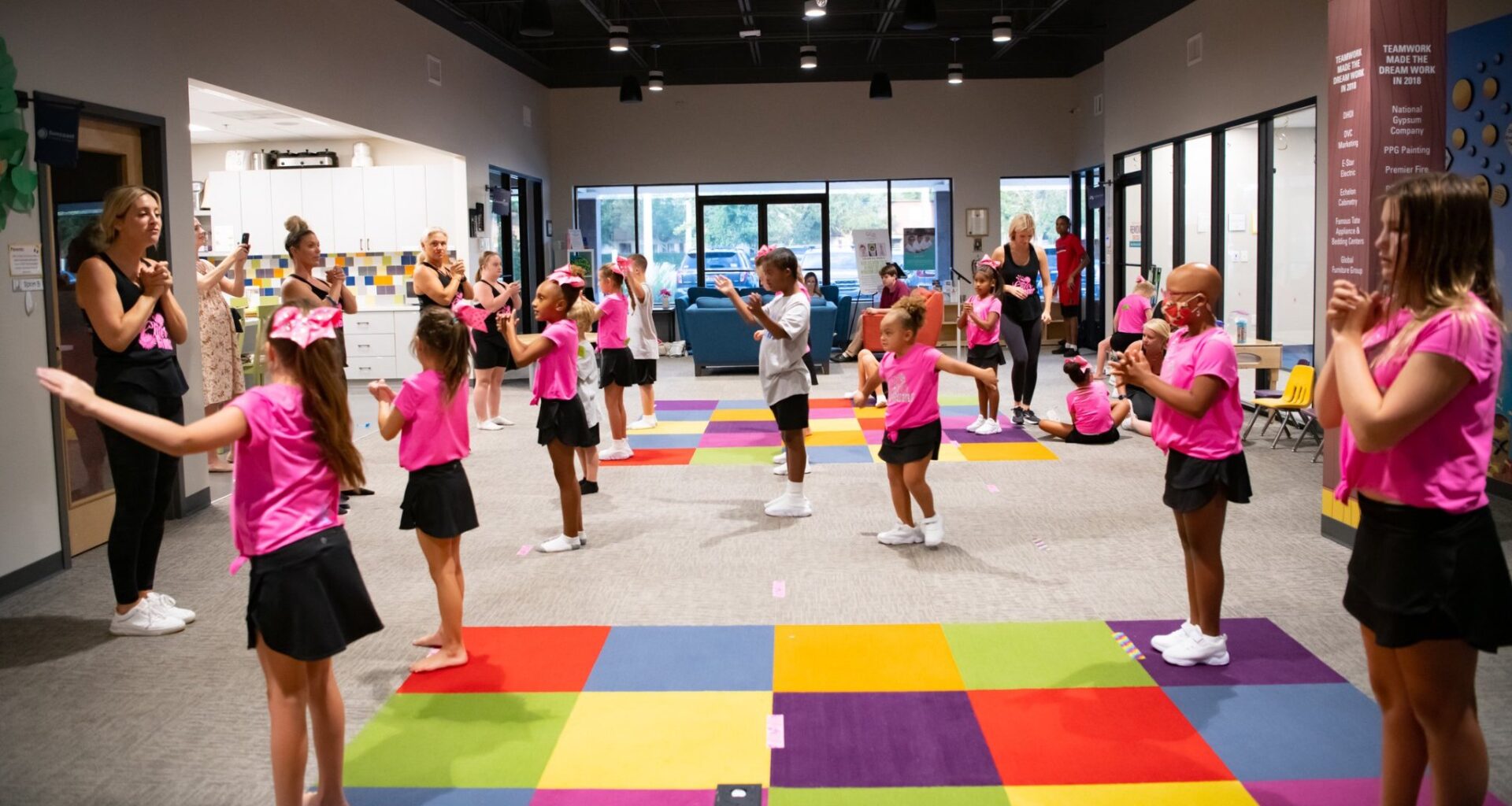
Amanda Bucalo is a board member at Gigi’s Playhouse, a Down syndrome achievement center. She has many titles. But mostly she goes by “Mason’s mom.” Mason, her son, is 7 years old and has Down syndrome.
Gigi’s is competing in the Giving Bowl, a bracketed competition against other non-profits vying for the chance to win $50,000. This week, Gigi’s is pitted against the Crisis Center of Tampa Bay, a youth mental health organization that won last year’s Giving Bowl.
Friday marks the end of the end of round two, and for Bucalo, the competition is about more than simply moving forward. It is about making sure more families know a place like Gigi’s exists, and keeping its critical programs operating.
“Benefits for people with disabilities, things like therapy, speech therapy, fitness classes, yoga classes, they are dwindling,” Bucalo said. “There’s nothing like it in the Tampa Bay. For families this is the difference between walking at 2 years old or working at 4. It can’t be defined, really, the services we offer. Many insurance companies don’t offer it.”
Gigi’s Playhouse Tampa is part of a national network of Down Syndrome Achievement Centers that provide free educational and therapeutic programming. For families navigating a system where services are often limited or inaccessible, that model fills a critical gap.
“From a parent level, it’s unlike anywhere else, as it’s a place we walk in and are welcome,” Bucalo said. “We can fellowship with other parents, talk about the challenges and successes.”
For Bucalo, it is also personal. Mason moves through the space with a level of comfort that is hard to find elsewhere. “It’s a place of safety and feels like home,” she told the Catalyst.

Ryan Pepiot
That sense of community has recently been amplified by an unexpected source. Tampa Bay Rays pitcher Ryan Pepiot selected Gigi’s Playhouse as his charity in the Giving Bowl, bringing new attention to the organization at a pivotal moment.
“Ryan joined us with another player, Jack Burger, over the summer,” Bucalo said. “Afterward, an energy caught onto them. It was apparent when he left that he was on board.”
His continued involvement, including attending a recent Down syndrome event with his wife, has helped energize both families and supporters.
“When anybody, big or small, dives into helping with the playhouse, it’s heart-warming,” she said. “And certainly with someone who could take his spotlight and put it anywhere else, but he gave it to us.”
Now, with the deadline approaching this Friday (March 27) at 4:30 p.m., and the matchup against last year’s winner adds a layer of urgency.
“No matter what, the Giving Bowl puts Gigi’s Playhouse at center stage,” Bucalo noted.
Still, the financial stakes are significant. The $50,000 prize would go directly toward keeping programs running and expanding accessibility.
“We pay our own rent. Buy our own supplies for cooking classes. Pay the speech therapists,” she said. “We have to be really good stewards of the money we do have, but the additional $50,000 would help keep our doors open.”
According to Bucalo, more than 1,000 participants are actively involved with the playhouse. For many, access remains a challenge, especially for adults who cannot easily get themselves to the facility. Additional funding could help address that gap, including the possibility of transportation that would bring participants to programs and into the broader community.
Beyond logistics, Bucalo says the heart of Gigi’s is the people inside it.
“Many of the adults at Gigi’s give me hope for what my own son could do,” she said, reflecting on her early days after Mason’s diagnosis. She now sees that potential realized every day, from individuals who attend programs to those who arrive from jobs and homes they manage on their own.
“Anybody looking for a purpose in their life, they will find it at Gigi’s Playhouse,” she said, describing the community she has found as “the lucky few,” and says the experience has reshaped how she sees ability, connection and joy.
“It’s a gift meeting someone with unconditional love and energy as our friends with Down syndrome,” Bucalo said. “It’s a gift to know them, be around them.”