
Miami is famous globally as the gateway to Latin America and shares the region’s passion for the game Latinos call fútbol. As one of 11 U.S. host cities for the FIFA World Cup 2026™, Miami promises fans a chance to feel right at home.
“We want everybody to feel welcome. We want everybody to feel very united,” says Janelle Prieto, chief marketing and community officer for the FIFA World Cup 2026™ Miami host committee.
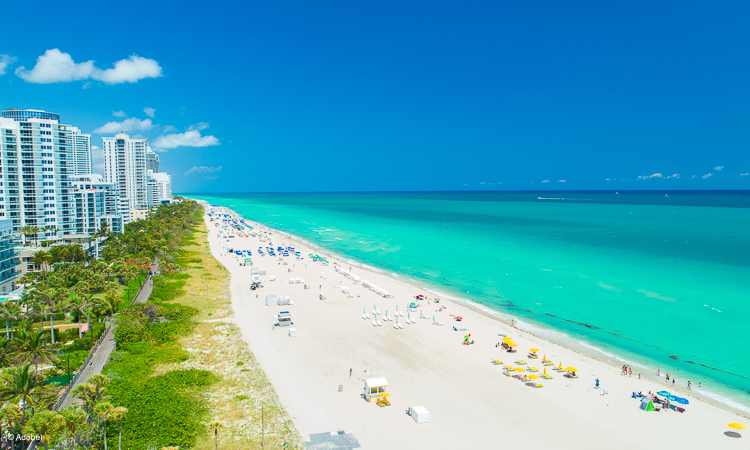
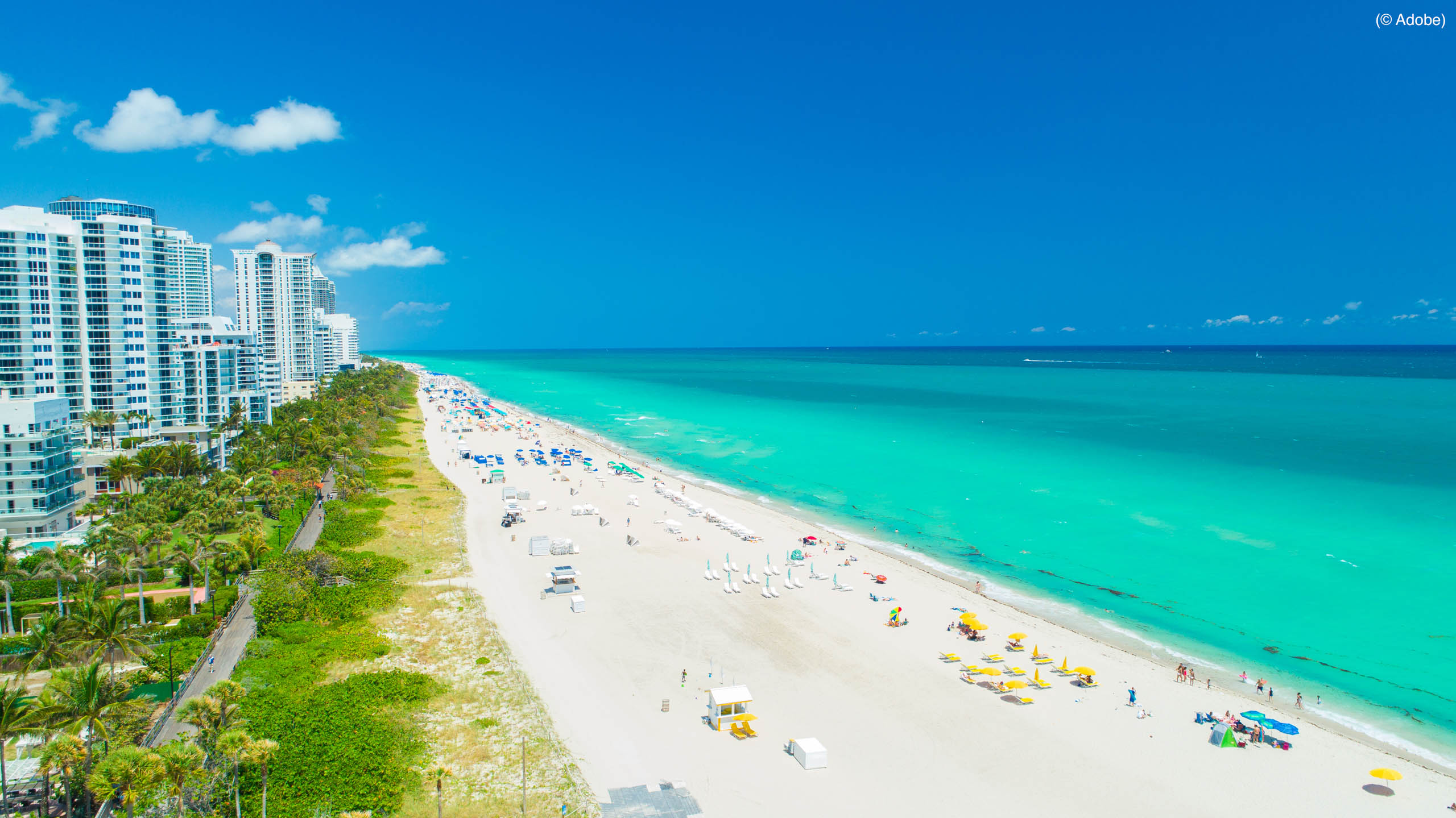 Aerial view of South Beach in Miami Beach, Florida (© Adobe)
This year’s tournament from June 11 to July 19 is the largest since its inception in 1930, featuring 48 national teams playing 104 matches in the United States, Canada and Mexico. Seven national teams — Brazil, Cabo Verde, Colombia, Portugal, Saudi Arabia, Scotland and Uruguay — are set to play four group-stage matches at Miami Stadium. The stadium will also host two knockout round matches and the third-place match on July 18.
Miami knows how to welcome tourists. According to the International Trade Administration, there were 5.2 million international visitors to Miami in 2024, making it the second-most visited U.S. metro area after New York City.
Officials expect 1 million fans to attend matches in Miami Stadium and more to make the metro area their home base for the tournament, says Tomas Alcala of the Miami-Dade mayor’s office.
FIFA is using a lottery to allocate match tickets from among more than 500 million requests worldwide. The most requested ticket was for the June 27 match at Miami Stadium between Colombia and Portugal. Some 40 million people are vying for fewer than 68,000 available seats.
“We’re definitely expecting serious traffic,” Alcala says. Miami-Dade County has some 3 million residents, and local officials are working to make it easier for visitors to get around the crowded city. During the tournament, the city will offer shuttles to and from the stadium and extend the hours for its light-rail system.
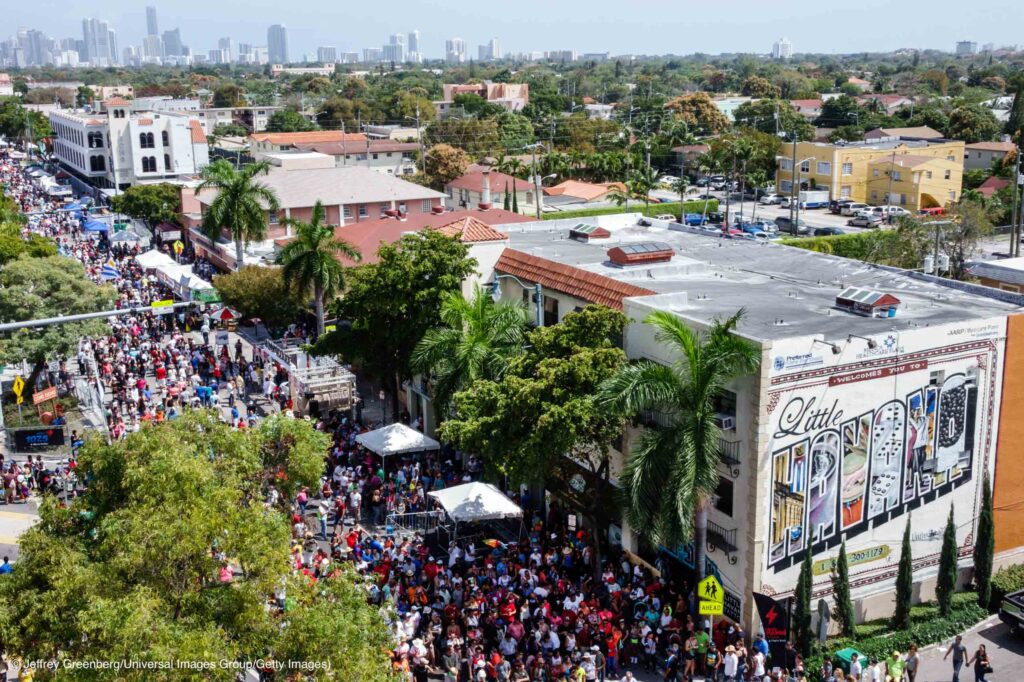 The streets are crowded during an annual festival in Calle Ocho, a hub for Miami’s Cuban American community. (© Jeffrey Greenberg/Universal Images Group/Getty Images)
Many international fans will feel right at home, since Miami is home to large immigrant communities from Brazil, Colombia and Caribbean nations. The city’s Major League Soccer team, Inter Miami, features superstar Lionel Messi, captain of defending FIFA World Cup champions Argentina.
 (© Rubem Robierb/FIFA)
Miami is also where many of the 2.4 million Americans of Cuban descent live. This cultural mix creates a unique variety of food and music visitors can enjoy in neighborhoods such as Calle Ocho, where restaurants serve Cubanos — toasted sandwiches of roast pork, ham, Swiss cheese, pickles and yellow mustard — and cafecito, a small, sweet espresso.
Miami is identified with musical styles from Latin-influenced dance and pop to reggaeton and hip-hop.
From Key Biscayne and the art deco buildings of South Beach to Haulover Beach Park near Miami Stadium, the Miami-Dade area offers 17 miles (27 kilometers) of beaches for sunbathing, relaxing or playing soccer. Visitors should prepare for hot and humid conditions, with highs near 90 degrees Fahrenheit (32 degrees Celsius) and lows around 77 degrees Fahrenheit (25 degrees Celsius) in June and July.
The host committee plans to take full advantage of Miami’s cultural star power to offer tourists a memorable experience, including at the fan festival planned for Bayfront Park and outdoor watch parties for those who are unable to get match tickets.
“We’re hoping people make core memories for the rest of their lives,” Prieto says.
[Editor’s note: Teams and locations for some matches are not set at the time of publication.]