The City of Orlando has expanded its push for more “accessory dwelling units.” An ADU, which we last wrote about in 2020, is a small home next to a larger home on the same lot and goes by many names: mother-in-law suite, garage apartment, granny flat, carriage house, etc.
A new ADU Incentive Program was recently launched to provide financial incentives for homeowners who construct ADUs and lease them at affordable rates. The incentive offers a buildout rebate up to $10,000 for construction costs, a 100% rebate for certain impact fees and a 100% rebate on building permit fees.
According to the city’s website, Orlando.gov, the average range for ADU-related impact fees is $1,300–$3,100, and the range for building permit fees is $450–$1,050.
The main stipulation is that the ADU must be rented to an individual earning at or below 120% of the area medium income for 12 of the first 24 months once the certificate of occupancy is received.
The Orlando City Council originally passed changes in 2018 to the Land Development Code encouraging the construction of ADUs, as one way to alleviate the housing shortage in Orlando. Since then, many new ADUs have been built, especially in the historic districts where permitting is actually easier, since garage apartments were often part of the original neighborhoods.
Benefits of an ADU include allowing a person to live downtown with a lower rent when compared with renting an entire single-family house. An ADU also provides the homeowner with rental income, making their mortgage more affordable.
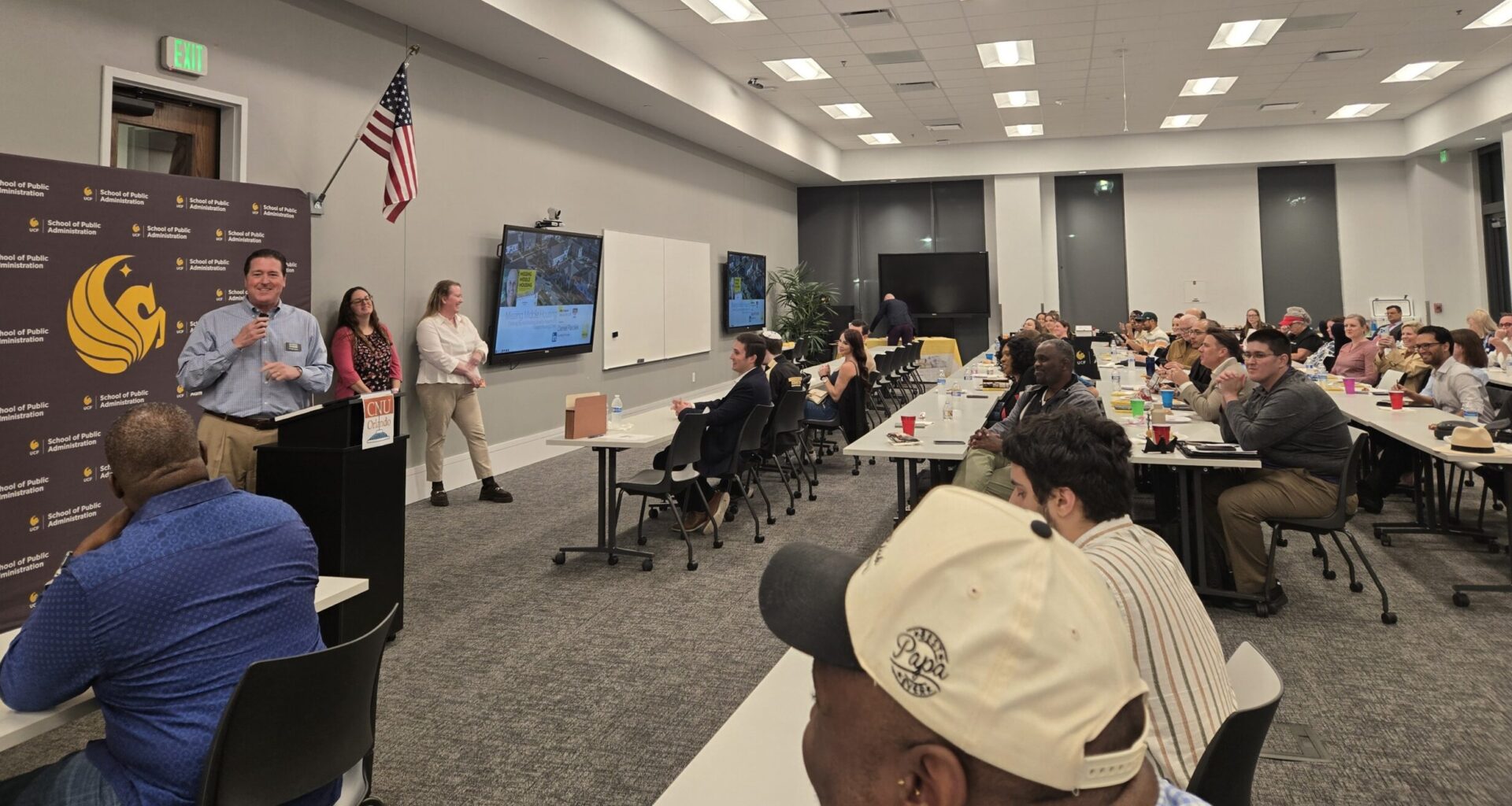
An ADU is a type of “missing middle housing,” a term coined by national housing expert Dan Parolek, who recently spoke to the UCF Urban Knights Planning Association in Creative Village on Feb. 19.
Other types of missing middle housing include duplexes, townhomes, cottage courts and small apartment buildings. After World War II, cities stopped building many of these housing types due to zoning changes, which partially led to our current affordable housing crisis.
“With fewer and fewer households able to afford single family detached houses, [missing middle housing] is a really, really important part of the conversation,” Parolek said. “A lot of Orlando’s historic missing middle is what I would call hidden density. You would never notice it unless you stop and count the mailboxes.”
Parolek encouraged Orlando to continue to relax zoning rules to allow for more housing types and mixed-use, walkable neighborhoods.
Parolek’s presentation was sponsored by downtown developer Craig Ustler, who is building out Creative Village. Attendees included developers, students, urban planners and others interested in improving housing options in Orlando.
“This housing challenge is much more dramatic than it was 15 years ago [when Creative Village was started],” Ustler said.
For more information about Orlando’s ADU incentive program, contact Ben Paquin, city of Orlando housing initiative manager, at ben.paquin@orlando.gov.

Creative Village developer Craig Ustler welcomes Dan Parolek on Feb. 19 to discuss the “missing middle of housing” options that include accessory dwelling units, which Orlando is incentivizing. (LOGAN LAMPHERE)
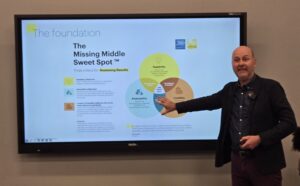
Dan Parolek, national housing expert who coined the phrase “missing middle of housing,” spoke to UCF students and developers in Creative Village. (LOGAN LAMPHERE)