
Forecasters are predicting “a near- to below-historical average” 2026 Atlantic hurricane season, which starts June 1 and runs through Nov. 30, 11 to 16 named storms, according to a new report from AccuWeather.
Of these storms, four to seven are expected to become hurricanes and two to four are predicted to strengthen into major hurricanes that are Category 3 or higher, AccuWeather said.
Major hurricanes are storms that grow to a Category 3 hurricane or higher on the Saffir-Simpson Hurricane Wind Scale. Category 3 hurricanes have maximum sustained winds of 111 to 129 mph.
Hurricane experts predict that three to five storms could directly impact the U.S. this year.
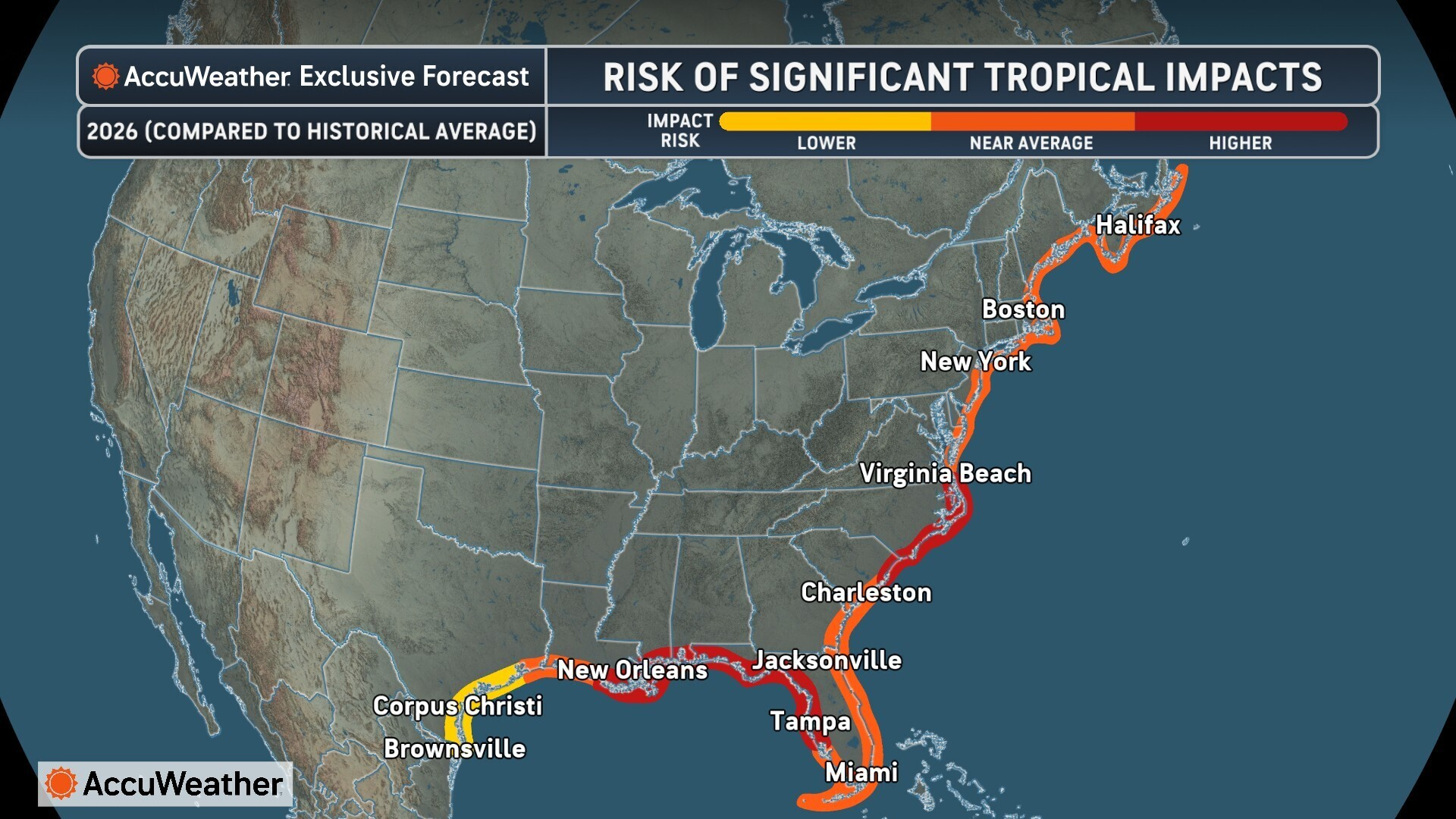
The central and eastern Gulf Coast, as well as the Carolinas and parts of the Virginia coastline, face a higher-than-average risk of significant tropical impacts this year.
Meanwhile, central and southern Texas are expected to face less of a risk during this upcoming season, forecasters said.
Even at the higher end of AccuWeather’s forecast, the 2026 season is expected “to fall below the 10-year average for both total storms and hurricanes,” experts said.
A developing El Niño could impede tropical activity, especially during the second half of the season, which is typically the climatological peak. This climate pattern is expected to increase disruptive wind shear and reduce storm activity.
El Niño seasons, on average, see about 10 named storms and five hurricanes, while La Niña years produce about 15 storms and eight hurricanes during La Niña years, forecasters said. During neutral seasons, the average is 13 named storms and seven hurricanes.
There’s a 15 percent chance of a Super El Niño developing in the second half of the hurricane season, which means even less activity in the Atlantic, forecasters said.
Still, forecasters warn that “the risk of U.S. impacts remains elevated” this coming hurricane season with the potential for rapid intensification over very warm waters and “homegrown development near the U.S. coastline.”
“It’s very important that everybody from South Texas all the way to Maine prepares equally for each and every hurricane season, regardless of the forecast. Even if it’s expected to be a slightly below average hurricane season, we can still see major hits across the U.S.,” AccuWeather lead hurricane expert Alex DaSilva said.
Exceptionally warm Atlantic waters extend hundreds of feet deep, which could fuel stronger storms that rapidly intensify.
“Water temperatures across much of the Gulf, Caribbean and Atlantic are forecast to reach exceptionally warm levels again this summer. That heat extends hundreds of feet below the surface, providing additional fuel for storms,” DaSilva said. “As a result, we are very concerned about the risk of rapid intensification this hurricane season.”
This means storms could form close to the U.S. in the Gulf, western Caribbean or western Atlantic, off the Southeast U.S. coast, forecasters said.
“Storms that form within a few hundred miles of the coast can leave people, businesses, and officials with less time to prepare and evacuate,” DaSilva said. “These ‘homegrown development’ storms that spin up near the U.S. coast can pose bigger threats with a lot less time to react, compared to storms that form off the coast of Africa and take a week or more to trek across the open Atlantic.”