
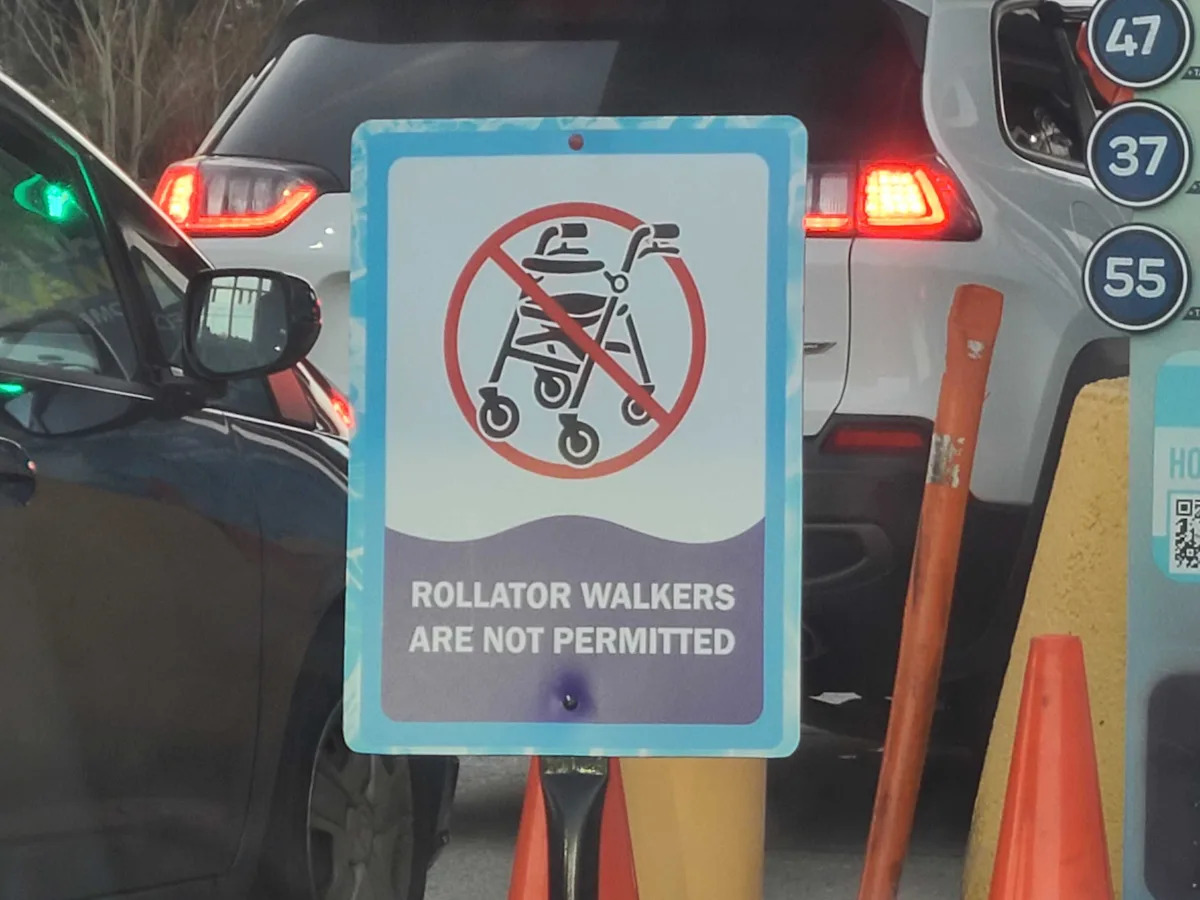
The U.S. Department of Justice on Thursday sued SeaWorld Orlando’s parent company, alleging that its theme parks’ ban on “rollator walkers” discriminates against guests with disabilities, including children and veterans.
The department’s civil rights division filed the lawsuit in Orlando federal court against United Parks & Resorts Inc., which owns or licenses theme parks across the United States, including SeaWorld Orlando, Aquatica Orlando and Busch Gardens Tampa Bay.
The department launched an investigation into the parks in November, questioning why “rollators,” a type of walker with wheels on its legs, a seat and a handbrake, were banned starting that month.
The parks said they imposed the ban because of safety concerns, noting that other mobility aids, such as wheelchairs and electric scooters, were still allowed. But the change sparked outrage among some parkgoers, who said the other devices weren’t medically appropriate for them and were costly to rent at SeaWorld and the other parks.
The day the investigation began, SeaWorld’s website said rental prices started at $40 for wheelchairs and $110 for mobility scooters. The company later said guests could use park walkers without seats and wheelchairs free of charge.
Some of those angry about the changes alerted the federal agency, which is still urging anyone impacted by the rollator ban to file written complaints.
In the lawsuit, federal authorities allege the company violated the Americans with Disabilities Act — which prohibits discrimination based on disability by public accommodations, including theme parks — when the three Florida parks prohibited rollators.
The lawsuit wants a judge to declare the company in violation of federal law, force the parks to change their rules, demand they pay those hurt by the policy and levy a fine of more than $118,000.
“United Parks & Resorts disagrees with the claims asserted in the Department of Justice’s complaint and will respond through the legal process,” the company said in a statement. “The policy at issue was implemented to address repeated safety incidents involving misuse of rollators with seats and was designed to enhance guest safety while continuing to provide accessible options for all guests.”
The company noted that it offers “alternative mobility devices at no cost to ensure guests can fully enjoy our parks. We believe our approach is consistent with the requirements of the ADA and reflects our commitment to providing a safe and inclusive experience.”
Steven McCracken, a regular SeaWorld visitor, was among those who filed a complaint because his grandmother used the type of walker that was banned until she died this past year. He said he also witnessed a woman struggling with a cane because she wasn’t allowed to take her rollator into the park.
He praised the lawsuit Thursday, calling it “fantastic.”
“I hope this gets the horrible decision rectified. I also hope that there is no monetary backlash from this lawsuit put onto the pass holders and general ticket buyers,” he said. “SeaWorld and their parent company should admit to the mistake and move on.”
The lawsuit cites cases of children, veterans and others with disabilities who could not go to the parks because of the rollator ban and alleges the company imposed “impermissible” surcharges on guests with disabilities in the form of rental fees.
“The ADA requires equal access for people with disabilities, and theme parks such as SeaWorld are no exception,” said Assistant Attorney General Harmeet Dhillon, head of the department’s civil rights division, in a statement. “Under my leadership, the Division is committed to defending the rights of all Americans with disabilities, as the law requires.”
Two veterans with disabilities visiting SeaWorld in November with their families, both annual passholders, were told they couldn’t enter the parks with their rollators. One veteran was offered a wheelchair free of charge and used it, but it is not a device his doctor wants him to use, the lawsuit said.
The other veteran was not offered a free alternative and left because it was “infeasible” for his wife to push him around in a wheelchair. The couple decided not to renew their annual passes.
In another case, a Wisconsin man with disabilities who had a walker that specifically accommodated his tall height visited SeaWorld with his family. Employees told him he couldn’t enter with that device, and gave him the free option of a walker without a seat that was too small or said he could pay for a mobility scooter.
He chose the smaller walker but was in pain using it and then used a wheelchair that required family members to push him, the lawsuit said, all of which “diminished” the family’s enjoyment of the park.
The day the investigation began, SeaWorld Orlando’s webpage said the ban on rollator walkers was for the safety of park guests and employees, while the pages for Aquatica Orlando and Busch Gardens Tampa Bay said the ban was due to different pathway configurations and terrain in those theme parks.
The day after the investigation was announced, a spokesperson for SeaWorld and Aquatica said the parks had updated their policy to allow guests with rollators to use one of their wheelchairs or walkers without seats at no extra cost.
This is a developing story. Check back for updates.