
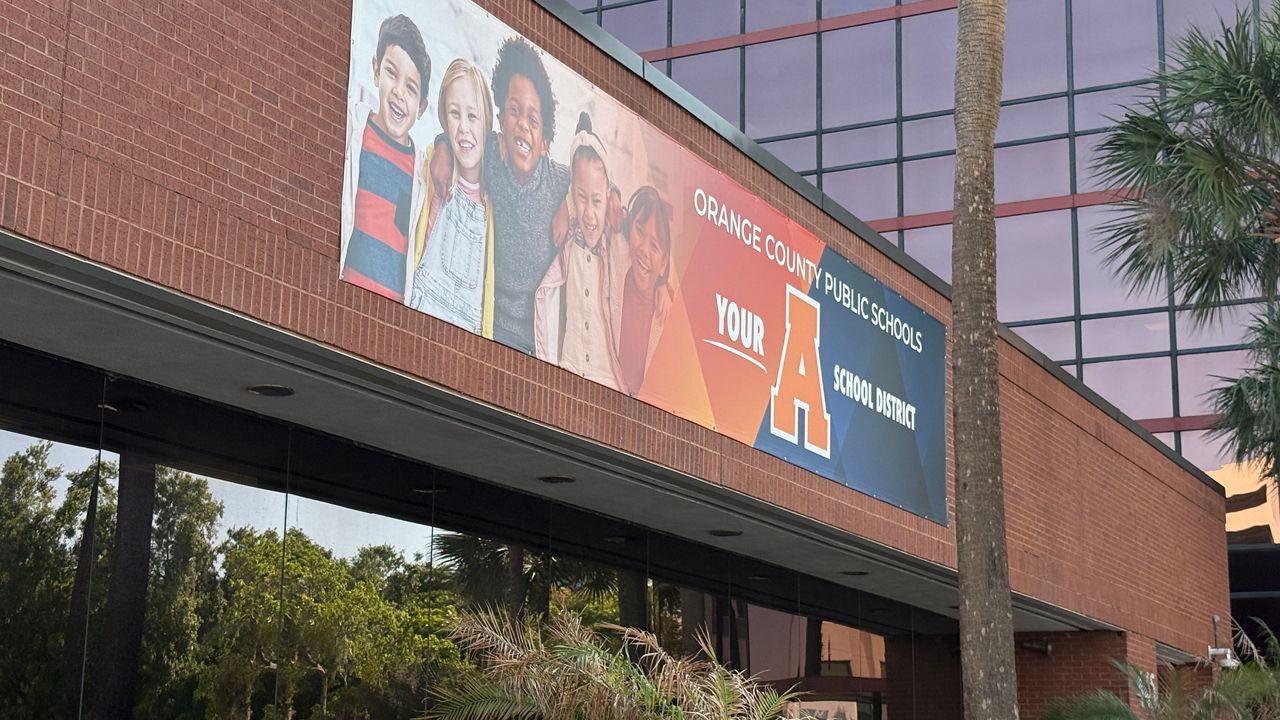
ORLANDO, Fla. — Artificial intelligence is bringing real world challenges into our classrooms.
Orange County School Board members are listening to parents’ concerns while working to come up with a new policy to regulate its use.
What You Need To Know
Orange County School Board is developing an AI policy for classrooms
About 5,800 parents responded to district’s AI survery with comments on benefits and concerns
School board members hope to have a new policy in place for tne new school year
Alexandra Ale has two daughters enrolled in the district. Her youngest is a student at Howard Middle School. Ale says there’s no doubt artificial intelligence will shape her daughter’s education, but she wants to make sure it’s used for research and writing.
“My concern is when it stops the critical thinking aspect,” Ale said. “Because when children have to solve a problem, that’s where learning begins.”
On Tuesday, school board members reviewed results from the district’s artificial intelligence survey. District officials say about 5,800 parents responded.
Some see potential benefits of using AI in the classroom like improving access to tutoring and personalized learning support. However, others worry about reduced critical thinking or problem solving, over reliance on technology and accuracy of AI.
Distrcit 1 Orange County School Board Member Angie Gallo says parents do not want their children to lose learning skills.
“Using ChatGPT to create an essay or to do some of their work robs them of all the other things that need to happen for them to learn,” Gallo said.
Gallo points out the district’s policy will set guidelines for how teachers instruct and how students learn with AI. Gallo said district staff pulled ideas from several resources to write the still evolving policy.
“There’s a lot of concerns I have around the safety, the data, the privacy, all of those I have concerns with students, and so we really do need to make sure that there’s guardrails in place,“ Gallo said.
The current draft of the policy would prohibit the use of AI to generate “deep fakes” or voice cloning to impersonate, harass or bully others. It would also prohibit copyright infringement and using AI chatbots as a substitute for human companionship to find emotional support.
Ale believes her two daughters will both succeed as long as they rely on creative thinking and problem solving.
“If we interfere with that by just letting AI solve everything for them, then the learning process is completely stopped,” Ale said.
District officials have a rule development workshop set for April 28, with a tentative final vote on the policy scheduled for May 12.
They say the new AI policy is expected to be in effect for the start of the new school year.