
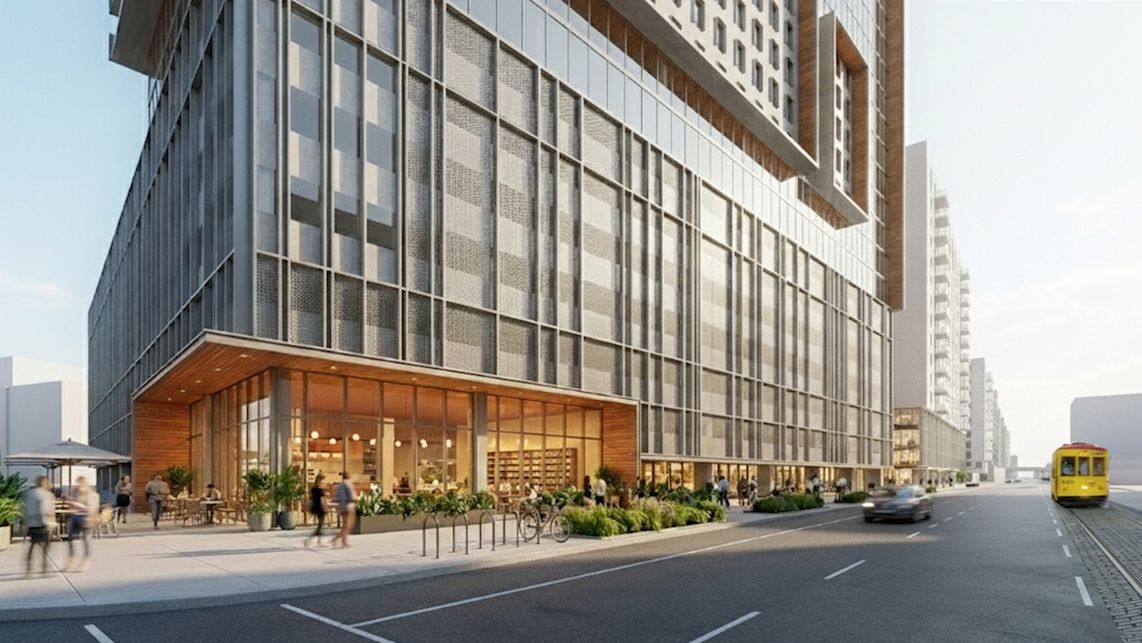
TAMPA, Fla. — A long-vacant site in North Downtown Tampa could soon become a major hub for affordable and workforce housing — bringing more than a thousand new residential units within walking distance of jobs, transit, and the city’s urban core.
What You Need To Know
The proposed mixed-use development would rise on and around the former Army Navy surplus store site near North Tampa Street and East Ashley Drive
Plans call for nearly 1,200 residential units, with about 70 percent designated for affordable and workforce housing, targeting a wide range of incomes
Construction on site and demolition is expected to begin next year, with the first phase of development projected to start in late 2027 or early 2028
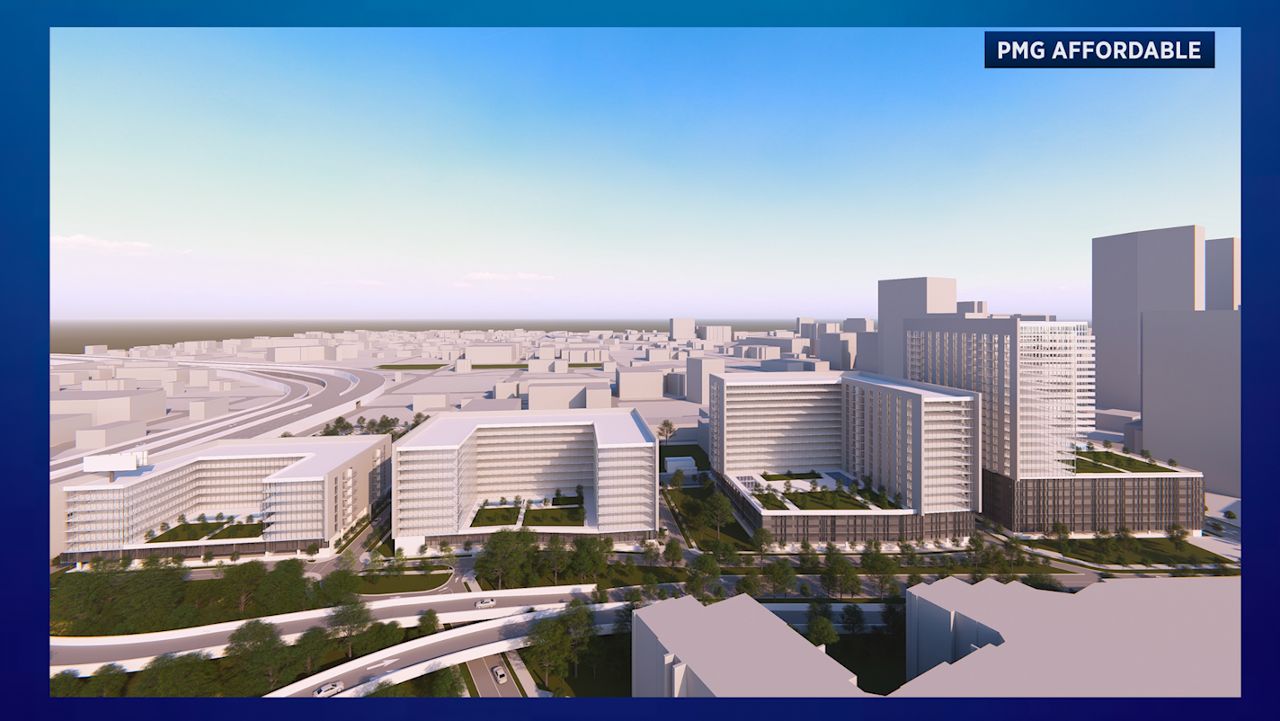
The proposed mixed-use development would rise on and around the former Army Navy surplus store site near North Tampa Street and East Ashley Drive — an area city leaders say is key to improving connectivity across downtown.
Developers with PMG Affordable say the location itself makes this project unique.
“So you can see, this is literally the northern gate, the gateway to the northern part of downtown. The high rises are right here. We’re designing this to blend right in,” said Dan Coakley, principal of PMG Affordable.
Plans call for nearly 1,200 residential units, with about 70 percent designated for affordable and workforce housing, targeting a wide range of incomes
“Affordable housing is characterized into tenants making different area median income and below,” Coakley said. “So affordable housing is 80% area median income, and below workforce housing is technically 80% to 140% area median income. So you’re talking about firefighters, cops, teachers, first responders, people who make, you know, really good incomes, but just given the cost of housing has increased astronomically, have a hard time affording, you know, reasonable places close to where they work,” Coakley said.
The development is designed not just to add housing, but to better connect key parts of Tampa, from Water Street to Tampa Heights and beyond.
“Our goal would be to make this, you know, architecturally important and a great gateway for for the city and really a connecting site for what’s going on in Water Street, what’s going on at Armature Works, what we’re doing up in Tampa Heights at the Robles site,” Coakley said.
He adds that projects like this are rare, especially in a downtown setting where land is limited.
Construction on site and demolition is expected to begin next year, with the first phase of development projected to start in late 2027 or early 2028.
“You know, it’s kind of a once-in-a-generation opportunity to deliver a workforce housing to the workforce in the CBD. It’s the first project of its kind in Tampa,” Coakley said. “We develop in many markets around the state, around the country. It’s highly unusual other than like New York City, where there is no land to be able to develop in the urban core workforce housing, affordable housing.
“A lot of times it’s an hour away, 45 minutes away, whatever it is, this is walkable to places of work, public transport, nation, bikeable. And, you know, this is the kind of project that we like to do because of it,” he said. “I think it’ll be transformational not only for the city, but giving, you know, 1,200 units, 800 of which will be attainable, high priced. Those are all workers downtown that’ll be close to the employment centers.”
City officials say the project supports a broader effort to expand housing access.
“Mayor (Jane) Castor set a goal of creating 10,000 affordable units during her administration or by 2027,” said Abbye Feeley, administrator of development and economic opportunity for the City of Tampa.
Eligibility for affordable housing is based on area median income, or AMI.
“Right now, for a family of four in the city of Tampa, it’s $86,450 is the area median income. And if you were to say you’re eligible, if it’s 80% of that, you would take 80% of that number. And that’s how you get what the different eligibility is, are,” Feeley said.
Feeley says the distinction between affordable and workforce housing can be confusing — but both are critical.
“So the Army Navy redevelopment was just announced,” she said. “There was a request for proposals that went out and that was just awarded. It’s a very exciting opportunity. It’s going to be about 1100 units and those will have a minimum of 750 of those will be affordable. And workforce workforce, when we refer to it, is really 120% area median income and 140% area median income. So you have that goes above the 100%, which is sometimes is confusing, but people kind of equate work force with more of a 120% and the 140% and affordable more with the 86 and 30.”
For many workers, proximity to downtown jobs is key.
“Residents who are working in Water Street in service industry or in some of our downtown hotels can afford to live here within walking distance because that’s so critical. Then you don’t have to spend $5 a gallon on gas when you can get to work, either by walking scooter, the streetcar or some other means of transportation,” Feeley said.
Currently, affordable housing options in downtown Tampa are limited.
“We have one affordable housing project in downtown that’s called Metro 510, and that was done probably about 15 years ago,” Feeley said. “This (redevelopment of four properties between N Tampa Street and E Ashley Drive) would be the first newer development to incorporate affordable housing within the central business district.”
She also emphasized that modern-affordable housing developments are designed to look no different from market-rate units.
“We also have West River, which is just on the west side of the river by Lake High School, and they have six or seven blocks in there. Most of them are in affordable market mix with 80% affordable units and 20% market because you really want to have that integration and affordable unit. You cannot tell the difference. It looks and feels exactly like a market rate. It’s just that the individual in that unit is income qualified,” Feeley said.
Funding for developments like this typically comes through public-private partnerships.
“Most of this is done through public-private partnership. The state of Florida, as well as Housing and Urban Development. They provide funds and tax credits to developers. So tax credits give the developers the opportunity to put these units in. And then when they receive tax credits, they have to keep them a lot of times for a minimum now of 50 years,” Feeley said.
Construction on site and demolition is expected to begin next year, with the first phase of development projected to start in late 2027 or early 2028.