
A more detailed discussion is scheduled for April 2, when staff will present an extensive review of stormwater management. The presentation, expected to include more than 50 slides, will examine flooding risks, infrastructure needs and long-term mitigation strategies.
Beyond infrastructure, economic and community development updates filled much of the agenda.
Commissioners highlighted the impact of major regional events, including the Valspar Championship and the Firestone Grand Prix of St. Petersburg, both of which draw tens of thousands of visitors and generate significant economic activity.
Tourism officials were credited with strong promotional efforts, particularly around branding the area’s beaches and attractions.
Local arts and cultural programming also received attention, along with efforts to expand educational and workforce opportunities across the county.
That focus was most visible during an evening presentation from Clearwater for Youth, a nonprofit that has rapidly expanded its reach in recent years.
Executive Director Kevin Dunbar told commissioners the organization will distribute approximately $1.3 million this year through scholarships, youth sports funding and water safety initiatives.
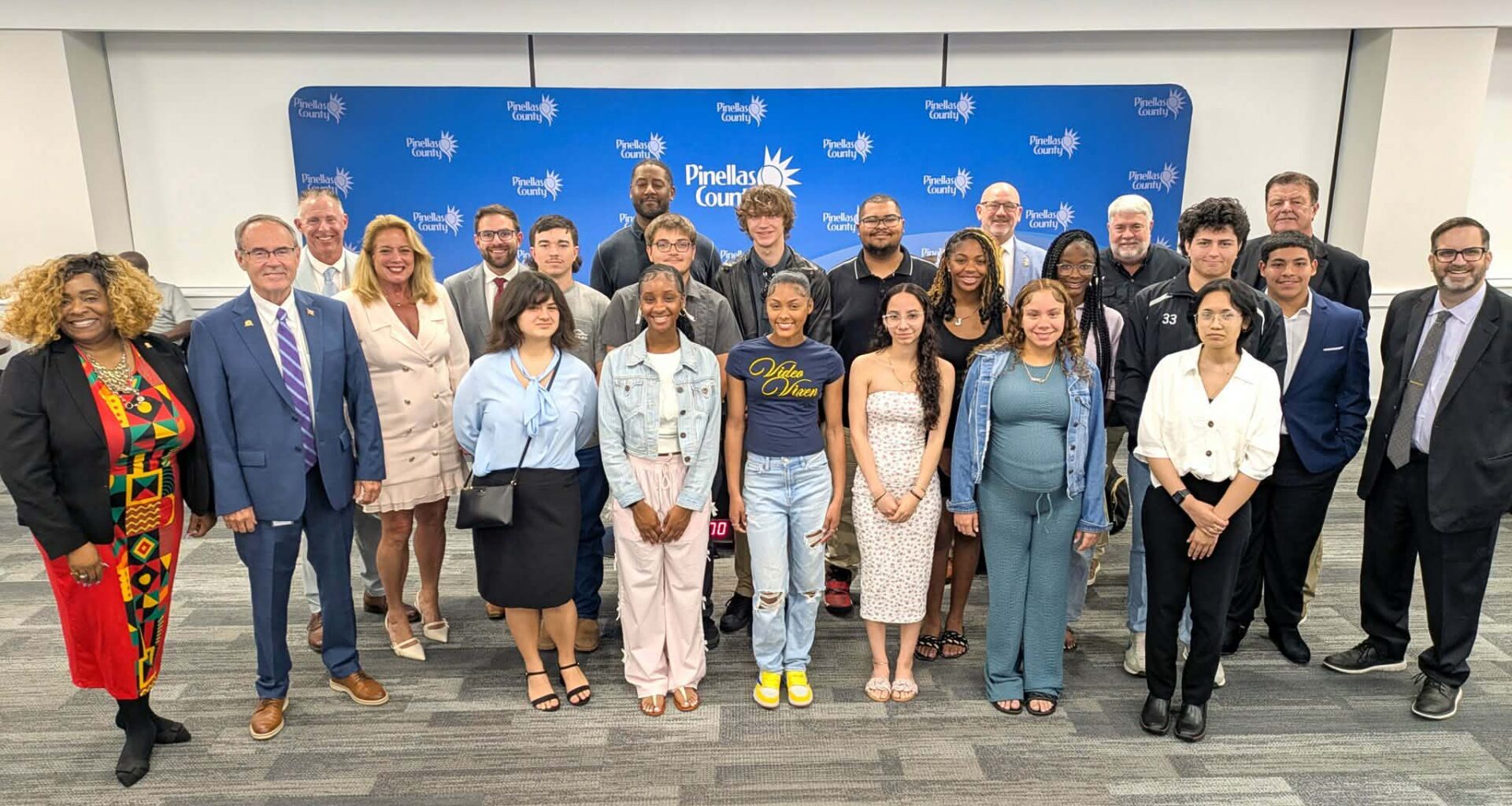
The group awarded 57 post-secondary scholarships to students from 16 high schools across Pinellas County. Awards ranged from $5,000 to $10,000, with additional partnerships providing full coverage for tuition, fees and books at St. Petersburg College.
Dunbar said the organization has also strengthened its vocational training pipeline, working with Pinellas Technical College to support students pursuing trades. Funding now extends beyond tuition to include tools, uniforms and other essential equipment.
“This is about removing every barrier we can,” Dunbar said. “If a student is willing to do the work, we want to make sure cost is not the reason they can’t succeed.”
Students recognized during the presentation reflected a wide range of academic and career paths.
Several plan to attend four-year universities, including Florida State University and Florida A&M University, while others will remain local to complete associate degrees or pursue technical certifications in fields such as construction, culinary arts and veterinary science.
Commissioners paused the meeting to take photos with the students, offering congratulations and encouragement.
“You’re the future of this county,” one commissioner said. “And it’s clear you’re already on the right path.”
In addition to scholarships, Clearwater for Youth supports youth athletics programs, facility improvements and water safety instruction for elementary school students. The organization partners with local schools to provide swim lessons for children in kindergarten through second grade.
The meeting also included a series of routine but significant approvals.
Commissioners unanimously reauthorized the county’s nine-cent local fuel tax, a key funding source for transportation infrastructure.
They also approved updates to the county’s fireworks ordinance to align with state regulations, along with multiple land use amendments, zoning changes and easement vacations across unincorporated areas.
Two historic structures at Heritage Village, the House of Seven Gables and the Plant-Sumner House, were formally designated as local landmarks. The recognition marks 50 years since the buildings were relocated to the site and reflects the county’s ongoing investment in preserving its history.
A public ceremony is scheduled for March 30 at Heritage Village to commemorate the milestone.
Board appointments rounded out the agenda.
The meeting closed after more than four hours of discussion, approvals and presentations.
While many items passed quickly, the range of topics reflected the complexity of governing a county facing both opportunity and pressure. From housing and water to education and economic development, commissioners signaled that the months ahead will require continued coordination and careful decision-making.