
JetBlue is set to further expand its U.S. network with new daily nonstop service between Fort Lauderdale and Cleveland, enhancing connectivity between South Florida and Northeast Ohio and adding fresh competition on a key domestic corridor.
Get the latest news straight to your inbox!
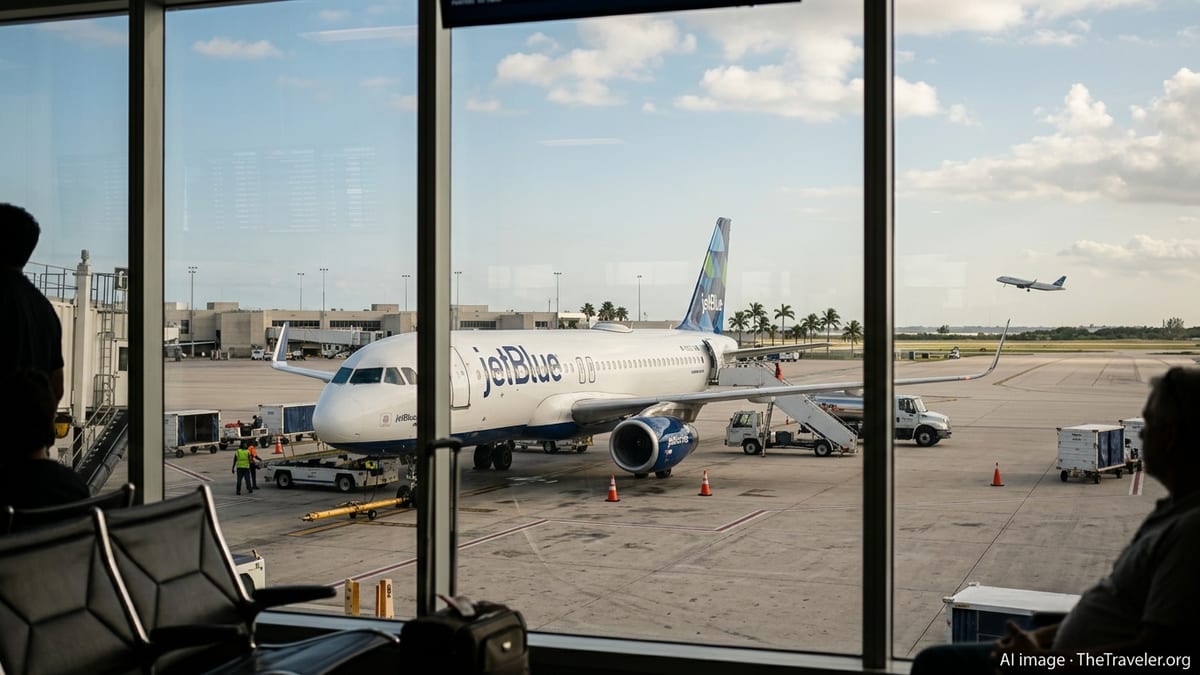 New Daily Link Between South Florida and Northeast Ohio
Publicly available schedule data and industry reports indicate that JetBlue is introducing a new daily nonstop route connecting Fort Lauderdale-Hollywood International Airport and Cleveland Hopkins International Airport, broadening the carrier’s footprint in both Florida and the Midwest. The added service is positioned to capture strong demand between a major South Florida gateway and one of the Great Lakes region’s principal business and population centers.
The daily pattern is expected to appeal to both leisure and business travelers, offering consistent, year-round connectivity rather than limited seasonal options. Travelers from Cleveland gain a direct link into JetBlue’s well-established presence in Fort Lauderdale, while South Florida residents receive an additional nonstop option to reach Northeast Ohio without connecting through other hubs.
Industry coverage frames the move as part of a broader network recalibration in which airlines are fine-tuning domestic routes to match evolving demand patterns. For JetBlue, which has been steadily reinforcing its positions at focus cities including Fort Lauderdale, the Fort Lauderdale–Cleveland link represents another building block in a strategy that emphasizes frequent, point-to-point connectivity on high-potential city pairs.
The route also lands at a time when domestic air travel volumes are tracking above pre‑pandemic benchmarks on several leisure and visiting-friends-and-relatives corridors. Analysts note that links between Florida and the industrial Midwest have historically proven resilient, supporting multiple carriers and giving airlines latitude to experiment with schedules and pricing.
Strengthening JetBlue’s Fort Lauderdale Focus City
JetBlue has long treated Fort Lauderdale as one of its key focus cities, using the airport as a south Florida alternative to Miami and as a connecting gateway to the Caribbean and Latin America. Additional nonstop options such as the Fort Lauderdale–Cleveland route reinforce that role by adding another spoke to the airline’s Fort Lauderdale-based network of domestic and international services.
From Fort Lauderdale, travelers arriving from Cleveland can tap into a wide range of onward flights to Florida beach destinations, Caribbean islands and select Latin American cities, creating one-stop itineraries that compete with itineraries via larger hubs. Industry analysis suggests that this broader connectivity is central to the carrier’s value proposition in the region, especially for travelers seeking to avoid the congestion and fares often associated with larger hub airports.
For Fort Lauderdale-Hollywood International Airport, the additional JetBlue route adds to an already competitive roster of domestic links. Airport traffic statistics in recent years have shown steady demand from Midwestern markets, and more nonstop options are seen as beneficial for both inbound tourism and South Florida residents traveling north for business, university visits and family trips.
Travel planners note that the introduction of another daily service to a major Midwestern city can exert downward pressure on average fares over time, particularly when a low-cost or hybrid carrier adds capacity on a route historically dominated by legacy airlines. This can translate into more accessible pricing for travelers flexible on dates and willing to compare across carriers.
Cleveland Hopkins Gains Another Growth Carrier
Cleveland Hopkins International Airport has been working to diversify its airline portfolio and rebuild connectivity after legacy hub reductions earlier in the decade. The addition of new daily service from JetBlue between Cleveland and Fort Lauderdale complements other recent capacity additions by low-cost and hybrid carriers, giving local travelers more choice on both business and leisure routes.
Airport traffic and route announcements over the past two years show that Cleveland has attracted a mix of new entrants and expansions, with carriers adding point-to-point service to sun destinations and key business markets. JetBlue’s arrival on an additional Florida route aligns with that trajectory, positioning Cleveland as a competitive origin and destination market rather than a secondary spoke dependent on a single hub operator.
The Fort Lauderdale–Cleveland link is expected to bolster inbound tourism from South Florida and connecting markets, offering Ohio’s tourism sector an opportunity to capture more visitors interested in city breaks, sports travel and access to attractions across Northeast Ohio. In the opposite direction, it provides Cleveland-area residents a convenient nonstop path to one of the country’s most popular winter and spring escape regions.
Local travel advisers observe that Florida routes from the Midwest tend to be among the first to fill during school holiday periods and winter months. Adding capacity with another daily flight can improve availability in peak periods and give travelers more options on departure times and fare types.
Competitive Dynamics on the Florida–Midwest Corridor
The Fort Lauderdale–Cleveland market is already served by multiple airlines, according to public booking and schedule tools, and JetBlue’s entrance adds another competitor into a space where low fares and frequent flights are common. Competition on city pairs linking Florida with Midwestern population centers has intensified as carriers pivot toward strong leisure demand and away from some underperforming business routes.
Observers note that JetBlue typically competes by emphasizing its onboard product, including seat comfort and free inflight entertainment, while still targeting price-sensitive travelers. In a market where ultra-low-cost carriers and legacy airlines are already present, JetBlue is expected to position itself as a differentiated option focused on value and experience rather than simply rock-bottom fares.
For travelers, more competition on this route could mean a wider spread of departure times, fare buckets and ancillary options, as airlines react to one another’s schedules and promotions. Historical patterns on similar routes suggest that new entrants often trigger promotional pricing in the months surrounding a launch, which can benefit early bookers and flexible travelers looking to lock in lower fares.
Industry analysts will be watching to see how quickly the new service ramps up in terms of load factors and revenue performance. Consistently strong demand could prompt schedule tweaks, such as upgauging aircraft size or adjusting flight times to better match peak travel windows on both ends of the route.
Broader Implications for U.S. Domestic Connectivity
The addition of daily JetBlue service between Fort Lauderdale and Cleveland fits into a wider pattern of U.S. airlines fine-tuning domestic networks ahead of expected demand growth in 2026 and beyond. Airlines are seeking to balance high-yield business markets with resilient leisure and visiting-friends-and-relatives traffic, often by reinforcing links between secondary cities and major tourism gateways.
Industry coverage points out that carriers across the spectrum are adding capacity on Florida and sun-bound routes, even as they trim or reshape other parts of their networks. Within that context, JetBlue’s latest Fort Lauderdale service underscores how strategically important Florida remains to U.S. airlines seeking reliable year-round demand.
For passengers, the practical impact is increased choice. Travelers in Cleveland gain an additional nonstop to South Florida and easier one-stop access to beach and island destinations, while Fort Lauderdale residents and visitors enjoy another direct option to the Midwest. As airlines continue to refine schedules, such point-to-point additions are likely to play a larger role in shaping how Americans move between regions without always passing through a traditional hub.
Looking ahead, network planners and airport officials around the country are expected to track performance on routes like Fort Lauderdale–Cleveland as indicators of how well demand holds up on leisure-leaning city pairs that also carry a measure of business and family traffic. Strong performance could encourage further expansion, reinforcing a trend toward more direct links between mid-sized cities and key tourism gateways across the United States.